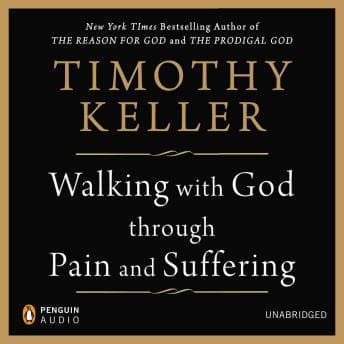

Bottom Line: Worth your commute if you're wrestling with the big questions. Not a quick fix, but a genuinely thoughtful framework.
Look, I'm not usually the person reaching for theology audiobooks. My queue is like 80% hard sci-fi and business books about optimizing my morning routine (that I then ignore). But last month my aunt was diagnosed with stage 4 pancreatic cancer, and suddenly all my usual listens felt... hollow? I needed something that actually engaged with the mess instead of pretending it didn't exist.
So I grabbed this. Thirteen hours. That's basically a full week of commutes for me.
Why Keller Works (Even If You're Skeptical)
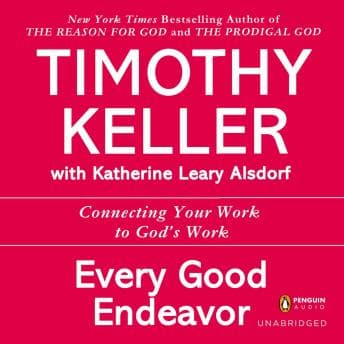
Here's the thing about Timothy Keller - he doesn't do the cheap moves. He doesn't pretend suffering has easy answers or that faith is some magic shield against pain. The first third of this book is basically him saying "here's how every major worldview - secular, Buddhist, Christian, whatever - has tried to make sense of suffering, and here's where each one falls short." It's almost academic in places. I'll be honest, the early chapters dragged a bit during my 6AM commutes when I was barely conscious.
But then something shifted around hour four or five. He stops being a professor and starts being a pastor. The case studies he brings in - real people walking through cancer, loss, betrayal - that's when the book hit different. I actually missed my stop once because I was so locked into this story about a woman whose husband left her after 30 years.
Keller's framework is basically: suffering is a furnace. You can come out purified or destroyed, and the difference isn't luck - it's preparation and perspective. As a systems engineer, I weirdly appreciated this. It's like he's debugging the human response to pain. What are the failure modes? What's the architecture that holds up under stress?
Lloyd James Behind the Mic
Okay, Lloyd James. He's... fine? His voice is clear, pacing is steady, production quality is solid. But he reads this like it's a textbook, not a letter from a friend. Keller's writing has warmth to it that I think gets flattened a bit in James's delivery. When Keller quotes from someone's personal story of grief, James reads it with the same measured tone he uses for the theological arguments. It works, but I found myself wishing for a bit more emotional range.
That said - and this is important - the formal tone actually helped during the denser philosophical sections. I could follow the arguments at 1.5x without getting lost, which is more than I can say for some narrators who get too dramatic and muddy the content.
No character differentiation issues here since it's straight non-fiction, but James does handle the Scripture quotations with appropriate weight without going full "movie trailer voice." Small thing, but I appreciated it.
The Parts That Actually Stuck
The section on "the varieties of suffering" was genuinely useful. Keller breaks down how different types of pain require different responses - grief isn't the same as injustice isn't the same as physical pain. Sounds obvious, but I'd never really thought about it systematically before.
The weakest parts? Some of the historical theology stuff in the middle. I get why it's there - he's building a case - but my eyes (ears?) glazed over during the extended discussions of Augustine and various church fathers. Could've been tightened up.
Who Should Listen (And Who Should Skip)
Best for: Anyone in the middle of something hard, or anyone who wants to be prepared before they are. If you're dealing with the aftermath rather than the crisis itself, Healing the Shame That Binds You goes deeper into the emotional wreckage that lingers. Also solid for people who've read C.S. Lewis's "The Problem of Pain" and wanted something more practical and less abstract.
Skip if: You want quick answers or you're looking for something light. This is not comfort food. It's more like... a really thorough diagnostic manual for the soul.
Would I Listen Again?
Honestly? Parts of it, yes. I've already gone back to a few sections while sitting in the hospital waiting room with my mom. There's something grounding about Keller's voice (well, James's voice delivering Keller's words) when everything feels chaotic.
It's not a perfect audiobook experience - I'd probably recommend the physical book for the really dense sections so you can underline and flip back. But for commute listening? It works. Just maybe bump it down to 1.25x for the theological deep dives.
Perfect for: train, long drives, walks when you need to think. Skip for: gym (too cerebral) or anything where you need to be alert.
The ROI on this audiobook is high if you're in the right headspace for it. It won't fix anything - Keller would be the first to say that - but it gave me a framework when I desperately needed one.