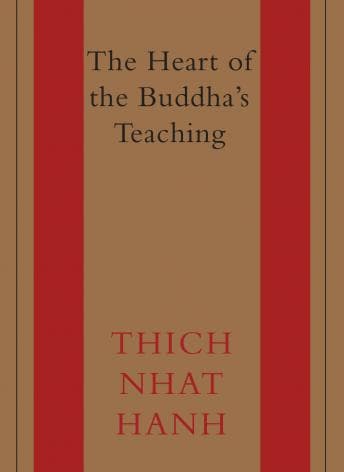

I fell asleep three times during my first attempt at this audiobook. Not because it's bad—because it's doing exactly what it's supposed to do.
Let me explain. I was cooking dal makhani at 10 PM (a recipe that requires patience I don't naturally possess), and René Ruiz's voice was so measured, so deliberately calm, that my brain interpreted it as permission to stop thinking. I had the opposite problem with Salt, Fat, Acid, Heat—that audiobook demanded my full attention in the kitchen, which is probably why I didn't burn anything. The Four Noble Truths became background music to me burning onions. My therapist would have thoughts about this—specifically that I can't sit still with stillness.
A Textbook Disguised as Wisdom
Thich Nhat Hanh has structured this audiobook like an academic primer, and I mean that as both compliment and warning. You get the Four Noble Truths. The Noble Eightfold Path. The Three Doors of Liberation. The Seven Factors of Awakening. The Three Dharma Seals. If you're counting, that's at least twenty-five discrete concepts before we've even gotten to the deeper teachings.
This is a fascinating case study in how Western audiences approach Eastern philosophy. We want the wisdom, but we also want it organized, categorized, numbered. Thich Nhat Hanh obliges—perhaps too well. One listener described walking while listening and ending up in "aimless dreamland due to the many numbers and enumerations." Psychologically, this tracks. The brain can only hold so many categorizations before it starts to blur.
But here's what makes this author compelling: he understands that suffering isn't something to be solved like a math problem. It's something to be sat with. The poetry breaks through the enumeration—moments where Ruiz's calm delivery suddenly carries genuine weight. Thich Nhat Hanh's explanation of interbeing (how everything contains everything else) stopped me mid-stir. I found myself asking: why does Western psychology insist on separating the self from its context when Buddhism has been saying "you are your context" for millennia?
A Narrator Who Knows When to Disappear
Ruiz makes an interesting choice here. He doesn't perform the text—he presents it. No dramatic inflections when discussing suffering. No hushed reverence when approaching enlightenment. Just steady, clear, accessible delivery.
For some listeners, this will feel flat. For others (myself included, once I adjusted my expectations), it creates something rare in audiobooks: space. The narration allows room for contemplation. You're not being told how to feel about impermanence; you're being given the concept and trusted to sit with it yourself.
The downside? Nine hours and twenty-three minutes of calm can become nine hours and twenty-three minutes of struggle to maintain attention. I had to switch from cooking to morning jogs through Cambridge—something about physical movement kept my brain engaged with the material instead of floating away from it.
Who Should Listen (And Who Should Run)
This is not the audiobook for your commute if your commute involves traffic stress. The cognitive dissonance between "cultivate equanimity" and "that person just cut me off" is too much.
This IS the audiobook for:
- People who want a comprehensive Buddhist foundation, not just vibes
- Listeners willing to pause, rewind, and actually contemplate
- Anyone who's read pop psychology on mindfulness and wants the actual source material
- Academics and researchers who appreciate systematic presentation (guilty as charged)
Skip this if:
- You want quick, actionable self-help
- Dense enumeration makes you zone out
- You're looking for entertainment rather than education
- You need dynamic narration to stay engaged
The Prescription: Worth the Effort, But It IS Effort
I've read enough pop psychology books that bastardize Buddhist concepts for Western consumption. The same oversimplification happens in wellness culture—Wish at least acknowledges the complexity instead of reducing everything to platitudes. "Just breathe!" they say. "Be present!" As if two thousand years of philosophical tradition can be reduced to Instagram captions.
Thich Nhat Hanh doesn't do that. He respects his audience enough to give them the full framework—the suffering, the causes of suffering, the cessation of suffering, and the path. The problem is that respect requires reciprocal effort from the listener.
I finished this audiobook over three weeks, in chunks. Dedicated listening sessions, usually during those morning jogs when my body was occupied and my mind could actually receive the material. Is that how most people consume audiobooks? No. Is it how this one needs to be consumed? Probably yes.
Learning requires struggle—the brain needs to work to retain information. This audiobook provides that struggle, whether intentionally or not. By the end, I had a genuine understanding of Buddhist fundamentals that no amount of meditation app subscriptions had given me.
Worth a credit if you're serious about understanding Buddhism as a philosophical system rather than a wellness trend. Just don't expect it to be easy. And maybe don't listen while cooking anything that can burn.