
"We were still clinging to the old ways. The old ways that had gotten us into this mess."
Somewhere around hour three, chopping onions for a dal that would take another two hours (my mother's recipe, the one she still insists I make wrong), that line hit me like a diagnosis. The protagonist exhibits classic cognitive dissonance—and so does every government official, every military commander, every terrified civilian in Max Brooks' oral history. This isn't a zombie book. It's a case study in institutional failure dressed up in rotting flesh.
The Research Actually Shows: Humans Are the Real Horror
I've read papers on mass panic, on how bureaucracies collapse under unprecedented stress, on the psychology of denial. Brooks clearly did too. The Israeli intelligence officer who recognizes the threat because his job is literally to believe the unbelievable? That's not creative writing—that's understanding how cognitive frameworks shape response to crisis. The Chinese doctor who first encounters Patient Zero and watches his superiors bury the information? I've seen that pattern in every institutional failure case study I've ever analyzed. The same bureaucratic paralysis shows up in Star Trek: Lost Frontier, though that one trades zombies for space politics.
What makes this character study compelling is that Brooks doesn't give us heroes. He gives us survivors—people who made terrible choices, who froze, who ran, who did what they had to do. The format (oral history, interviews collected after the war) means every narrator is unreliable in the most psychologically honest way. They're performing their trauma for the interviewer. They're justifying their survival. They're still processing. My therapist would have thoughts about basically every character in this book.
When Your Cast Includes Luke Skywalker and a Scorsese Regular
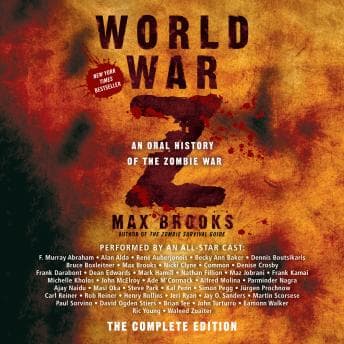
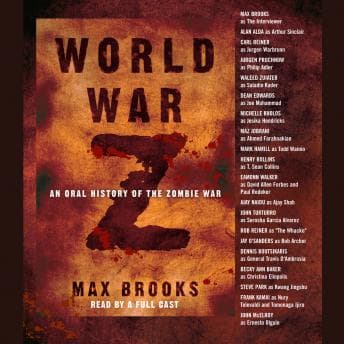
The full cast situation here is—look, it's ambitious. Mark Hamill narrating the Battle of Yonkers sequence gave me actual chills. Kal Penn's delivery of the bridge defense, the way his voice breaks when describing Sardar Khan's sacrifice? I stopped chopping. Just stood there with a knife in my hand like an idiot.
But here's what the research confirms and my ears agree with: Max Brooks himself is the weakest link in his own audiobook. His interviewer segments are flat, almost clinical—which, okay, maybe that's intentional? The journalist as blank slate? Psychologically, this doesn't track for me. A man traveling through apocalypse aftermath collecting trauma testimonies would have some affect. Some warmth. Something.
And Alan Alda—I know some people loved him, but I kept waiting for him to make a joke about the 4077th. That's not his fault. That's my brain refusing to separate Hawkeye Pierce from post-apocalyptic survivor. (My therapist would probably say something about parasocial relationships and cognitive interference here.)
Why Fragmentation Makes It More True
The format is the genius. Oral history means you never get the full picture. You get fragments—a Chinese submarine commander's perspective, then jump to a feral child raised in the wilderness, then a Hollywood director who made propaganda films. Each voice adds a piece. None of them agree on what really happened. It's a fascinating case study in how collective memory forms and fractures.
I found myself asking: why does the format feel so intimate when it's so fragmented? Because trauma works that way. We don't experience catastrophe as a coherent narrative. We experience it as moments—the smell of something burning, the sound someone made, the thing we can't forget. Brooks understands this. He understands that the most honest way to tell a global story is through the unreliable, contradictory, deeply personal memories of people who lived it.
The movie adaptation apparently missed this entirely. (I haven't seen it. I've been told by multiple sources not to bother. The audiobook stands alone.)
Who This Is For (And Who Should Skip)
If you need a single protagonist, a clear arc, a hero's journey—this isn't that. The episodic structure means some chapters grip you and others feel like filler. If you're listening while distracted, you'll lose the thread between narrators and wonder who's talking.
But if you're someone who reads pandemic response reports for fun (just me?), if you find institutional psychology fascinating, if you want horror that's actually about human systems failing rather than jump scares—this is your audiobook. The full cast elevates what could have been a gimmicky concept into something that feels like testimony. Like evidence.
The Diagnosis
I finished the dal. I ate it alone, which I prefer, while the final interviews played. Brooks ends not with triumph but with uncertainty—we survived, but at what cost? And are we actually safe?
That's the question that keeps me up at night anyway. The zombies are just a metaphor. The human psychology? That's the real horror.
Six hours well spent. Even if I still can't unhear Hawkeye Pierce.