
I was meal-prepping on a Sunday afternoon—chopping onions for a week's worth of dal—when the irony hit me. Here I was, listening to a book about handling difficult people, and the narrator sounded exactly like the woman from every mandatory HR training video I've ever sat through. You know the one. The one where you're clicking through slides about appropriate email etiquette while mentally calculating how many minutes until lunch.
And look, that's not entirely a criticism. Stay with me here.
The Psychology of Typing People (It's More Useful Than You'd Think)
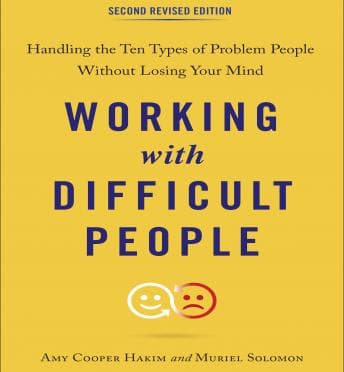
Hakim and Solomon do something I genuinely appreciate: they categorize. Ten types of difficult people, each with their own behavioral patterns and—this is the key part—their own underlying motivations. The tyrant. The bully. The conniver. The whiner. As someone who spends her professional life analyzing why people do what they do, I found myself nodding along more than I expected.
The book gets that difficult behavior isn't random. That colleague who undermines you in meetings? There's a pattern there. The person who takes credit for your work? Also a pattern. And patterns can be predicted, which means they can be managed. This is basic behavioral psychology, but Hakim presents it in a way that's actually actionable for people who haven't spent years reading research papers on workplace dynamics.
What I particularly appreciated was the updated content on cyber-bullying and technology-mediated conflict. The difficult person in 2024 isn't just the guy who talks over you in meetings. It's also the passive-aggressive Slack message. The reply-all email that subtly throws you under the bus. The book acknowledges this shift, which feels refreshingly current for a revised edition.
Karen Saltus: Corporate Training Energy (Let's Just Address It)
Saltus has excellent pacing. I mean genuinely excellent—she doesn't rush through the practical advice, and her error rate is basically nonexistent. Her voice is clear and pleasant. These are good things.
Saltus also narrates Networking for People, where that same measured tone actually works better—something about career advice feels like it should sound professional.
But here's the thing. One listener described her as sounding like "the same exact voice from the 'Sexual Harassment on the Job' PowerPoint you have to begrudgingly watch every time you're a new hire." And... I can't unhear it. There's a certain quality to corporate training narration—measured, neutral, almost aggressively inoffensive—and Saltus has it.
Is this a dealbreaker? Depends on your tolerance. If you're someone who zones out during mandatory workplace trainings (most of us), you might find yourself drifting. I caught myself rewinding a few times during the meal prep, not because the content was bad, but because my brain had categorized the voice as "information I'm supposed to retain but probably won't be tested on."
Psychologically, this is actually fascinating. We associate certain vocal qualities with certain contexts, and those associations trigger automatic responses. Saltus's narration style triggers my "mandatory compliance training" response, which is: listen just enough to pass the quiz.
Who Should Listen (And Who Should Skip)
If you're dealing with a genuinely difficult person at work right now—like, actively losing sleep over it—this audiobook is worth your time. The strategies are practical. The scenarios are realistic. The advice is grounded in actual workplace dynamics rather than idealistic "just communicate better" platitudes.
But if you're looking for something engaging to listen to during a commute? If you want narration that pulls you in? This isn't it. The content is solid. The delivery is... fine. It's exactly what it needs to be for the material, which is practical and straightforward.
I found myself wishing for a bit more psychological depth—more exploration of why these difficult personality types develop, what's happening beneath the surface. Art of Seduction scratches that itch better—it digs into the psychological mechanisms behind influence and manipulation in a way that feels more like case study analysis than workplace tips. But that's probably my research brain wanting to turn every self-help book into a clinical case study. (My therapist would have thoughts about that tendency, I'm sure.)
The Prescription
The book works best when you approach it like a reference guide. You don't need to listen straight through. Skip to the chapter about your specific problem person. Get the strategies. Apply them. Move on.
Would I recommend it? Yes, with caveats. Speed it up to 1.25x if you can—it helps with the corporate-training-video effect. And maybe don't listen while doing something that requires your full attention. This is background-task material. Commute material. Folding-laundry material.
The content earns its place on your listening list. The narration is just something you'll need to work around.