
Bottom Line: Worth your commute if you're in the startup trenches. Skip if breathing sounds make you rage-quit audiobooks.
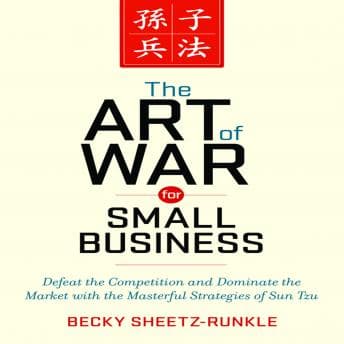
Look, I'll be honest - I grabbed this one because I was three weeks into a particularly brutal sprint at work where our scrappy team was getting absolutely steamrolled by a competitor with 10x our resources. I needed some strategic inspiration, and "ancient Chinese military strategy applied to small business" felt like exactly the kind of thing that would either be brilliant or hilariously bad.
It's... somewhere in the middle? But leaning toward useful.
The Actual Tactical Value
Here's what Becky Sheetz-Runkle gets right: she doesn't just slap Sun Tzu quotes onto generic business advice and call it a day. The book actually does the work of translating concepts like "go where the enemy is not" into practical small business strategy. There's a whole section on finding market gaps that bigger companies are too slow or too arrogant to fill, and as someone who's watched enterprise software companies completely whiff on obvious user needs, this hit home.
The examples are a mixed bag though. Some are genuinely useful case studies - small companies that outmaneuvered giants through smart positioning. Others feel like they were thrown in because the editor said "needs more examples" and the author grabbed whatever was closest. One reviewer I saw online nailed it: the anecdotes sometimes feel haphazardly placed. I'd be following a strategic concept and then suddenly we're talking about some company I've never heard of, and by the time we get back to the main point, I've lost the thread.
At 4 hours 56 minutes, the ROI on this audiobook is decent. You could knock it out in a week of commutes, maybe less if you're doing the 1.75x thing (which I did for chunks of this - business books that could've been blog posts, you know the drill).
The Narrator Situation (Ugh)
Okay, so Karen Saltus. I need to talk about this because the listener reviews are WILDLY split and I kind of get both sides.
She has a strong, clear voice. The dramatic delivery actually works for material that's literally about warfare strategy - you want someone who takes it seriously, not someone who sounds like they're reading a grocery list. When she's hitting her stride, her interpretation of complex strategic concepts is genuinely good.
BUT. And this is a big but.
The breathing. I didn't notice it at first, but once I did, I couldn't un-hear it. Sharp intakes of breath between sentences. It's not constant, but it's frequent enough that on a 6AM train when you're already irritated at the world, it can grate. One reviewer said she "ruins any audiobook" which feels harsh, but another said she has "the best pipes in the business" and honestly? Both takes are defensible depending on your sensitivity to this stuff.
I'd say if you're the type who notices mouth sounds in podcasts and it drives you crazy, maybe sample this first. If you can tune that stuff out, you'll be fine.
Who This Is (and Isn't) For
Perfect for: founders, small team leads, anyone competing against bigger players who needs to think strategically about positioning rather than just working harder. Also solid for your gym sessions - the concepts are chunky enough that you won't lose the plot between sets.
Skip if: you want deep work material (it's not that kind of book), or if you need super polished narration. Also maybe skip if you've already read a bunch of Sun Tzu business adaptations - there's only so many ways to say "know your enemy."
Deploy or Delete?
The author clearly knows her stuff - she's a martial artist and strategic marketer, which is a combo that makes this feel less like armchair philosophy and more like practical application. I'd be curious to check out her Sun Tzu for Women book, actually.
Would I listen again? Probably not cover to cover, but I've already recommended it to a friend who's launching a SaaS product against some entrenched competitors. Sometimes you need the reminder that being small isn't a weakness - it's a different kind of weapon. David and Goliath explores that same underdog advantage from a completely different angle, and pairs well with this one if you're building the mental toolkit for competing against giants. This book makes that case pretty well, breathing sounds and all.