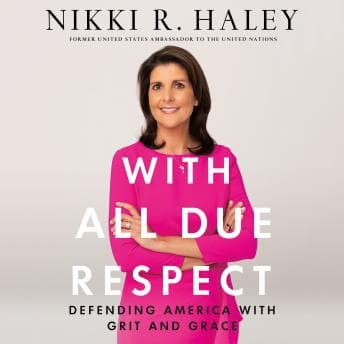
What makes a politician's memoir worth your time when half the country already decided they love or hate the author before page one?
I was driving back from a client site in Houston—four hours of Texas highway with nothing but cattle and wind turbines—when I started this one. Figured I'd give Ambassador Haley a fair shake. I've worked with enough State Department folks and foreign service officers to know the UN gig is no cakewalk, regardless of which party sends you there.
The Charleston Chapters Hit Different
Let me cut to the chase: the strongest material in this book isn't about diplomacy. It's about the 2015 Charleston church shooting and Haley's response as Governor of South Carolina. When she describes the aftermath—the families, the Confederate flag debate, the impossible decisions—you can hear something change in her voice. The polish drops. She's not reading talking points. She's reliving it.
I've been in rooms where impossible calls get made. Where you know whatever you decide, someone's going to hate you for it. That same moral weight—watching people make choices under impossible pressure—runs through Ordinary Men, though in far darker circumstances. Haley captures that weight. The flag coming down wasn't just politics for her—it was a governor trying to lead a state through genuine trauma. Whether you agree with her politics or not, that section earns respect.
The UN Tenure: Selective Briefing
Here's where it gets complicated. The diplomatic material reads like a carefully edited after-action report. Haley walks you through Syria, North Korea, Russia—the greatest hits of her UN tenure. She's direct about her positions, doesn't shy away from conflict with other administration officials, and that famous "I don't get confused" moment gets proper context.
But—and this is a significant but—it's clearly her version of events. She's building a narrative. I've read enough military memoirs to recognize when someone's writing for history rather than writing history. Every confrontation she describes, she comes out looking principled. Every disagreement, she was right. That's not how diplomacy actually works. 48 Laws of Power would call this Law 25: re-create yourself, control the narrative—and Haley's doing exactly that here. Nobody bats a thousand.
Some critics called her previous book more balanced. This one feels like it was written with one eye on future campaigns. (Which, given her 2024 run, wasn't exactly subtle.)
Author-Narrated: The Double-Edged Sword
Haley reads her own book, and this creates an interesting dynamic. On one hand, you get the authentic cadence of someone who lived these events. Her South Carolina accent comes through naturally, and when she's genuinely passionate—like those Charleston chapters—you believe her.
On the other hand, politicians are professional communicators. They know how to modulate their voice for effect. Sometimes I couldn't tell if I was hearing genuine emotion or practiced delivery. That's not a criticism of her narration skills—she's solid, clear, professional. It's just... you're always aware you're listening to someone who's very good at being listened to.
No production issues. Clean audio throughout. At 8 and a half hours, it's a reasonable commitment for a political memoir.
Who Gets Value Here (And Who Doesn't)
If you're already a Haley supporter, you'll find plenty to reinforce your view. If you're looking for a genuine behind-the-scenes look at Trump administration foreign policy, you'll get her perspective—emphasis on "her." Skip this if you want balanced analysis of the UN during this period; you'll need to supplement with other sources.
The book works best for people interested in how a governor handles crisis leadership and how an ambassador navigates the snake pit of international diplomacy. Just go in knowing you're getting one side of every story.
Ranger slept through most of the policy discussions but perked up during the Charleston material. Dogs know when something's real.
Mission Debrief
Worth your time? Conditionally. The Charleston chapters alone justify the listen—that's leadership under fire, documented by someone who was there. The UN material is interesting but filtered through obvious political ambition. Haley's a capable narrator of her own story, which is both the strength and the limitation here.
If you're looking for a political memoir that doesn't pretend to be objective, this delivers. Just don't mistake it for the complete picture. In my experience, the complete picture never fits in one book anyway.






![Steve Jobs [unabridged audiobook] audiobook cover](/_next/image?url=https%3A%2F%2Fcovers.audiobooks.com%2Fimages%2Fcovers%2Ffull%2F9788499923406.jpg&w=1920&q=75)