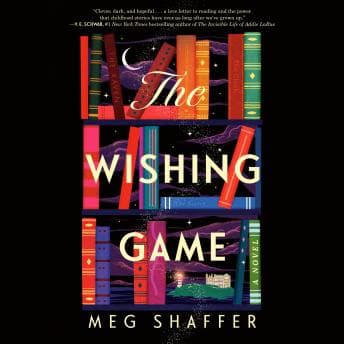

Denise picked this one. I want to be upfront about that. She's been on a streak of what she calls 'cozy competition books' and I've been along for the ride, which is how I ended up listening to The Wishing Game on a Saturday afternoon walk along the lakefront while she read the physical copy at home. The irony of us consuming the same book through different formats while apart is the kind of thing I'd normally turn into a podcast episode. I didn't. I just walked and listened.
And I'm glad I did.
What Shaffer Is Actually Doing Here
Let me be honest about what kind of book this is, because I think some readers come in with the wrong expectations and then blame the novel for their disappointment. This isn't Willy Wonka with the serial numbers filed off, even though the structural DNA is obvious. What Shaffer is doing - and she does it with real intention - is writing about what childhood books do to us. Not nostalgia in the soft-focus, greeting-card sense. The actual psychological grip of it. Lucy Hart carries the Clock Island books the way some of my students carry certain novels - as survival equipment, not entertainment. That's the engine of this story, and it's a legitimate one.
The contest itself, four competitors on a real island with a reclusive author pulling strings, is the vehicle. The destination is a question about whether the stories that saved you when you were small can still save you when you're grown. My students would probably roll their eyes at the premise. I found it quietly devastating in spots, particularly in how Lucy's relationship with seven-year-old Christopher mirrors her own childhood hunger for a story that felt like it was written specifically for her.
The interjected chapters from the fictional Clock Island series - read by Paul Boehmer in a different register, slower and more deliberate, like he's reading aloud to a child - are genuinely clever structurally. They function the way epigraphs do in serious literary fiction. Each one reframes what you just heard. The narrator understands that pause is punctuation, and Boehmer earns his keep in those moments.
Two Narrators, One Uneven Split
Here's where I have to be straight with you. The dual narration is doing two very different things at two very different levels.
Paul Boehmer is excellent. His Cockney accent for Hugo - the grumpy illustrator who is, let's be honest, obviously going to be a love interest from page one - creates an immediate class and personality texture. Some listeners apparently found it veering toward pirate territory. I didn't. I thought it gave Hugo an edge that kept him from being a pure romantic trope. Boehmer's Clock Island chapter interjections are the audio highlight of the whole production. Sober, warm, and just slightly formal in a way that signals 'this is a book inside the book.' Smart interpretive choice.
Rachel L. Jacobs is harder to assess. She's doing the heavy lifting - Lucy is on every page - and her emotional instincts are mostly right. The scenes between Lucy and Christopher land. But there's a flatness in her delivery during the expository passages that I kept noticing, a kind of recitation quality that would disappear during emotional beats and then return. And her attempt at a British accent for certain characters is - I'll be charitable and say it's effortful. Less charitably: it's the kind of accent that makes you suddenly very aware you're listening to an audiobook. The prose deserves to be savored, and a few of those scenes got away from her.
So: one narrator who elevates the material, one who is adequate with occasional stumbles. That's the honest accounting.
Who Should Actually Listen to This
If you grew up with a book that felt like it was written specifically for your loneliness - a specific book, not books in general - this will hit differently than it would for someone who just liked reading. That's the reader Shaffer wrote for, and that's the listener who'll forgive the predictable plot beats and the slightly too-tidy ending.
If you need narrative unpredictability, this isn't your book. The contest structure is more scaffold than surprise. I knew where most of it was going by hour three. But I kept listening, which tells you something.
At 10 hours and 38 minutes, it's a single-weekend commitment. I finished mine in two lakefront walks and one late grading session where I definitely should've been writing comments on student essays about The Great Gatsby. Fitzgerald's own short fiction, which I covered in our Selected Short Stories episode, does something similar with that tension between longing and disillusionment - though with considerably less whimsy. Worth pausing the faculty meeting for - but maybe not worth a full credit if you're on the fence. Stream it first.