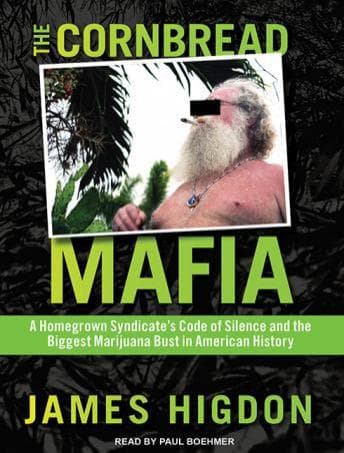

What happens when a bunch of Kentucky farmers with moonshine in their blood decide to become the biggest marijuana operation in American history? You get one of the most fascinating true crime stories I've stumbled across in years.
I picked this one up for a long drive to San Antonio - client meeting about perimeter security, nothing exciting - and I'll be honest, I wasn't expecting much. Drug stories usually bore me. But James Higdon's Cornbread Mafia? This one grabbed me the way Strange Case of Jekyll and Hyde did - dual identities, men living by their own codes outside the law. This is operational planning at a level that would impress any military strategist. These weren't some stoners growing weed in their basement. This was a coordinated syndicate that moved two hundred tons of product across ten states without a single member breaking the code of silence.
Zero. Talked.
Let that sink in. Seventy people arrested, and not one of them flipped. I've seen hardened soldiers crack under less pressure.
The Intel Report
Higdon did his homework - and I mean really did it. The guy got subpoenaed by the Obama administration because of his relationship with Johnny Boone, who's still a federal fugitive. That's not a journalist playing pretend. That's a reporter who got close enough to the fire to get burned.
The book goes deep into the 1970s and '80s, covering the clash between federal task forces and local law enforcement. Here's where it gets interesting from a tactical standpoint - these Kentucky farmers weren't just lucky. They understood terrain, they understood operational security, and they understood that the feds were fighting a war on multiple fronts while they only had to defend one.
Fair warning: the first couple hours are heavy on historical context. Higdon traces the moonshine traditions, the Vietnam veterans who came home with nothing, the economic desperation that made growing pot look like a reasonable career choice. Some listeners complained about the pacing here, and I get it. But for me? That's the mission brief. You can't understand the operation without understanding why these men did what they did.
Paul Boehmer Behind the Mic
I'd never heard of Paul Boehmer before this, but the man knows what he's doing. He's got an Audie Award to his name, and you can hear why. His delivery is clean, professional, and he's got this way of handling the humor in the story that caught me off guard. There's a scene where these guys steal GE products to donate to a hospital - Robin Hood stuff, basically - and Boehmer's timing on the delivery actually made me laugh out loud. Ranger looked at me like I'd lost my mind.
The character voices work well enough. Nothing over the top, but distinct enough that you can track who's who during the more complex sequences. Where Boehmer really shines is in the serious moments - the violence, the arrests, the moments when the code of silence is tested. He doesn't oversell it. Just delivers it straight, which is exactly what this material needs.
I did bump it up to 1.25x after the first hour. The historical sections drag a bit at normal speed, but once you hit the main narrative - the 1987 grow operation and everything that followed - the pacing finds its rhythm.
The Tactical Assessment
Here's what surprised me most: the heart in this story. These weren't just criminals. They were Vietnam vets who felt abandoned by their country. Farmers watching their way of life disappear. Men who built a twisted version of the American Dream because the legitimate one wasn't available to them.
The violence is real - Higdon doesn't sugarcoat it - but so is the altruism. These guys funded hospitals, helped neighbors, lived by a code that would've made sense in any military unit I ever commanded. Wrong side of the law? Absolutely. But there's something almost admirable about the discipline.
Higdon's journalism background shows in how he handles the federal side too. He's not writing a love letter to drug dealers. He's documenting a war between two groups who both thought they were right. That balance is what elevates this above typical true crime sensationalism.
Who's This Mission For?
If you've got patience for the setup, this is worth every minute of those fourteen hours. Best for long drives or any situation where you've got time to let a story unfold. Skip it if you need constant action or if drug content isn't your thing.
Mission Debrief
Ranger approved this one. Mission accomplished.