
How many Americans can name an actual armed coup that overthrew a democratically elected government on U.S. soil? Not a metaphorical one. Not a protest that got out of hand. A coordinated, premeditated military assault by over two thousand armed men who marched into a city, murdered black citizens in the streets, forced elected officials to resign at gunpoint, and installed their own people in power - and then got away with it for over a century?
I couldn't. Twenty-five years in the Army, three combat deployments, a degree in military history, and I'd never heard of the Wilmington coup of 1898 until this book showed up in my recommendations. That alone should tell you something.
The Operation They Erased From the History Books
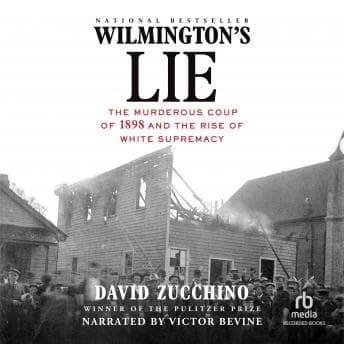
David Zucchino lays this out with the precision of an after-action report, and honestly, it reads like one. The white supremacist Democrats in North Carolina didn't just stumble into violence - they ran a sophisticated information operation first. Josephus Daniels, publisher of the Raleigh News & Observer, was essentially running a propaganda campaign that would look familiar to anyone who's studied modern psyops. Fabricated stories, inflammatory cartoons, coordinated messaging across the state. I've seen this scenario play out in real life in other countries, but reading about it happening in North Carolina in the 1890s hit different. Ordinary Men gave me the same sick recognition - the machinery of atrocity running not on monsters but on lawyers and businessmen and neighbors who'd decided a certain group of people simply didn't count.
The author clearly did their homework. Zucchino builds his case from primary sources - letters, diaries, official correspondence, newspaper accounts from both sides. He traces how Wilmington went from being a genuinely functional multiracial city with black aldermen, black police officers, a thriving African American middle class, and a black-owned newspaper, to a smoking ruin in the space of forty-eight hours. And the thing that kept gnawing at me during the eleven-plus hours of listening: the men who did this weren't fringe radicals. They were the "prominent citizens." Former Confederate officers like Alfred Moore Waddell leading mobs. Businessmen. Lawyers. The respectable class.
The parallels to counterinsurgency - except inverted, where the insurgents ARE the establishment - are unsettling.
Victor Bevine and the Problem of a Soothing Voice Describing Atrocities
Let me cut to the chase on the narration. Victor Bevine has a warm, steady voice with a low rumble that's well-suited to serious nonfiction. His delivery is clean and unfussy, no unnecessary dramatics, which I appreciate - the material is dramatic enough without a narrator chewing the scenery. He handles the escalating horror of the narrative with real weight.
But here's the thing. That same comforting quality almost worked against me. I was driving back from a client meeting in San Antonio one evening, sun going down on I-35, and I caught myself zoning out during a passage about the Red Shirts terrorizing black neighborhoods. Not because it wasn't powerful material - because Bevine's voice is so steady and warm that my brain occasionally processed it like background noise instead of the gut punch it should've been. I had to crank it to 1.25x just to stay locked in. That helped. The slightly faster pace matched the urgency the content demanded.
He's good. He's a pro. But I'd have traded some of that smoothness for a little more edge when the text called for it - when you're describing sixty men being shot dead in the streets, I want to hear something break in the delivery.
Who Needs to Hear This
Anyone who thinks they understand American history. I'm serious. If you've never heard of the Wilmington coup - and statistically, you haven't - this is essential. It's not comfortable listening. There are passages about families hiding in swamps with children, prominent black citizens being marched to the train station at gunpoint and banished from their own city, that are genuinely hard to take. Content warnings for racial violence are warranted and then some.
This is where it lost me slightly: Zucchino occasionally gets deep into the weeds of North Carolina Fusionist politics - the alliance between Populists and Republicans, the internal maneuvering - and at eleven and a half hours, there are stretches in the middle that feel like they're building the same point a third time. It's thorough to a fault. But that's a minor complaint against the weight of what's being documented here.
If you want action-packed military thrillers, this isn't that. If you want to understand how political violence actually works in America - the planning, the propaganda, the execution, and the cover-up that lasted a hundred years - this is the real thing. Pulitzer Prize for General Nonfiction in 2021, and it earned it.
Ranger sat through the whole drive with me. He didn't flinch, but I did. More than once.
Mission Debrief
Worth your time? Here's the debrief: Zucchino wrote the definitive account of an American atrocity that was deliberately buried and rebranded as a "race riot" for over a century. Bevine's narration is professional if occasionally too comfortable for the subject matter. This won a Pulitzer for a reason - it fills a gap in the historical record that shouldn't exist. The fact that it does is part of the story.







![Steve Jobs [unabridged audiobook] audiobook cover](/_next/image?url=https%3A%2F%2Fcovers.audiobooks.com%2Fimages%2Fcovers%2Ffull%2F9788499923406.jpg&w=1920&q=75)