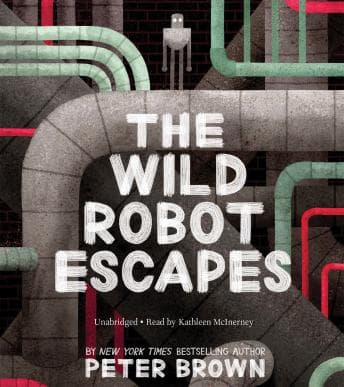
"I am Roz. I am a robot. And I am going home."
That's the line that got me. Somewhere around the two-hour mark, in the dark of my apartment at midnight (because yes, I listen to kids' books in the dark too - Shirley the cat judges me regardless), I realized Peter Brown had done something sneaky. He'd written a horror novel disguised as a children's adventure story.
Okay, dramatic? Maybe. But hear me out.
The Existential Dread of Being Seen
The Wild Robot Escapes is, on the surface, about a robot named Roz trying to get back to her island, back to her adopted goose son Brightbill. Sweet, right? Heartwarming adventure about nature versus technology, found family, all that good stuff. And it IS that. But underneath? This book is about being hunted. About being seen as property. About having your personhood denied because you don't fit the definition of "alive."
Roz spends this entire book running from people who want to dismantle her, reprogram her, erase everything she's become. And Brown never lets you forget the stakes. Every farm she hides on, every kind human who helps her - there's always the shadow of RECO, the corporation that made her, lurking. They want their property back.
As someone who grew up being told my identity was wrong, that I needed to be "fixed" - yeah, this hit different than I expected from a middle-grade audiobook. Shirley Jackson walked so Peter Brown could run, and I'm only half joking.
Kathleen McInerney Gets It
Here's the thing about narrating a robot protagonist: you can go full monotone and boring, or you can find the soul underneath the circuitry. McInerney does the latter. Her Roz is warm but measured, curious but careful. There's this quality to her performance - almost like Roz is constantly observing, processing, deciding how to respond. It's subtle work.
The animal voices are charming without being cartoonish. The human characters feel distinct. McInerney's ability to find emotional truth in unusual protagonists reminds me of the narrator work in Lock and Key: The Gadwall Incident, where character voice makes or breaks the mystery. But it's Roz who carries this, and McInerney never lets her become either too robotic or too human. She exists in that uncanny space between, which is exactly where the story needs her.
Now, I've seen some reviews complaining about slow pacing. And look - at 4.5 hours, this is a quick listen, so "slow" is relative. But I get it. Brown's prose is deliberate. Quiet. There are stretches where Roz is just... surviving. Working on a farm. Learning about tractors. If you need constant action, you might zone out.
I didn't. But I'm also the person who thinks slow-burn dread is superior to jump scares, so take that with a grain of salt.
When Horror Wears a Gentle Face
What makes this work as horror - and I'm claiming it, fight me - is that the threat is systemic. It's not a monster. It's a corporation. It's humans who genuinely believe they're doing the right thing by "recovering" Roz. The scariest villain in this book is someone who smiles while explaining that Roz doesn't have feelings, so dismantling her isn't cruel.
My podcast listeners are going to love this take. I can already hear the emails.
Brown also does this beautiful thing where the natural world and the technological world aren't enemies. Roz isn't trying to become "natural" or reject her robot nature. She's trying to integrate. To belong. The farms she passes through, the animals she meets - they're not opposing forces. They're just... different ways of being alive.
It's hopeful horror, if that makes sense. The dread is real, but so is the possibility of connection.
Who Should Listen (And Who Should Skip)
If you have kids who love animals and adventure, this is a no-brainer. It's genuinely sweet, the stakes are clear, and at 4.5 hours it won't overstay its welcome on a road trip. But honestly? This works for adults too - especially if you're the kind of person who finds meaning in stories about outsiders finding their place. If you've ever felt like you had to escape somewhere - or someone - to become yourself.
Skip if you need gore or explicit scares. This isn't that kind of horror. This understands that horror isn't about gore - it's about dread. About the slow realization that the world wasn't built for you.
I listened to this expecting a palate cleanser between darker listens. Instead I got an existential meditation on personhood wrapped in a children's adventure. Shirley (the cat) was unimpressed. I was unexpectedly moved.
Finally, kids' lit that respects the genre - even if it doesn't know it's in one.