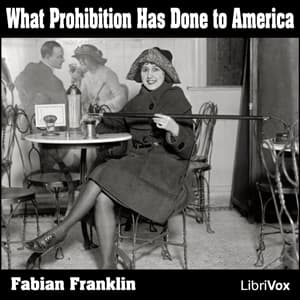

When's the last time you read something written in 1922 that made you feel like the author was staring directly at 2024?
I was up late - past midnight, actually - half-heartedly scrolling through a stack of sophomore essays on The Great Gatsby when I figured I'd put something on that connected to the Prohibition context I'd been hammering into my students' heads all week. Two hours and twenty-two minutes later, the essays were still ungraded, and I was sitting there genuinely unsettled by how much Fabian Franklin got right.
A Mathematician Who Wrote Like a Trial Lawyer
Here's what caught me off guard: Franklin wasn't a political firebrand or a journalist chasing a scoop. He was a Hungarian-born mathematician who'd taught at Johns Hopkins before pivoting to newspaper editing at the Baltimore News and the New York Evening Post. And yet this slim volume reads like a closing argument delivered by someone who's watched the jury fall asleep and decided to wake them up with a slap. His central thesis - that the Eighteenth Amendment isn't just bad policy but a "crime against the first principles of rational government" - hits with the force of someone who understands logical proof. He builds his case with a mathematician's precision, stacking evidence and precedent until the conclusion feels inevitable.
What's remarkable is the timing. This was written only two years into Prohibition. Two years. And Franklin is already predicting bootlegging empires, the erosion of respect for law, the creation of an entire criminal infrastructure that wouldn't have existed without government overreach. He didn't need to wait for Al Capone to prove his point. He saw the structural logic of failure baked into the amendment itself.
This reminds me of what Hemingway said about the first draft of anything being garbage - except Franklin seems to have gotten it right on the first pass, writing in real time about a catastrophe still unfolding. That kind of creative precision under pressure - getting it right the first time, in the moment - is something I've been thinking about a lot lately after spending time with How to Write One Song, which makes a surprisingly similar case about the discipline of committing fully to a single idea.
The LibriVox Question (Let's Be Honest)
So here's the thing about LibriVox volunteer productions: they're free, they're a public service, and they vary wildly. This recording features volunteer readers, and the production is exactly what you'd expect - clean enough, no music or sound effects, no full-cast dramatization. It's someone reading a text aloud with sincerity. The narrator understands that pause is punctuation - mostly - though the delivery is more "earnest volunteer" than "trained performer." There's no dynamic range you'd get from, say, a Simon Vance or a Grover Gardner tackling political nonfiction.
But here's my confession: for a text this short and this argument-driven, the bare-bones production almost works in its favor. Franklin's prose doesn't need theatrical interpretation. It needs clarity. And clarity is what you get. The prose deserves to be savored, and at 1.0x speed, each of Franklin's logical pivots lands with enough weight to process.
That said - if you're someone who needs vocal dynamism to stay engaged, this recording will test you. The energy stays at one register. For a two-hour-and-change listen, that's manageable. For anything longer, I'd have struggled.
Why My Students Would Hate This (And Why I'm Assigning It Anyway)
My students would hate this. I love it. Not because it's about alcohol - though that would certainly get their attention - but because it's one of the cleanest examples I've ever encountered of someone making a constitutional argument that's simultaneously passionate and rigorously logical. Franklin doesn't just say Prohibition is wrong; he distinguishes between the government's legitimate power to regulate and its illegitimate power to dictate personal behavior. He draws a bright line between public safety and moral coercion.
And the thing that kept nagging at me, grading forgotten on the kitchen table, Denise already asleep - Franklin's framework applies to basically every debate we're still having about government overreach, bodily autonomy, the limits of majority rule. Written in 1922. The specifics are dated; the principles are evergreen. If you loved reading about the tension between individual liberty and collective morality in Mill's On Liberty, this is its spiritual successor - shorter, angrier, and aimed at a specific target.
Let's talk about what the author is really saying: it's not just "Prohibition is bad." It's that the method of Prohibition - amending the Constitution to impose a moral preference - is a corruption of what constitutions are supposed to do. That argument hit me harder than I expected at 12:47 AM on a Tuesday.
Worth Two Hours of Your Life, But Maybe Not a Credit
At two hours and twenty-two minutes, this is barely longer than a faculty meeting. (Worth pausing the faculty meeting for, though - sorry, Principal Martinez.) It's free through LibriVox, which is really the right way to access it. The production won't blow you away, but Franklin's prescience will. Assign it to your AP Government teacher friends. Or just listen to it yourself the next time you need a reminder that smart people have always been shouting into the void about obvious problems while everyone else pretends not to hear.