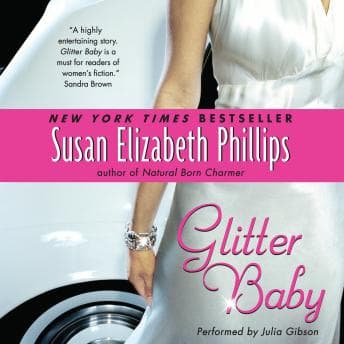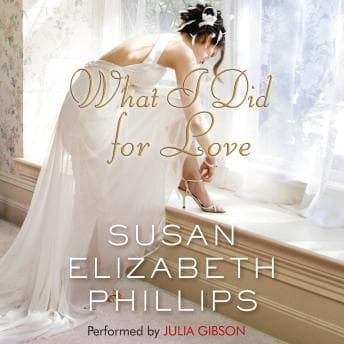

Susan Elizabeth Phillips has been called the Queen of Romantic Comedy for a reason, and What I Did for Love reminded me exactly why that title stuck.
Look, I'll be honest - I came to this book sideways. My wife Denise grabbed it for a road trip down to Springfield, and I was fully prepared to zone out and think about my lesson plans for Gatsby. But somewhere around hour three, I realized I hadn't thought about Nick Carraway once. Phillips had me.
The Hollywood Satire That Actually Works
Here's the thing about celebrity culture satire - it usually ages like milk left in the faculty lounge fridge. But Phillips does something clever here. She's clearly riffing on the whole Aniston-Pitt-Jolie mess (this came out in 2009, for context), but she builds characters that transcend the gossip rag inspiration. Georgie York and Bramwell Shepard are messy, wounded people pretending to have it together for the cameras. That's not just Hollywood. That's every faculty meeting I've ever sat through.
The setup is deliciously absurd - two former co-stars from a beloved sitcom, both with careers in freefall, drunkenly marry each other in Vegas as a publicity stunt. It sounds like the premise of a bad rom-com you'd flip past on cable. But Phillips understands something fundamental about romantic comedy that most writers forget: the comedy has to hurt a little. These characters are genuinely struggling. Georgie's dealing with her ex-husband's very public affair and subsequent marriage to her former friend. Bram's reputation is in tatters. They're not just charming people having charming problems.
This reminds me of what Austen does in Pride and Prejudice, actually. (Yes, I'm comparing a 2009 beach read to Austen. My students would hate this. I love it.) The wit serves the emotional truth. That same sharp wit cutting through social pretense shows up in Julius Caesar, though Shakespeare's stakes are considerably higher than a Vegas wedding. Phillips writes dialogue that crackles, but underneath all that banter, there's real vulnerability.
Julia Gibson Behind the Mic
Now, about the narration. Julia Gibson is... interesting. And I mean that in a genuinely conflicted way.
She's technically proficient. Her character voices are distinct - you always know who's talking, which matters in a book with this many secondary characters. Her pacing is steady. She handles the comedic timing reasonably well.
But here's my issue: Phillips writes with such emotional warmth that I wanted more heat from the performance. Gibson reads clearly, but sometimes clarity isn't enough. There were moments - particularly in the slower romantic scenes - where I wanted her to lean into the vulnerability more. The growing attraction between Georgie and Bram is supposed to simmer. Gibson keeps it at a low boil when it should be threatening to overflow.
I couldn't find much about Gibson's background online, but based on this performance, she seems more comfortable with the comedy than the romance. Which is fine. It's a romantic comedy. But the romance is what makes the comedy land.
Also - and this is petty but I'm saying it anyway - there's apparently music inserted at the beginning and end of each hour in some versions. I didn't notice it much, but Denise found it distracting. Your mileage may vary.
Thirteen Hours of Slow Burn
At thirteen and a half hours, this is a commitment. Phillips takes her time building the relationship, which I appreciate. But I'll admit there are stretches in the middle where the paparazzi subplot starts to feel repetitive. Yes, we get it - fame is a prison. Move along.
The secondary characters are a mixed bag. Some are delightful. Some feel like they wandered in from a different, broader comedy. The book juggles a lot of tonal balls, and occasionally one drops.
But when Phillips hits? She hits. There's a scene late in the book - I won't spoil it - that genuinely moved me. Denise looked over and asked if I was okay. I was grading papers. (I wasn't. I was completely absorbed in fictional people's problems.)
Your Required Reading List
If you loved Phillips' other work, this delivers exactly what you're expecting. If you're new to her, this isn't a bad entry point, though I've heard Chicago Stars is the fan favorite.
Skip if: flat narration drives you crazy, you have zero patience for celebrity culture (even satirized), or you need your romance without any heavier themes. There's some stuff here about alcoholism and miscarriage that's handled thoughtfully but might catch you off guard if you're expecting pure fluff.
I listened at 1.0x because the author chose those words - and Phillips chose good ones. Gibson's measured pace actually works better without speeding up. Let the wit breathe.
Class Dismissed
It's not Middlemarch. But honestly? Sometimes you don't need Middlemarch. Sometimes you need two beautiful disasters falling in love in a crumbling mansion while the tabloids circle like vultures. Phillips understands that need. She delivers.