
"Pay yourself first." That's it. That's basically the whole book. And honestly? I'm not even mad about it.
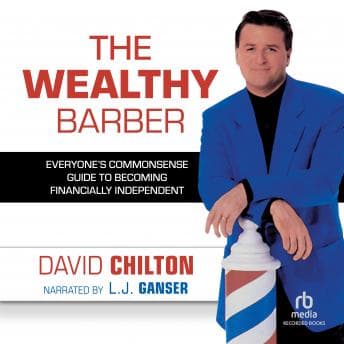
Look, I went into The Wealthy Barber expecting another one of those business books that could've been a blog post. You know the type—200 pages of padding around one decent idea that the author stretches into a "system." And yeah, at 7 hours, this definitely has some padding. But here's the thing: the padding is actually... kind of charming?
The Barber Shop Gambit
So the whole book is framed as conversations in a barber shop. Roy the barber dispenses financial wisdom while giving haircuts to a group of young professionals. It's a gimmick. A very 1989 gimmick. And I can see why some listeners find it "excruciating" (actual word I saw in reviews). The humor is dad-joke level. The characters are basically cardboard cutouts who exist to ask convenient questions.
But here's my hot take: it works for audio. Way better than print, actually. Because L.J. Ganser—who's narrated like 600+ audiobooks and has multiple Audie Awards—turns what could be painful into something genuinely listenable. He gives each character just enough differentiation that you can follow who's talking, and his delivery on Chilton's jokes lands better than it has any right to. The man is a professional, and it shows.
I finished this in about 4 commutes, and not once did I zone out during the dialogue sections. That's saying something for a personal finance book.
The Actual Financial Advice
Okay, let's talk substance. The core message is brutally simple:
- Save 10% of everything you earn. Automatically. Before you see it.
- Invest it in boring stuff (index funds, basically, though Chilton doesn't use that exact term).
- Wait decades.
- Become wealthy. Slowly.
That's... that's really it. The rest is variations on this theme—how to handle insurance, mortgages, RRSPs (it's a Canadian book, so there's some Canada-specific tax stuff that won't apply to US listeners). The advice is solid but not revolutionary. If you've read literally any personal finance content in the last decade, you've heard most of this before.
But here's why I'm still giving this a decent rating: sometimes you need to hear the basics delivered with warmth and humor rather than the aggressive "FIRE movement" energy that dominates the space now. Chilton isn't trying to optimize you into early retirement. He's just saying hey, maybe don't be broke when you're 65? The bar is low, but he clears it with style.
Who Should Queue This Up (And Who Should Skip)
Perfect for: Your 22-year-old cousin who just got their first real job and has never thought about money. Your friend who keeps saying they'll "figure out retirement eventually." Anyone who needs the basics delivered without condescension.
Skip if: You've already read The Simple Path to Wealth, or I Will Teach You to Be Rich, or basically any modern personal finance book. Even Stillness is the Key covers more ground on building sustainable habits than this does. The ROI on this audiobook is low if you've already internalized the core concepts. Also skip if extended fictional conversations make you want to throw your phone out the train window.
The Canadian angle is worth mentioning—there's a lot of RRSP talk that's not directly applicable if you're in the US, though the principles translate. I just mentally swapped in "401k" and moved on.
Why Audio Beats Print Here
Ganser's performance is the reason to go audio over print. His pacing is solid—conversational without dragging—and he makes the barber shop framing device feel less like a gimmick and more like you're eavesdropping on a genuinely pleasant conversation. Is it Ray Porter? No. But it's warm and professional and exactly what this material needs.
I listened at 1.5x and it held up fine. Could probably push to 1.75x if you're in a hurry—the content isn't dense enough to require slower processing.
One Listen, Then Archive
Would I listen again? Nope. Once is enough. The advice sticks after one pass, and there's no narrative complexity that rewards revisiting. But I don't regret the commute time I spent on it. It's comfort food for your financial anxiety—nothing fancy, but it does the job.
If you're already saving 10%+ and have your financial house in order, this is a skip. But if you've been meaning to get your act together and need a gentle, non-judgmental nudge? The Wealthy Barber is a solid 7-hour investment. Just don't expect it to blow your mind.