
Okay, look. I have a rule. If you are a medical student in a thriller, you are legally required to have at least an ounce of common sense. Just a crumb. Is that too much to ask?
Apparently, for Amy Brenner, it is.
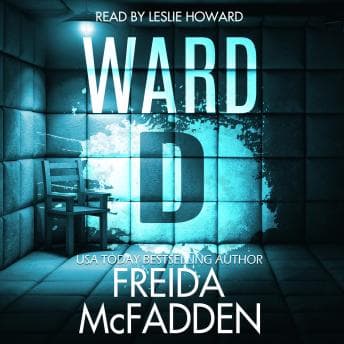
I listened to Ward D during my evening runs along the Charles River—which, by the way, is already spooky enough when the fog rolls in off the water—and I spent half the time wanting to reach through my earbuds and shake this girl. I mean, honestly. You're on a locked psychiatric ward overnight. People are disappearing. Maybe—just maybe—don't wander off alone into the dark basement because you heard a noise? My mother would say this is why I have high blood pressure. She's not wrong.
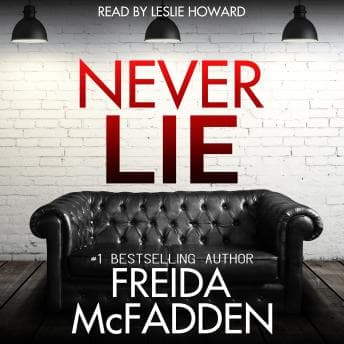
But here's the thing about Freida McFadden books: I can't stop listening to them. I complain, I roll my eyes, I analyze the wildly unethical doctor-patient boundaries... and I finish the whole thing in two days.
The Clinical Definition of Panic
Let's talk about the setting. As someone who spends a lot of time reading about how environments shape psychology, the locked ward trope is classic for a reason. It creates forced proximity. High stakes. Nowhere to run. McFadden is a physician, so the medical details usually have this nice layer of grime and reality that you don't get from authors who just watched Grey's Anatomy.
The atmosphere here? It's suffocating. In a good way. The paranoia ramps up fast, and psychologically, the premise is solid: isolate a character with her own trauma in a place that mirrors it. Fascinating setup for a character study on fear response.
Except Amy's fear response is to make the worst possible decision at every turn.
(Don't tell my students I said this, but sometimes "flight" is the correct response, Amy. Just run.)
It became this weird struggle for me. The academic side of my brain was screaming about the unrealistic behavior—no med student is this oblivious to protocol—but the thriller-junkie part of my brain, the part raised on Bollywood melodramas where logic goes to die, was eating it up. It's a train wreck. You have to watch.
When the Narrator Does Too Good a Job
Leslie Howard narrates this, and honestly? She might be part of the problem.
Wait, let me explain. She is technically excellent. Her pacing is snappy, her diction is clear, and she actually does believable male voices, which is a rare skill. A lot of female narrators drop into this weird, gravelly register that sounds like a cartoon villain, but Howard keeps it grounded.
But she nails Amy's anxiety too well.
Amy is terrified, whiny, and frantic for about 7 hours. Howard leans into that high-pitched, breathless panic. It's realistic—if I were trapped in a psych ward with a killer, I'd probably sound shrill too—but in an audiobook? It gets grating. There were moments around the 4-hour mark where I had to turn the volume down because the sheer intensity of the whining was spiking my cortisol.
She captures the spiral of paranoia perfectly. Maybe too perfectly. If you're sensitive to high-anxiety narrations, consider this your warning.
Who's Going to Love This (And Who Should Skip It)
If you want a deep, nuanced exploration of mental health, read a textbook. But if you want to yell at your phone while a fictional character runs toward the killer? This is the one. Skip it if shrill, panicked narration grates on you, or if protagonists making terrible decisions ruins your suspension of disbelief.
Cold Biryani at Midnight: My Verdict
So, where does that leave us?
Ward D is not a pinnacle of narrative psychology. The twist—and there is always a twist with McFadden—required a suspension of disbelief so massive I think I pulled a muscle. The character motivations don't track with actual human behavior patterns.
But did I turn it off? No.
I finished it while eating cold biryani standing up in my kitchen at midnight, completely stressed out. It's fast, it's messy, and it's entertaining in that "popcorn thriller" way. The literary equivalent of junk food—nutritionally void, but sometimes you just need the salt. Terminal List scratches that same itch—high-octane, zero pretense, pure adrenaline.