
I started this one on the subway after a 14-hour hospital shift, knees aching, mascara basically gone, and the train stalled between Canal and Spring long enough for me to hit the part where Tegan is stranded in that blizzard with a dead car, a broken ankle, and eight months of pregnancy making every bad decision feel ten times more dangerous. Wrong environment for calm breathing. I was already tired, and this book weaponizes that exact feeling - being vulnerable, stuck, and forced to trust people you absolutely would not have chosen.
When the rescue feels worse than the crash
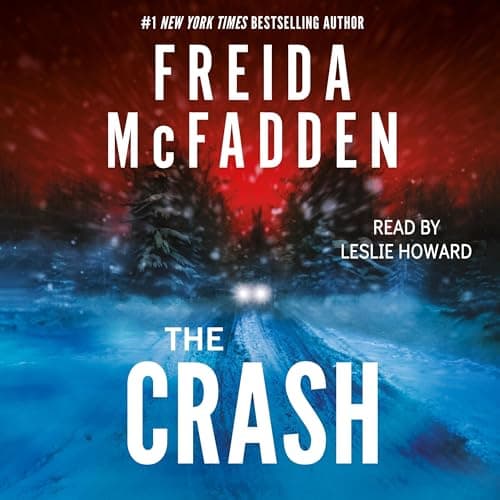
The setup is pure nightmare fuel: Tegan is trying to get to her brother, life already falling apart, then rural Maine and a snowstorm turn a bad plan into a survival situation. The moment she gets taken in by the couple at the cabin, the book starts doing what Freida McFadden does best - making "help" feel sinister. Not in a subtle literary-fiction way. In a "girl, absolutely not, do not eat that, do not stay there, why are you still in this house" way.
And yes, I yelled at my phone on the subway during this one.
What worked for me is how specific the threat feels. Tegan isn't just scared in the abstract. She's immobilized, isolated, heavily pregnant, and trapped in weather that cuts off every easy exit. As someone who's actually run a code, I get extra annoyed when thrillers use pregnancy like set dressing. Here, it matters mechanically. It changes what she can risk, how she moves, what pain means, how every minute gets weighted by the baby. That part lands.
The book also knows that snowbound thrillers need pressure, not just vibes. The cabin is supposed to be safety, but the longer Tegan stays there, the more that safe haven starts curdling. You can feel the walls get smaller. The suspense engine is basically: who is lying, how much are they lying, and how trapped is she really? It's very easy to keep listening because McFadden keeps dropping twists at regular enough intervals that your brain goes, fine, one more chapter.
But. There are stretches where Tegan's paranoia loops a little too long before the plot cashes it in. If you have low tolerance for repeated internal panic, you'll feel that drag. Some listeners got irritated with her, and I get why - though in fairness, if I had a broken ankle, no transport, and strangers controlling the environment while I was eight months pregnant, I too would be suspicious of literally the wallpaper.
Leslie Howard understood the assignment
Leslie Howard is a big reason this works in audio. Single narrator, no gimmicky production, no sound effects trying to do cheap horror for her. Just clean delivery and control.
She distinguishes Tegan and Polly clearly enough that you don't need verbal hand-holding, which matters because this story lives or dies on point-of-view tension. Tegan's voice has that tight, frayed edge of someone trying not to come apart, while Polly comes off differently enough that the dynamic shifts immediately. Not cartoonish. Just intentional. The narration keeps the suspicion alive without overselling it.
The emotional delivery is strong too. Howard knows when to tighten a line and when to let it breathe. In a thriller this pulpy, that balance matters. Go too dramatic and it gets silly. Go too flat and the whole snowed-in menace collapses. She mostly nails it.
My one caveat: the baby nickname "Tuna" made me wince every single time. Every. Single. Time. And if you're sensitive to baby-talk energy, there's a decent chance you'll have the same reaction some listeners did when the vocal choices leaned a bit much in that direction. It didn't ruin the audiobook for me, but it definitely made me pause and stare into middle distance like I had just heard an intern present a potassium of 7.1 like it was no big deal.
Still - the medical-adjacent vulnerability, the fear, the bodily discomfort, the desperation? Howard sells those beats. The performance is why I'd choose the audiobook over eyeballing the ebook.
Twists, but know what kind you're signing up for
This is not a quiet psychological study. This is a popcorn thriller with icy windows, bad instincts, and a plot that likes to yank the floorboards up every so often. If you come to Freida McFadden for elegant realism, you are at the wrong masjid, my friend. The closest thing I've read to this kind of sustained, icy dread in a completely different setting is From Potter's Field - different world, same feeling of a protagonist being systematically boxed in with nowhere clean to run. If you come for momentum, claustrophobia, and increasingly sketchy people in a remote cabin, you will probably have a good time.
What kept this from being a higher rating for me is that not every twist feels equally earned. A few landed with that delicious oh-no click. A few felt more manufactured - like the book knew it needed another shock point and went for it whether or not the emotional scaffolding was fully there. And compared to the Housemaid books, this didn't hit me quite as hard. Less sharp. Less addictive in that "accidentally listened to half the book while folding laundry and ignoring texts" way.
Still, nine hours is a solid length for this kind of thriller. It doesn't overstay by twenty extra reveals. The story gives you enough menace, enough reversal, and enough maternal survival instinct to keep the engine running. Between shifts and salah - this kept me going.
Also, small but important: no overproduced audio nonsense. Just clear sound, strong character separation, and the kind of pacing that benefits from 1.25x if you want the repetitive anxiety tightened up a bit.
So who gets this credit?
Pick this up if you want a tense, snowbound survival thriller where pregnancy isn't decorative and the audiobook performance does real lifting. Skip it if cutesy baby nicknames enrage you, or if you need every twist to feel airtight and every protagonist choice perfectly rational.
For me? Worth a credit, mostly because Leslie Howard keeps the whole icy contraption upright even when the plot edges toward "okay now you're doing a lot." Not McFadden's best. Definitely not her weakest. A very listenable bad-idea-in-a-blizzard book.