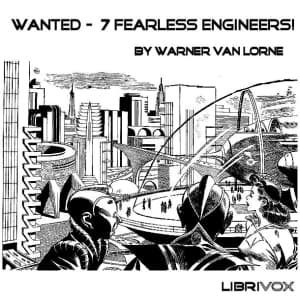

I was supposed to be outlining Chapter 3 of my thesis on procedural dungeon generation. Instead, I found myself falling down a LibriVox rabbit hole at 2 AM, and somehow ended up with this obscure 1930s pulp gem in my ears. Warner Van Lorne - a name I'd never encountered despite my embarrassingly extensive consumption of vintage sci-fi - apparently wrote this for the magazines back when engineers were the superheroes of speculative fiction.
And honestly? For about an hour and forty-five minutes, I was having a blast.
When Engineers Were Basically Paladins
There's something genuinely charming about pre-war science fiction's obsession with engineers as adventure heroes. Dick Barrow and his six fellow brave engineers aren't just fixing machines - they're literally asked "Are you a brave man?" before being sent into unknown territory to save a civilization. It's got that Lensman-era energy where technical competence equals moral virtue. Shine captures that same vintage optimism about humanity's ingenuity saving the day, though with better production values. My D&D group would absolutely eat this up for a one-shot campaign setting.
The premise is delightfully pulpy: seven engineers, a mysterious land, danger around every corner, and the fate of a great civilization hanging in the balance. At just over two hours, it doesn't overstay its welcome. The pacing clips along nicely - this isn't a slow-burn world-builder, it's a sprint. Van Lorne throws you into the action and trusts you to keep up. Pretty refreshing, actually.
Compared to other pulp-era sci-fi I've listened to (and I've consumed more than I should admit), this one sits comfortably in the middle tier. Revelations falls into a similar category for me—enjoyable enough, but not quite reaching the heights of the genre's best. It's no Barsoom, but it's got more personality than a lot of the forgotten magazine serials from that era. The world-building is sketched rather than painted - you get impressions of this strange land rather than Sanderson-level detail. For a two-hour listen, that's probably the right call.
The LibriVox Lottery
Here's the thing about LibriVox productions - they're free, they're volunteer-driven, and quality varies wildly chapter to chapter. This recording features Andrew Coleman, Cori Samuel, David Barnes, Lizzie Driver, and Philippa, and for most of the runtime, they deliver solid, clear readings of the text. Nothing fancy, no production value to speak of, but serviceable.
But then we get to that final chapter.
Look, I've listened to a lot of amateur audiobook productions. I've sat through mispronunciations, background noise, and narrators who clearly recorded in their bathroom. I can forgive a lot. But the last chapter of this recording features this weird, repetitive chanting quality where every sentence is delivered with the exact same cadence. Same rhythm. Same emphasis pattern. Over and over.
It's like if someone programmed a text-to-speech engine to have exactly one emotional setting and then cranked it up to eleven. By the end, I was genuinely annoyed - and I say this as someone who regularly endures my advisor's monotone during committee meetings. One listener nailed it: "This audiobook would deserve 5 stars if it weren't for the nuisance at the end." That's not hyperbole.
Worth Your Two Hours?
If you're into pulp-era science fiction - the kind where engineers are heroes and mysterious lands await exploration - this scratches that itch. It's free on LibriVox, it's short enough to knock out during a couple of coding sessions (or thesis procrastination sessions, hypothetically), and the story itself is genuinely fun.
But that ending. That ending is rough.
My recommendation: Listen at 1.25x speed, especially toward the end. It actually helps smooth out that repetitive delivery pattern in the final chapter. And maybe have something else queued up so you can switch over if the chanting gets too grating.
Who Should Listen (And Who Should Skip)
This is perfect for fans of vintage sci-fi who want something light and adventurous. Skip it if you're particular about narration quality or if you need polished production values. It's a free LibriVox recording - calibrate your expectations accordingly.
The Thesis Can Wait (It Always Does)
Three stars feels right. The story itself is a solid little pulp adventure that deserves to be remembered. The production is mostly fine until it very much isn't. If you're already a LibriVox regular, you know what you're getting into. If you're not, maybe start with one of their more consistently produced recordings.
Now if you'll excuse me, I need to pretend I'm going to work on Chapter 3. (I'm going to start The Stormlight Archive again instead. Oathbringer isn't going to re-listen to itself.)