
What happens when a child narrates her own horror story and doesn't quite realize it's a horror story?
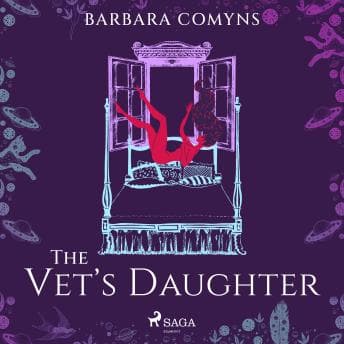
That's the question I kept turning over while listening to Barbara Comyns' The Vet's Daughter during a stretch of late-November walks along the lakefront with Denise. The wind was biting, the sky was that particular Chicago grey that feels personal, and Alice Rowlands was describing her father's cruelty with the same flat affect you'd use to talk about what you had for breakfast. It was the perfect mismatch — brutal content delivered with eerie calm — and it got under my skin in a way I wasn't expecting from a five-hour listen.
Alice Speaks Like a Child Who's Learned Not to Flinch
Let's talk about what Comyns is really doing with this voice. Alice doesn't dramatize. She doesn't editorialize. When her father — this hulking, red-faced vet who treats his daughter with roughly the same regard he shows the sick animals in his surgery — does something awful, Alice reports it like weather. It rained. Father hit the wall. There was mutton for dinner. That bluntness is the whole engine of the book. It's how Comyns smuggles genuine dread past your defenses. You're three chapters in before you realize you've been holding your breath.
Katherine Press gets this. Her narration captures that naive, matter-of-fact quality without ever tipping into parody. She doesn't perform Alice as simpleminded — she performs her as someone who's constructed a survival mechanism out of understatement. There's a difference, and Press walks that line well. When Alice describes the macabre brown stain around a neck in a discovery scene I won't spoil, Press's voice stays level, almost gentle, and it makes the image ten times more disturbing than any dramatic reading would.
This reminds me of what Hemingway said about the dignity of an iceberg — the real weight is underneath. Comyns was doing that decades before it became a creative writing workshop cliché.
Edwardian South London as a Kind of Cage
The world here is small and suffocating. Alice's London isn't Dickensian spectacle — it's cramped rooms, the smell of animal medicine, a father's girlfriend who barges in like she owns the place (because, functionally, she does). The relief comes in strange pockets. There's a winter interlude when Alice stays with a Mrs. Peebles, and Comyns writes it as this fragile little wonderland — snow and quiet and temporary peace. You can feel Alice breathing for the first time. And then you can feel the dread of knowing she'll have to go back.
The romance with Nicholas, the handsome sailor, is handled with the same naive directness. Alice's longing is rapturous and a little delusional, which is exactly how first love works when your entire frame of reference for human relationships is dysfunction. And then there's the occult element — Alice's growing belief in her own strange powers — which Comyns introduces so gradually that by the time you reach the story's culmination, that scene of appalling triumph, you're not sure whether you're in a realist novel that wandered into the supernatural or the other way around.
My students would hate this. They'd want the magic system explained. I love it.
Five Hours That Earn Their Brevity
At just over five hours, this is a compact listen, and it benefits from that compression. There's no padding here. Every scene is doing work — building the claustrophobia, layering the quiet horror, moving Alice toward that ending that hits like a door slamming. I listened at 1.0x because the prose deserves to be savored. Comyns' sentences are short, almost childlike, but they're doing sophisticated things with rhythm and implication. Speed this up and you'll lose the pauses where the real meaning lives. The narrator understands that pause is punctuation.
Press doesn't get a lot of chances to differentiate voices — this is Alice's show, told almost entirely from inside her head — but the shifts in tone when she channels the father's gruffness or the girlfriend's coarseness are subtle and effective. It's a chamber piece, not an ensemble performance, and Press treats it accordingly.
Who This Is For (and Who Should Steer Clear)
If you loved Rebecca or du Maurier's quieter unease, this is its spiritual successor — or maybe its scrappier, stranger cousin. Fans of Shirley Jackson's domestic horror will find a kindred spirit in Comyns. If you need explicit scares or big supernatural set pieces, this will frustrate you. The Blind Assassin operates in that same unsettling register — a woman's voice narrating damage with such careful restraint that you keep waiting for the floor to give way. The horror here is mostly human, mostly domestic, and delivered in a voice so calm it'll make your skin crawl.
Content warning: abuse, violence, and a pervasive atmosphere of control that might sit heavy depending on your own history.
Worth Pausing the Faculty Meeting For
This is why we still read the classics — or rather, the overlooked classics. Barbara Comyns never got the attention she deserved in her lifetime, and listening to The Vet's Daughter in 2024 feels like finding a letter someone should have opened sixty years ago. It's dark, it's strange, it's funny in ways that make you uncomfortable about laughing. At five hours, it asks for one long afternoon of your time and gives back something that'll linger for weeks. I'm already planning a podcast episode about it. All 47 of my listeners are in for a treat.