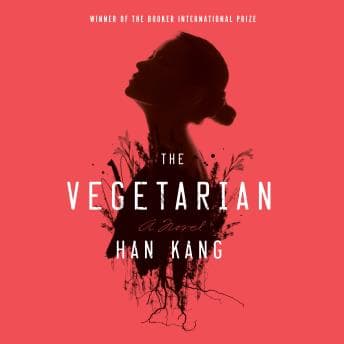

Han Kang's The Vegetarian is the most quietly violent book I've encountered in twenty years of teaching literature.
I started it during one of those late Sunday mornings when Denise was still asleep and the lakefront was gray and cold and perfectly empty. Five hours and fifteen minutes later, I hadn't moved from the kitchen table. My coffee was untouched. I'm not being dramatic — this book pins you in place.
A Woman Stops Eating Meat and the World Loses Its Mind
Here's what Kang is really doing, and it took me about an hour to see it clearly: Yeong-hye's refusal to eat meat is almost incidental. It's the quietest possible rebellion — she doesn't march, doesn't scream, doesn't even fully articulate why. She just... stops. And then every person in her orbit treats this small act of bodily autonomy like a declaration of war. Her husband is annoyed the way you'd be annoyed if your dishwasher broke. Her father literally tries to force pork into her mouth at a family dinner. That scene — I had to pause and just sit with it. The casualness of the violence. The way everyone at the table watches.
Kang structures the novel in three parts, each narrated from a different perspective, and none of them are Yeong-hye's. Think about that. The woman at the center of her own story never gets to tell it. We see her through her insufferable husband, her artist brother-in-law (whose section veers into genuinely disturbing territory involving body paint and obsession), and finally her sister In-hye, who might be the most tragic figure in the whole book. In-hye's section wrecked me. She's the "responsible one," the woman who held everything together, and watching her realize the cost of that — it's the kind of slow devastation Chekhov would've appreciated.
This reminds me of what Hemingway said about writing — the dignity of the iceberg. What's above the surface in The Vegetarian is a woman who won't eat meat. What's below is every question you've ever avoided about who owns your body, your choices, your silence. The only other book I've reviewed that does this kind of iceberg work — hiding its real argument beneath something almost deceptively simple — is Moby Dick, where Melville buries an entire philosophical crisis inside what is, on the surface, a whale hunt.
The Narration Problem (And It Is a Problem)
So here's where I have to be honest, and it pains me because this novel deserves better. Janet Song and Stephen Park split the narration duties across the three sections, which structurally makes sense — different perspectives, different voices. But the performances are flat in ways that actively work against the text. Song's delivery during the most harrowing moments — the force-feeding scene, Yeong-hye's increasingly dissociative episodes — lands with the emotional weight of someone reading a grocery list. The prose deserves to be savored, and there are passages here that should make your skin crawl, but the narration smooths out every edge Kang sharpened.
I don't say this lightly. I believe great narration is performance art. The narrator needs to understand that pause is punctuation. And in a book this short — barely over five hours — every moment has to count double. When the delivery stays at one emotional register through scenes of psychological horror AND scenes of domestic mundanity, you lose the contrast that makes Kang's writing so effective.
I bumped the speed to 1.25x about halfway through, which helped with the pacing but obviously can't fix interpretation. If you're someone who listens at higher speeds anyway, this might bother you less.
Who This Book Is For (and a Confession)
My students would hate this. I love it.
Not because it's difficult — it's actually deceptively simple in its language, which is partly a function of Deborah Smith's translation from Korean. But because it asks you to sit with discomfort and not look away. If you loved Kafka's The Metamorphosis, this is its spiritual successor — the transformation isn't the point, the reaction to it is. If you've ever taught a class on allegory and wished you had something written in the last decade that students couldn't dismiss as "old," this is your book.
But — and I genuinely wrestled with this — I'm not sure this is the version to experience it. The novel itself is a 4.5. The audiobook production brings it down considerably. If you're a reader who processes better through audio, you'll still absorb the story. But you'll be doing some of the narrator's emotional work yourself, filling in the gaps between what's on the page and what's coming through your earbuds.
Denise asked me what it was about when I finally got up from the table. I said, "A woman becomes a tree." She looked at me like I'd lost it. But that's the thing about Kang — the image sounds absurd until you've lived inside it for five hours, and then it's the only thing that makes sense.
Worth the Read, Not Quite Worth the Listen
Get this book. Read it, teach it, argue about it. But if audio is your only option, know that you're getting the architecture of something extraordinary through a window that's slightly fogged. The story will still unsettle you. The narration just won't help.