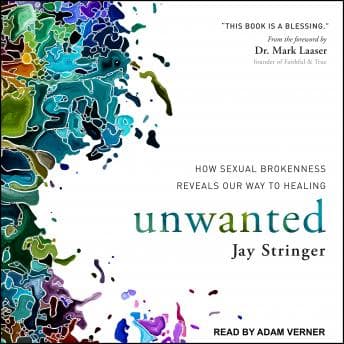

"Your unwanted sexual behavior is not the problem. It's the arrow pointing to the problem."
I hit pause somewhere around hour two, staring at my laptop in my home office at 11 PM. Jenny was already asleep. The consulting deck I was supposed to be finishing could wait. Because Jay Stringer just articulated something I've watched play out in three different executive coaching engagements—leaders whose careers imploded not because of the affair or the porn addiction, but because of what those behaviors were screaming about their unprocessed stories.
Bottom line: This is the first book on sexual behavior I'd actually recommend to a client. Not because it's comfortable—it's absolutely not—but because it treats the reader like an intelligent adult capable of honest self-examination.
3,800 People Can't Be Dismissed
Stringer surveyed 3,800 people. Let that number sink in. This isn't some pastor's opinion dressed up as wisdom. This is data. And the data reveals patterns that make uncomfortable sense: childhood family dynamics, specific types of deprivation, particular emotional triggers—all correlating with specific unwanted behaviors.
He breaks down how different forms of neglect or rigidity in childhood homes predict different patterns of acting out. The kid who grew up with an emotionally absent father shows up differently than the one raised in a home of religious perfectionism. My parents' dry cleaning business meant I basically raised myself from 3 PM to 9 PM every day. Reading this, I started connecting dots I'd never bothered to examine.
The framework isn't rocket science once you see it: behavior is communication. Your unwanted patterns are telling you something about wounds that never healed. But Stringer doesn't just leave you there—he maps the path from understanding to actual change.
Adam Verner Handles the Uncomfortable Well
Let's be honest—narrating a book about pornography addiction, affairs, and buying sex requires a specific kind of steady presence. Verner delivers it. His voice is clear, gentle without being soft, and—critically—never sounds like he's judging you. For a book where the listener might be confronting their own shame, this matters enormously.
No dramatic flourishes. No awkward pauses around explicit content. Just consistent, professional delivery that lets Stringer's research speak for itself. At 7 hours, the pacing feels right—dense enough to be substantive, not so long it becomes a slog.
Who Should Listen (And Who Should Skip)
Stringer writes from a Christian framework, and I need to be direct about that. If faith-based language makes you check out, you'll struggle here. But—and this is important—the psychological and research components stand on their own. I've recommended the concepts to secular clients who've never opened a Bible.
This isn't for casual curiosity. It's for:
- People actively wrestling with patterns they can't break
- Therapists and counselors working with sexual shame (finally, something beyond "just stop")
- Spouses trying to understand a partner's behavior
- Anyone who's tried willpower and accountability software and found it's not enough
Skip it if you want simple answers. Stringer's whole point is that "just pray harder" and "install blocking software" miss the actual issue entirely.
What My Parents Understood Without Words
Here's what hit me: Stringer's emphasis on examining your story, understanding your triggers, doing the hard internal work—this is what every successful turnaround I've ever seen requires. Whether it's a struggling company or a struggling person, the presenting problem is never the real problem.
My parents didn't have therapy or self-help books. They had 14-hour days and Sunday church. That same tension between faith and practical wisdom shows up in Prayer: Experiencing Awe and Intimacy with God, though Keller leans harder into the theological side. But they also had an unspoken understanding that you deal with your stuff, you don't let your stuff deal with you. Stringer gives language and framework to that instinct.
(Jenny would say I'm being too generous to a faith-based book. Jenny is right that I usually hate these. But the research legitimately impressed me.)
The ROI on Uncomfortable Listening
I've seen executives lose everything because they thought the behavior was the problem. It wasn't. The behavior was the symptom of a leadership crisis, a marriage crisis, an identity crisis they'd been running from for decades. Stringer would've been useful reading for at least two of them before everything fell apart.
The key takeaway is worth the listen. The other 6 hours? Actually also worth it—Stringer respects your time by making every chapter build on the last. No padding. No repetitive anecdotes. Just progressive depth.
At 2.0x, I finished this in an evening. At 1.25x, you'll have space to actually sit with the questions he raises. For once, I'd recommend slowing down.