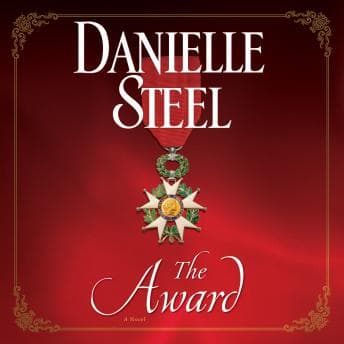

I was sitting on my back porch, actively avoiding a stack of fifty essays on The Great Gatsby that I promised would be graded by Monday. (Spoiler: They weren't.) I needed something that wasn't symbol-heavy 1920s disillusionment. I needed a story that just... moved. So, I hit play on The Award. Yes, it's Danielle Steel. No, don't tell the AP Lit board. I have a reputation to maintain.
The Voice That Saved My Sanity
Here's the thing about audiobooks: a narrator can either save a book or ruin it. Adam Verner? He saves it. His voice is deep—like, "I should be narrating a documentary about tectonic plates" deep. He brought that same gravitas to Love Dare, though that one leaned more inspirational than historical.
Steel's writing can be... let's call it "generous" with adjectives. My red pen usually twitches when I see this many emotional descriptors in one paragraph. But Verner grounds it. He reads with this gravity that makes the melodrama feel like history—captures that specific kind of cynicism, the "vulnerable guilt" of a character who has seen too much. It stops the story from floating away into pure soap opera territory. Honestly, if he read my students' essays, I might actually give them A's.
From Resistance to Runway
The plot is wild. We follow Gaëlle de Barbet from the terrifying occupation of France in 1940 all the way to modern times. She goes from saving Jewish children in the Resistance to being a Dior model in New York. Steel does this kind of sweeping life transformation a lot—Cast has a similar arc, though with less historical weight. (My students would call this a "glow up." I call it a jarring pivot, but okay.)
There are moments—specifically during the war sections—where the tragedy is heavy. Gaëlle loses pretty much everyone. Her father, brother, mother. It's brutal. And Verner doesn't shy away from the pain. He lets the silence hang there. He understands that pause is punctuation.
But then we get to the fashion world and the redemption arc with the granddaughter. It wraps up a bit neatly. Maybe too neatly. Life rarely gives you a full apology and a medal at the end, unlike what happens here. But after a week of dealing with teenagers, I'll take the tidy ending. It's comforting.
Who This Is (and Isn't) For
If you're a purist who only reads the canon, you'll hate this. You'll find the dialogue a bit on the nose. But if you want a narrator who sounds like a warm blanket and a story that takes you from tragedy to triumph without making you work too hard for it? It's solid. Perfect for grading avoidance, dish-washing, or staring at a lake wondering why Daisy Buchanan is such a polarizing character.
Back to the Essay Stack
Look, is this War and Peace? No. It's not trying to be. It's a sprawling, multi-generational saga that wears its heart on its sleeve. I usually preach about "showing, not telling" in my classroom. Steel does a lot of telling. But there's a rhythm to it that works for audio—easy to follow, undemanding in the best way.
I finished it at 1 AM. I might have teared up at the end. (Whatever. It was late.) Now, back to Gatsby.