
"I don't know how to turn on the oven."
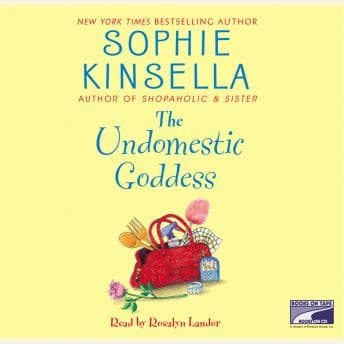
Somewhere around hour two, Samantha Sweeting—high-powered London solicitor, workaholic extraordinaire—is standing in a country kitchen she has no business being in, staring at an Aga like it might bite her. And Rosalyn Landor delivers that line with such genuine bewilderment, such perfectly dignified panic, that I laughed so hard Diego fell off my lap and gave me the dirtiest look a cat has ever given a human being.
Let me back up. I picked this one up on a Sunday when I had a massive branding project due Monday and needed something light to keep me company while I pushed pixels around. Sophie Kinsella felt right. Comfort food. Something fizzy. And honestly? This book delivered exactly that, but with a little more heart than I expected.
The Woman Who Forgot How to Iron (And Found Herself Instead)
Here's the thing about Samantha that makes her work better than Becky Bloomwood from the Shopaholic books: she's not oblivious. She's not charmingly clueless about her own mess. She's a genuinely competent person who made one catastrophic mistake and then—in a full-blown anxiety spiral—accidentally became someone's housekeeper. The comedy comes from watching someone who can negotiate million-pound deals but cannot, for the life of her, figure out how to sew a button. And that gap between who she is and what she's pretending to be? That's where all the good stuff lives.
Kinsella nails the physical comedy of domestic disasters—Samantha trying to work the ironing board is genuinely funny, the kind of scene where you can picture every limb going the wrong direction. But what surprised me is how the book quietly becomes about something bigger. About what happens when you stop performing competence in one narrow lane and actually learn to live in your body, in a kitchen, in dirt. Samantha's slow discovery that she loves making bread, that there's satisfaction in feeding people? My heart. MY HEART. Abuela would have loved this one. She always said you could tell everything about a person by whether they knew how to feed someone. That same quiet truth about identity and survival runs through Sarah's Key, though in territory that will absolutely wreck you—it's a completely different emotional register, but the question underneath both books is the same: what do we hold onto when everything we thought we were gets stripped away.
Rosalyn Landor's Secret Weapon Is the Serious Voice
Okay, let's talk about the narrator situation, because I almost didn't stick with this. Rosalyn Landor sounds, in the first twenty minutes, like she's narrating a BBC documentary about parliamentary procedure. She's poised. She's mature. She sounds like a woman in her fifties reading about a woman in her twenties, and initially it feels wrong—too stiff, too composed for a Kinsella heroine.
But here's the twist: that formality IS Samantha. Samantha talks like a lawyer because she is one. She's buttoned up and rigid and takes herself seriously. So when Landor has to voice Samantha's internal panic while maintaining that external composure—that's when the performance clicks. The tension between her dignified delivery and the absolute chaos happening around Samantha is what makes the comedy land. By hour four, I wasn't just okay with the voice choice, I was genuinely impressed.
She also does solid differentiation for the side characters. Trish, the employer, gets this breathless upper-class flutter. Nathaniel—the love interest, the gardener, the man with actual dirt under his fingernails—gets a warmer, earthier tone. It's not flashy narration. It's the kind of performance that disappears into the story, which is exactly what a twelve-hour comedy needs.
Where It Gets a Little Soggy
I won't pretend this is a perfect book. The romance with Nathaniel is sweet but pretty predictable—you can see every beat coming from about three hours out. The chemistry is warm rather than electric. This is a rainy Sunday book, not a stay-up-until-3 AM book. And the third act, when Samantha's old life catches up with her, leans heavily on a will-she-won't-she that doesn't generate real suspense because you already know what she's going to choose. We all know. Come on.
But did I cry? I cried once. Just a little. When Samantha makes her first perfect loaf of bread and stands there looking at it, and you realize she's never in her life made something with her hands that wasn't a legal brief. That got me. Sometimes the quiet moments hit hardest.
Who This Is Really For
If you want scorching romance or complex plot mechanics, look elsewhere. But if you've ever felt like your entire identity was your job—if you've ever been so good at one thing that you forgot you were a whole person—this book will feel like a warm kitchen on a cold day. Listen while cooking. Listen while doing laundry. Listen while doing the exact domestic things Samantha is learning to love. The irony makes it better.
Skip if you need your narrators to sound twenty-five. Landor sounds like a grown woman, and she makes no apologies for it. I respect that enormously.
This book felt like kneading dough—slow, repetitive in places, but the result is something soft and warm and exactly what you needed.