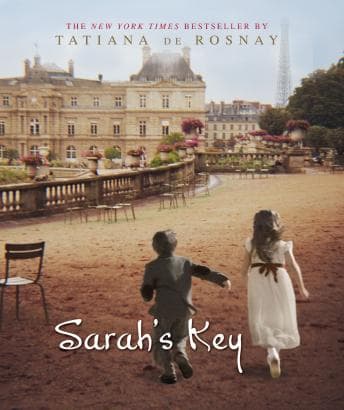

So I made a tactical error. I started this during Sophie's nap time on a random Tuesday, thinking "historical fiction, dual timeline, should be fine." Reader, I was not fine. I was ugly crying into my cold coffee by chapter three, and then my toddler woke up early and I had to pretend I wasn't emotionally wrecked while making goldfish crackers appear on a plate.
This book wrecked me. In the best way. But also—fair warning—maybe don't start it when you're already running on four hours of sleep and your emotional reserves are at "Target tantrum" levels.
A Key That Unlocks Everything
Here's the setup: Paris, 1942. A ten-year-old girl named Sarah locks her little brother in a secret cupboard when the French police come to arrest her Jewish family. She thinks she'll be back in hours. She won't be. And that image—a little boy waiting in the dark for his sister to come back—it just... it sits in your chest. Heavy.
The other timeline follows Julia, an American journalist in 2002 Paris, investigating the Vel' d'Hiv' roundup for its 60th anniversary. Through her research, she stumbles into Sarah's story—and realizes it's tangled up with her own family in ways she never expected.
I'll be honest: the modern-day sections don't hit as hard as Sarah's story. Julia's marriage problems and career stuff felt a little... I don't know, small? After you've been following a child through the French internment camps, hearing about someone's difficult mother-in-law just doesn't register the same way. But the two timelines do eventually braid together in a way that pays off. You just have to be patient.
Polly Stone's Quiet Devastation
Okay, the narration. Polly Stone does something really smart here—she keeps everything restrained. Low-key. Which sounds counterintuitive for a book about the Holocaust, right? But it works. She doesn't lean into the horror with dramatic gasps or trembling voices. She just... tells it. Plainly. And somehow that makes it hit harder.
Her French accents are convincing (I took French in college, so I have opinions), and she moves between the time periods smoothly. Some listeners apparently found the accents on French characters speaking French a little distracting—like, why do they have accents if they're speaking their native language? I get that critique, but honestly, it didn't bother me. It helped me stay oriented in which timeline I was in.
AudioFile Magazine called her delivery "riveting with its spare emotional power" and yeah, that's accurate. She's not performing. She's just telling you what happened. And that's enough.
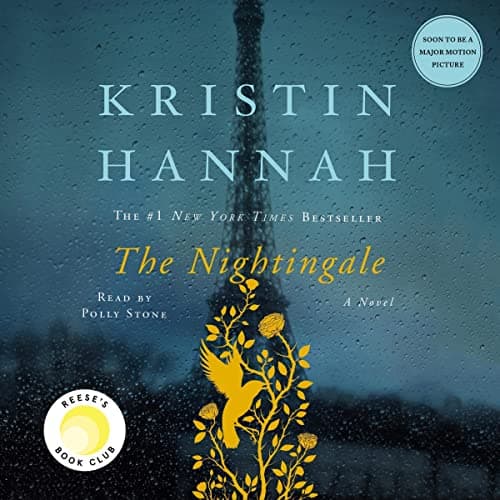
Stone brings that same restrained power to The Nightingale, another WWII story about sisters that absolutely destroyed me.
The Mom Confession Corner
Here's where I get real: this book hit different as a mom. The brother-in-the-cupboard thing. I kept thinking about my kids. About Lucas hiding in the coat closet during hide-and-seek and how panicked I get when I can't find him for thirty seconds. About Emma's fierce protectiveness of Sophie. About what it would mean to be separated from them.
I had to pause multiple times. Not because I was interrupted (though also that), but because I needed to breathe. That's the thing about historical fiction that centers mothers and children—it bypasses every defense mechanism I have. The scene where Sarah finally gets back to Paris—I won't spoil it, but I listened to that part sitting in my car in the garage, and I just... sat there. For a long time.
This isn't a criticism. The book is supposed to do this. It's supposed to make you feel the weight of what happened. But know going in that it's heavy. Really heavy.
The 10-Hour Reality Check
At 10 hours, this is on the longer side for my usual picks. And yeah, it drags in places. The modern timeline especially—there are stretches where Julia's investigating and processing and having conversations that feel like they could've been trimmed. One reviewer said the narrator's soothing voice made them sleepy during slower sections, and I can see that. I bumped up to 1.25x during some of the Julia chapters and it helped.
But here's the thing: the emotional payoff is worth the slower moments. When the two timelines finally collide, when you understand the full scope of what happened and how it echoes through generations—it earns every minute.
Who This Is (and Isn't) For
Skip this if you need something light right now, or if stories about children in danger are a hard no for you—totally valid. But if you're ready for historical fiction that leaves a mark, especially if you're a parent who can handle the gut-punch, this one delivers.
One and Done (But Worth Every Tear)
Honestly? I probably won't listen again. Not because it wasn't good—it was devastating in the best way—but because I don't think I can handle it twice. Some books you experience once and carry with you. This is one of those.
But would I recommend it? Absolutely. Especially for book clubs (if I ever have time for book club again). There's so much to discuss about memory, responsibility, the stories we tell ourselves about history. Just maybe have tissues ready. And don't start it during nap time unless you're prepared to explain to your toddler why Mommy's face is doing that thing.