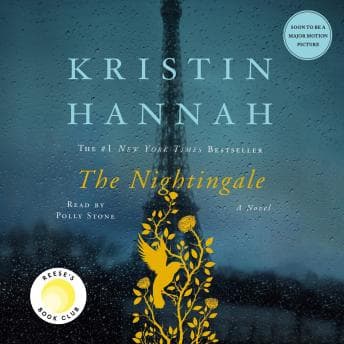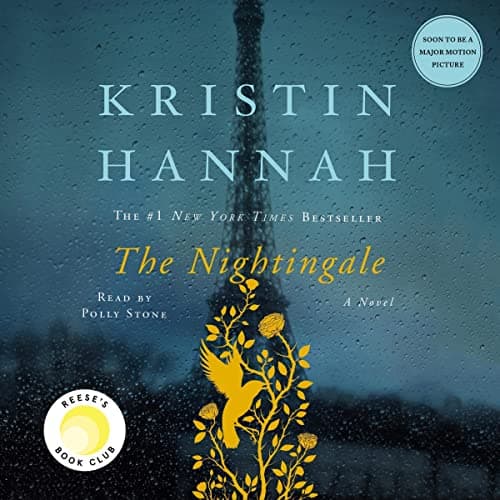

Everybody talks about The Nightingale like it's this universal sob-fest, and sure, yes, I cried. But what got me wasn't just the sadness. It was the specific, grinding way this book hurts you - one sister surviving by staying still, the other surviving by refusing to. I listened to a big chunk of this while reorganizing my chaotic art supply drawers, and there I was, holding dried-up paint markers, absolutely wrecked by women trying to stay alive in occupied France. Glamorous life.
This book felt like being trusted with someone's family grief. Not in a manipulative way. In a "sit down, I need to tell you what happened" way.
The sisters cut different wounds
Kristin Hannah builds this around Vianne and Isabelle, and thank God they don't blur together emotionally. Vianne's sections hit me with that suffocating domestic terror - the kind where war enters the kitchen, the schoolroom, the doorway, the body. Her fear isn't abstract. It's tied to food, safety, routine, what happens when keeping your child alive means swallowing your outrage again and again. Isabelle, meanwhile, is all spark and defiance and bad decisions that are also maybe the only decisions a person like her could make. She doesn't just resist the occupation; she resists the idea that women should endure quietly.
And that contrast is what kept the long runtime from feeling padded to me. At 17 hours, this is not a casual little "throw it on while answering emails" listen. It asks for your attention. The first half is slower, yes - more survival than spectacle - and I can see why some listeners got impatient. If you're waiting for constant resistance-mission adrenaline, you'll be waiting a bit. But I actually think that slower stretch is doing essential work. You need to feel the tightening of the noose before the book starts yanking hard.
The French Resistance material especially lands because Hannah roots it in cost, not glamour. Isabelle's dangerous path doesn't feel like movie-brave heroism. It feels cold, desperate, stubborn, and sometimes almost unbearably reckless. Vianne's wartime struggle hit me even harder because it's quieter. The compromises. The calculations. The way women's war stories so often get filed under "keeping things going" when really they were performing moral triage every day.
And the ending - that reveal of narrator identity? My heart. MY HEART. I'm not spoiling a thing, but if you're the kind of reader who gets emotional when a story suddenly reframes memory, legacy, and who gets remembered by history, clear your schedule. Don't listen to the last stretch in public unless you enjoy pretending you "just have allergies."
Polly Stone goes full occupied France
Polly Stone's voice is not velvet and honey in the cozy-romance sense. It's more like well-aged wine with a little bite to it. Controlled. Serious. Emotionally tuned in without turning every scene into capital-A Acting. That restraint matters here, because this book could've tipped into melodrama so easily. Instead, Stone gives it dignity.
Her French pronunciation is strong, and the accents absolutely ground you in the setting. I bought the world fast because of the way she shapes names and dialogue. Vianne and Isabelle sound distinct from each other, and Stone also separates men, children, German officers, British voices - a lot of moving parts for one narrator. You can hear the class, nationality, and temperament shifts. That matters in a war novel where power is always shifting room to room.
Now, honesty hour: if you're super accent-sensitive, your mileage may vary. There were moments where the French inflection felt a touch extra, almost right up against theatrical. I didn't mind it much because the book itself is emotionally large, and the performance matches that scale. But I get why some listeners bounced off it. The German accents also aren't as convincing as the French ones. Not disastrous. Just not as clean.
Still, Stone understands pacing in an emotional sense. She knows when to let a line sit. When not to rush grief. When fear should sound clipped and practical instead of hysterical. That's a real skill. Especially in scenes between the sisters, where old resentment and deep love are sharing the same air. She makes those exchanges feel bruised.
No sound effects, no production gimmicks, no manipulative music swelling in the background. Just one narrator carrying a very heavy emotional and historical load. And for me, she carried it.
Who should hand this book their whole chest (and who should maybe not)
If you loved All the Light We Cannot See, The Book Thief, or even Hannah's own The Four Winds because they understand suffering at both the intimate and societal level, this one is probably your lane. If you want historical fiction with women at the center, moral messiness, family fracture, and an audiobook performance that takes the material seriously, yes. Absolutely.
If you need fast pacing from minute one, maybe not. If over-pronounced accents pull you straight out of a story, maybe sample first. And if you're looking for a light romance because the word "love" appears in the description - babe, no. There is love here, but it's braided through hunger, occupation, violence, abuse, and impossible choices. Please check the content warnings.
This is a rainy Sunday book. A long walk book. A "stare at the ceiling after" book. Not background audio. Dedicated listening only. The only other audiobook I've found myself giving that same "dedicated listening only" warning about this year was Guy at the Wedding, though for entirely different emotional reasons - lighter stakes, but the same feeling that half-listening would mean missing everything.
Would Abuela have clutched her rosary?
Oh, fully. She would've gasped at Isabelle, worried herself sick over Vianne, and then sat there in silence after the ending like she'd been personally visited by every wartime ghost in France.
That's the thing. The Nightingale isn't subtle about wanting your feelings. But it earns them by making women's survival feel specific, ugly, brave, and horribly expensive. I finished it drained - and weirdly grateful.