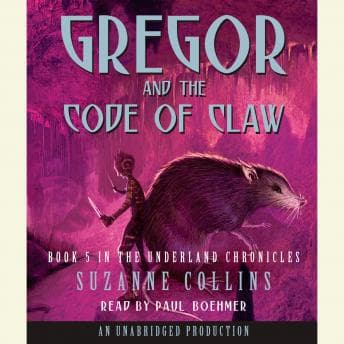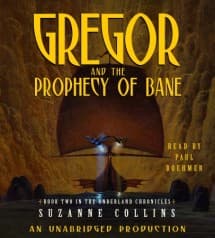

"The Bane will be a baby."
I don't remember exactly when that realization hits in the audiobook - somewhere around hour four, maybe - but when Gregor discovers that this terrifying prophesied creature is essentially an infant white rat, I actually stopped chopping onions and just stood there in my kitchen. Because that's the moment Suzanne Collins does what she does best: she takes a children's book and drops a genuine moral philosophy problem right into the middle of it. Can you kill a baby to prevent a future war? Should you?
I found myself asking: why does Gregor really refuse to kill the Bane? And the answer isn't simple heroism. It's that Collins has built a kid who's already been traumatized by the Underland - he's seen death, he's bonded with his bat Ares over mutual distrust from others - and now she's testing whether trauma makes someone more violent or more merciful. The research actually shows that children exposed to violence can go either direction. Gregor goes toward mercy, and Collins earns it rather than just assigning it to him like a character trait from a hat. The gap between earned character growth and assigned character traits is something I kept returning to while reading Fail Until You Don't too, where the whole premise lives or dies on whether the author can show you the psychological cost of repeated failure rather than just assert that grinding builds character.
This is a fascinating case study in how children's literature handles the ethics of preemptive violence. Years before Collins would write Katniss Everdeen into an arena, she was already asking kids to think about whether prophecies - essentially deterministic worldviews - justify killing. That's not light stuff.
Gregor's Psychology Is Better Than Most Adult Protagonists
What makes this character compelling is that Gregor exhibits classic avoidance behavior at the start. He's sworn off the Underland. He's done. But Collins understands that avoidance isn't resolution - it's a pressure cooker. So when the Underlanders essentially kidnap Boots to draw him back, Gregor doesn't go willingly; he goes furiously. That's psychologically honest in a way that most middle-grade fiction wouldn't bother with. He's not the Chosen One who accepts the call. He's a kid who's being manipulated through his attachment to his sister, and he knows it.
The Boots dynamic is genuinely well-observed. She's a toddler, which means she's both the emotional anchor and a constant source of danger. Every scene with her carries dual weight - she's adorable and she's vulnerable. Boehmer's narration handles this well, giving Boots this babbling warmth that contrasts sharply with the darker Underland voices. His roach voices have this clicking, alien quality that actually helps you buy the interspecies alliances Collins builds.
Paul Boehmer: Capable Vessel, Not Quite Perfect Fit
Look, Boehmer is a skilled narrator. He differentiates characters clearly - you always know when Luxa is speaking versus Ripred versus the cockroaches, and that matters in a world with this many non-human characters. His emotional delivery during Gregor and Boots interactions is solid. The man has Audie Awards for a reason.
But I get why some listeners find his voice slightly off for this material. There's an earnestness to his delivery that occasionally tips into performative rather than natural. For a book about an eleven-year-old from New York City, Boehmer sometimes sounds like he's narrating from a lectern rather than from Gregor's anxious, reluctant headspace. It's not a dealbreaker - not even close. But if you're someone who needs the narrator to disappear completely into the protagonist, you might notice the seams.
At six and a half hours, this is a quick listen. I had it on while making dal makhani (my mother's recipe, which takes forever because I refuse to use a pressure cooker like a reasonable person), and I finished it in essentially one extended cooking session plus my morning jog the next day. The pacing through the Waterway sequences is genuinely tense - Collins keeps throwing threats at the group and then not resolving them cleanly, which means you can't relax.
The Prophecy Problem (And Why Collins Mostly Solves It)
Prophecies in fantasy are lazy shortcuts ninety percent of the time. "You are the chosen one" is just authorial convenience dressed up in iambic pentameter. But Collins does something smart here: the prophecy is ambiguous. Characters interpret it differently based on their own biases and fears. Gregor has to figure out not just what to do, but what the prophecy actually means - and whether following it literally will lead to exactly the catastrophe he's trying to prevent.
Psychologically, this tracks. Confirmation bias means people read prophecies - or any ambiguous information - through the lens of what they already believe. Collins builds an entire plot around that cognitive tendency. In a kids' book. I genuinely respect it.
Who's This For (And Who Should Probably Skip)
If you have kids aged 8-12 and you want them listening to something with actual moral weight instead of another franchise tie-in, this is excellent. If you're an adult who loved the Hunger Games and never went back to Collins' earlier work - go back. The DNA is all here. If you need your audiobook narrators to sound like the protagonist's actual age, Boehmer won't satisfy that itch.
And if you're like me, someone who can't stop analyzing why fictional characters make the choices they make, Gregor is a surprisingly rich subject. My therapist would have thoughts about this character. Specifically about how he keeps returning to a place that terrifies him because his attachment bonds are stronger than his self-preservation instinct.
Relatable, honestly.
My Case Notes
Suzanne Collins wrote a children's book about whether it's moral to kill a baby rat based on a poem, and she made it work. The audiobook is solid if imperfect - Boehmer carries the ensemble well even if he doesn't fully inhabit Gregor. But the story? The story understands human nature in ways that most adult fiction doesn't bother attempting. That's worth your six hours.