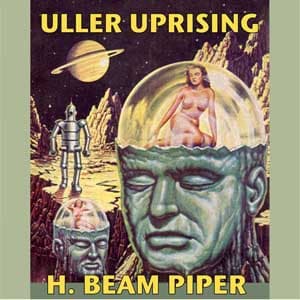

"The geeks have inherited Doofensmirtz's Inator factory, and they're pointing it at the natives."
Okay, that's not an actual quote from the book, but it's the vibe I got around hour two while supposedly debugging my thesis simulation code. (Spoiler: I did not debug my thesis simulation code.) H. Beam Piper basically looked at the 1857 Sepoy Mutiny, said "what if this happened on an alien planet with lizard people," and wrote what might be the most brutally honest colonial sci-fi I've encountered in the pulp era.
When Your D&D Campaign Goes Full Grimdark
Look, I grew up running campaigns where the party would sometimes side with the "evil empire" because, hey, moral complexity. Uller Uprising feels like Piper ran that exact game in 1952 and just... wrote it down. The Ullerans aren't noble savages or mindless monsters—they're a civilization with their own politics, factions, and a very legitimate grievance about being colonized by humans who treat their planet like a mining operation with inconvenient locals.
The magic system here—and yes, I'm calling colonial extraction economics a magic system because that's what it functionally is in space opera—centers on this incredibly detailed Company structure. The Doofensmirtz comparison isn't far off. You've got the Chartered Uller Company making decisions based on quarterly reports while the planet burns. Piper's worldbuilding is *chef's kiss* in how it maps historical colonialism onto future space exploitation without flinching.
The poisoning of the governor-general's whiskey? That's the cartridge grease moment. That's the spark. And Piper doesn't let you sit comfortably on either side of it.
B.J. Harrison Does the Heavy Lifting
Here's the thing about LibriVox-style multi-reader productions—they can be wildly inconsistent. But B.J. Harrison's the main voice here, and he brings this understated intensity that works perfectly for military sci-fi. No theatrical accents or dramatic flourishes. Just subtle shifts in diction when switching between the Company officers and the various human factions.
Where Harrison really earns his keep is the escalation. The book starts as bureaucratic tension—meetings, reports, the grinding machinery of colonial administration. But as the uprising spreads, Harrison layers on this building dread. By the time you're in the thick of the war sequences, the pacing feels genuinely urgent. I caught myself leaning forward in my desk chair like the Ullerans were about to breach my apartment.
At 5 hours, it's a tight package. No bloat. Piper wrote lean, and Harrison reads lean.
The Uncomfortable Part (That's Also The Point)
I need to be honest here: this book is deeply uncomfortable in ways that are both intentional and... maybe not entirely intentional? Piper's clearly critiquing colonialism—the ironic twist at the end makes that explicit. But he's also a product of 1952, and some of the language around the Ullerans reflects that era's limitations.
My D&D group would have a fascinating post-session discussion about this one. The same kind of moral ambiguity drives A Clash of Kings, where every faction thinks they're the righteous ones. Is the human protagonist sympathetic or just pragmatic? Are we meant to root for the Company's survival or recognize that they've earned every bit of what's coming? Piper doesn't hold your hand. He presents the situation with almost clinical detachment and lets you wrestle with it.
Who Should Queue This Up (And Who Should Pass)
Grab this if you're into: military sci-fi that doesn't glorify war, historical parallels in space opera, tight pacing with zero filler, or you just finished a Dan Carlin Hardcore History episode about colonial rebellions and want the fictional version.
Skip it if: you need likeable protagonists, colonial narratives (even critical ones) are a hard no, or you want something light for bedtime. This is focused listening material—I tried it while doing laundry and had to rewind twice.
Roll for Initiative on This One
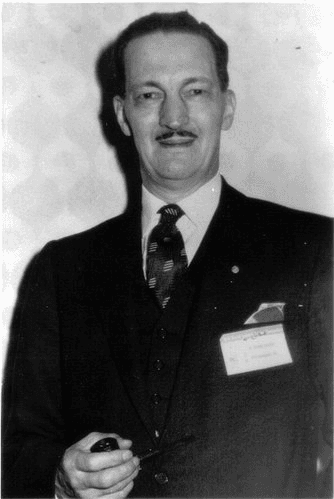
Piper committed suicide in 1964 thinking he was a failure. (1962 according to some sources—the research is inconsistent, which feels tragically appropriate.) His work went out of print, got rediscovered, and now we're here discussing his prescient take on colonial extraction politics sixty years later.
Uller Uprising isn't his best-known work, but it might be his most uncomfortable—and that's a compliment. It's the kind of book that makes you think about who writes history and why. The audiobook production is solid, Harrison's performance elevates the material, and at 5 hours, the commitment level is low enough that you can knock it out in a weekend.
I still haven't touched my thesis. Dr. Patel is going to be so disappointed. Worth it.