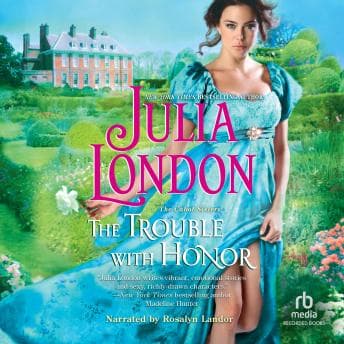

I was knee-deep in a rebrand project at 2 AM, Frida curled on my keyboard and Diego judging me from the bookshelf, when Honor Cabot decided to make a devil's bargain with a bastard duke's son. And honestly? Same energy. Sometimes you gotta scheme your way out of ruin.
Here's the thing about Trouble with Honor that I didn't expect: everyone online raves about Julia London's Regency wit, but what actually got me was how desperate Honor feels. Not desperate in a melodramatic telenovela way (though Abuela would have loved this one), but in that quiet, stomach-dropping way where you realize the safety net is gone and nobody's coming to save you. Honor knows her stepbrother's fiancée is going to kick her entire family to the curb the second the earl dies, and she's the only one willing to get her hands dirty about it.
George Easton, our resident scoundrel, is exactly my type of romance hero—illegitimate, wealthy from questionable means, and absolutely terrible at pretending he doesn't care. The chemistry between him and Honor builds slowly, which I appreciated. No instant declarations. Just two people who are too smart for their own good, dancing around the obvious.
When Scheming Becomes Foreplay
The central premise—Honor convincing George to seduce her stepbrother's fiancée away—sounds messy. It is messy. But London writes their negotiations with this crackling tension that made me pause my design work more than once. Every time Honor and George meet to discuss their "arrangement," you can feel them both pretending this is purely transactional. Spoiler: it is not purely transactional.
What I loved is that Honor isn't a passive schemer. She's actively terrible at this whole manipulation thing, which makes her endearing rather than calculating. She's a good person doing questionable things, and George sees right through her from the start. Their banter has genuine bite—not the cutesy Regency wit that sometimes feels performative, but actual verbal sparring where you can tell they're both a little surprised by the other.
Rosalyn Landor's Velvet-and-Thorns Delivery
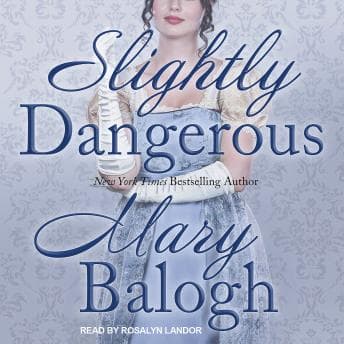
Okay, so Rosalyn Landor's narration is... complicated. Her voice is genuinely lovely—warm and British in that way that makes you want to curl up with tea you don't even drink. When she hits the emotional beats, she hits them. The moment Honor realizes she's in over her head emotionally? Landor's voice cracks just slightly, and my heart. MY HEART.
But—and this is real—there were moments where I genuinely couldn't tell if Honor or her sister was speaking. Landor does this thing where her younger female characters kind of... blend together? I had to rewind twice during a family scene because I'd assigned dialogue to the wrong sister entirely. Her older characters and the men are distinct (George gets this slightly rougher edge that works beautifully), but the Cabot sisters sometimes feel like they're sharing a voice.
It didn't ruin the experience for me. But if you're someone who listens while doing other things—like, say, designing logos at 2 AM—you might lose the thread occasionally.
The Vibes Are Immaculate (Mostly)
This is a rainy Sunday book. Or in my case, a late-night-design-session book. The pacing is leisurely in the best way—London takes her time building the world, the family dynamics, the slow-burn attraction. I listened at my usual 1.0x because rushing through George's internal conflict about falling for a woman he's supposed to be helping scheme felt wrong.
The secondary characters are where Landor really shines. There's something about how she voices the older society women—all judgment and pearl-clutching—that made me actually laugh out loud. Diego looked alarmed.
My one gripe: the ending wraps up a little too neatly for my taste. After all that delicious tension and moral gray area, the resolution felt... safe? Like London pulled her punch right at the end. I wanted messier consequences. But maybe that's just me being greedy.
Who Gets the Invitation (And Who Doesn't)
This book is for you if: you love slow-burn Regency romance, scheming heroines who are bad at scheming, and rogues with inconvenient feelings. If you ugly-cried at Beach Read (hi, it me), the emotional beats here will land, even if they're subtler. That same slow-burn emotional payoff shows up in Sun Also Rises, though with less scheming and more existential dread.
Skip it if: you need fast pacing or distinct character voices in every scene. Or if morally gray premises bother you—Honor's plan is objectively not great, even if her motivations are sympathetic.
Abuela Would Have Stayed Up Too
I finished Trouble with Honor at 4 AM, deadline forgotten, cats asleep, feeling that specific kind of satisfied-sad that good romance leaves behind. It's not a perfect audiobook—the voice confusion is real, and I wanted the ending to hurt more—but it made me feel things. Honor's desperation, George's reluctant tenderness, that moment when they both realize the game stopped being a game.
Abuela would have gasped at the premise and then stayed up all night to finish it. I know because I did exactly that.