
Greek mythology is basically the original D&D campaign setting, and I will die on that hill.
Seriously though - gods with jealousy issues, heroes with tragic flaws, monsters that are basically boss fights waiting to happen. The Greeks understood storytelling at a fundamental level that we're still ripping off thousands of years later. So when I saw this audiobook pop up as a way to introduce younger listeners to the classics, I had to check it out. My advisor can wait. (Dr. Patel, if you're reading this, I was doing "research on narrative structures.")
The Gateway Drug to Mythology
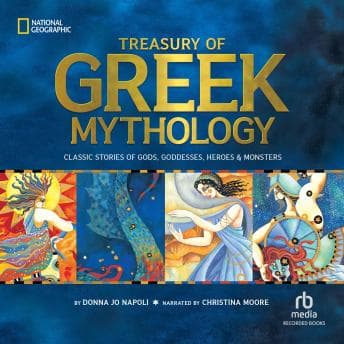
Donna Jo Napoli gets it. She's not dumbing down these stories - she's making them accessible without losing what makes them actually good. The lyrical quality of her writing hits that sweet spot where it feels appropriately epic without becoming a slog. We're talking about under three hours here, which is perfect for younger listeners but also for, say, a grad student who needs something lighter between Stormlight Archive re-listens.
The story selection covers the greatest hits: Zeus, Apollo, Perseus, Medusa - all the characters you need to know before you start reading Percy Jackson or, you know, playing any RPG ever made. What I appreciated is that Napoli doesn't shy away from the darker elements. These myths have violence. They have consequences. The Greeks weren't writing sanitized fairy tales, and this collection respects that while keeping it age-appropriate.
One thing parents should know: the vocabulary runs a bit advanced for really young kids. This isn't a criticism - it's actually a feature if you ask me. Stretch those vocabularies! But if you're expecting a toddler to follow along solo, maybe wait a year or two.
Christina Moore Brings the Olympian Energy
Here's where the audiobook format really earns its keep. Christina Moore's narration is the kind of clear, conversational delivery that makes these stories feel alive rather than like homework. She's got this emotional range that works perfectly for mythology - because let's be honest, Greek myths are basically soap operas with more lightning bolts.
Her character differentiation is solid. You can tell when we've shifted perspectives or when a god is speaking versus a mortal. It's not full-cast production, but Moore carries the whole thing on her shoulders and makes it work. The pacing keeps things moving without rushing through the important beats.
I couldn't find a ton of detailed info about Moore's specific approach to this recording, but based on what I heard? She understood the assignment. The conversational tone makes it feel like someone's actually telling you these stories rather than reading them at you. That's harder to pull off than it sounds.
Perfect for Road Trips and Bedtime
At just under three hours, this is ideal for a car trip with kids or splitting across a week of bedtimes. The production is clean - no weird audio issues or background noise to distract from the stories. It's professional work all around.
Who Should Listen (And Who Should Skip)
Obviously kids who are ready for chapter books will eat this up. Parents and educators looking for quality content that isn't just screen time. But also - and I say this as someone whose D&D group would absolutely appreciate the source material - adults who want a refresher on the classics without committing to a 40-hour epic.
Who should skip? If you need fast-paced action with constant plot twists, mythology isn't really built that way. These are origin stories and hero's journeys. They have a rhythm. Also, if you're uncomfortable with any mythological violence (people get turned into spiders, eaten by their fathers, you know - Greek stuff), maybe preview first.
Would I Listen Again?
I'd absolutely recommend this to anyone looking to introduce kids to mythology or anyone who wants a well-produced refresher on the Greek pantheon. Napoli's writing combined with Moore's narration creates something that respects both the source material and its audience.
This is the kind of audiobook that plants seeds. Kids who listen to this are going to understand half the references in every fantasy novel they'll ever read. Honestly, that foundation made Divergent's faction system click for me way faster than it should have—those archetypes are everywhere once you know the source material. They'll get why certain character archetypes exist. They'll have the foundation for so much storytelling that comes after.
Plus, it's just fun. The myths are wild. The gods are petty. The heroes are flawed. That's good storytelling, and it has been for about three thousand years.
Now if you'll excuse me, I need to pretend I'm working on my thesis.