
This is not a fantasy novel. There's no magic system, no progression fantasy, no stat blocks. And it wrecked me harder than the end of Words of Radiance.
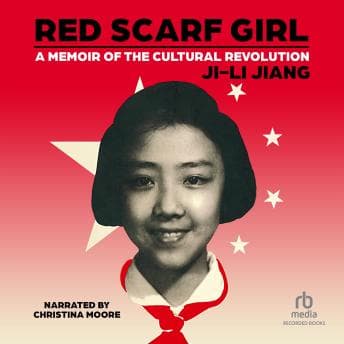
I picked up Red Scarf Girl because I was procrastinating on my thesis (shocking, I know) and wanted something short - six hours felt like a palate cleanser between Stormlight re-listens. I figured a YA memoir about China's Cultural Revolution would be educational, maybe a little dry. I was sorting my board game shelf while listening, reorganizing my Gloomhaven storage solution for the third time this month, and by hour two I'd stopped moving entirely. Just standing there holding a miniature, staring at nothing.
When the Dungeon Master Is Real Life
Here's what got me: Ji-li Jiang starts this story as basically the star student. Top of her class, selected for a dance audition, respected by her teachers. She's twelve. And then Mao launches the Cultural Revolution and the entire social order flips like someone rolled a natural 1 on a civilization check. Suddenly her family's "class status" - something determined by her grandfather's landlord background, decades before she was born - makes her an enemy of the people.
The way Jiang describes the slow erosion is what kills you. It's not one dramatic moment. It's her classmates starting to avoid her. It's the da-zi-bao posters going up with accusations against her father. It's the Red Guards ransacking her home and confiscating her grandmother's old photographs like they're contraband. Each chapter peels back another layer of normalcy until you realize there's nothing left. The progression is satisfying in the worst possible way - satisfying because it's so precisely rendered, awful because you know this actually happened to a real twelve-year-old.
What floored me was the dilemma at the heart of the book. Ji-li is eventually pressured to publicly denounce her own father to protect her political future. A kid. Being asked to choose between her family and her survival. My D&D group would call that an impossible alignment check, and they'd be right.
Christina Moore Channels a Kid Losing Her World
Christina Moore does something really specific here that I want to highlight: she nails the youthful earnestness of Ji-li's early chapters - that bright-eyed revolutionary enthusiasm where Ji-li genuinely believes in Chairman Mao and wants to serve the revolution - and then gradually lets that voice darken and hollow out as reality sets in. It's not a dramatic shift. It's incremental. By the time Ji-li is watching her father get taken away, Moore's delivery carries this bitter helplessness that sits in your chest like a stone.
She's terrific with the dialogue between Ji-li and her family members. The conversations between Ji-li and her grandmother have this quiet tenderness that contrasts sharply with the shouting of political meetings. Moore keeps things grounded - no melodrama, no over-the-top emotional swings. Just a steady, honest read that trusts the material. And the material is strong enough to carry itself.
If you want proof she can carry a whole book on emotional restraint alone, her work on Julie of the Wolves is just as quiet and devastating.I wouldn't put Moore in the Steven Pacey tier (Steven Pacey walked so other narrators could run, and that's just facts), but she's doing a different thing here. This isn't about distinct character voices for forty named characters. It's about emotional truth in a solo performance, and she delivers.
The Six Hours You Didn't Know You Needed
Look, I know my audience. If you're here for epic fantasy recommendations and LitRPG defense, this review probably caught you off guard. But here's why I'm writing it anyway: this book does something that the best fantasy does. It drops you into a world with completely different rules and forces you to navigate alongside the protagonist. The Cultural Revolution operated on its own terrifying internal logic - loyalty tests, public humiliation sessions called "struggle meetings," children reporting their own parents. It reads like dystopian fiction except it's not fiction.
That same quality of a narrator giving voice to a young woman trapped by circumstances she never chose is what made Plain Truth stick with me too.At six hours, it's a single-afternoon listen. I read this instead of writing my thesis, and for once I don't even feel guilty about it.
Content warning: there's psychological abuse throughout, descriptions of home raids, and the implied threat of violence that hangs over everything. It's written for young adults, so nothing is gratuitously depicted, but the emotional weight is real.
Who Gets the Red Scarf
If you have kids aged 10+ who are starting to learn about world history, this is genuinely one of the best entry points I can think of. If you're an adult who wants to understand the Cultural Revolution through a deeply personal lens rather than a textbook, this is it. If you exclusively listen to 40-hour epic fantasies and refuse anything under 20 hours... honestly, challenge yourself. This one earns every minute of its runtime.
And if your palate is more wintry fairy-tale than political memoir, Snow Child is another short, quiet listen that hit me harder than its page count suggested.
Roll for Emotional Damage
I went back to my board game shelf after finishing. Didn't reorganize anything. Just sat on the floor thinking about a twelve-year-old girl in 1966 Shanghai who had to decide what family meant when her entire country told her it meant nothing. Sometimes the most important stories aren't the ones with magic systems. (But the magic systems are still great. Don't @ me.)