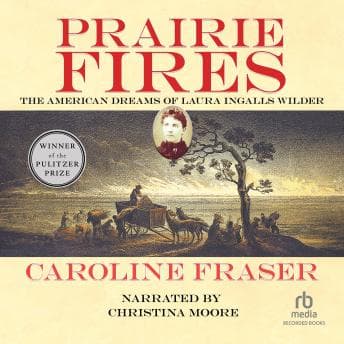

I thought I knew Laura Ingalls Wilder. Turns out I knew a character - a carefully constructed one, shaped as much by her daughter Rose as by Laura herself. Caroline Fraser's biography basically demolished everything I thought I understood about those Little House books, and I'm still processing it.
Here's the thing. I've taught excerpts from the Little House series to middle schoolers for years. The self-reliance narrative. The pioneer spirit. The American Dream in miniature. Fraser takes all of that and says, okay, but let's look at what actually happened. And what actually happened is so much messier, more tragic, and honestly more interesting than the sanitized version we got.
The Myth vs. The Ledger
Fraser is meticulous in a way that would make my graduate advisor weep with joy. She digs into land records, financial documents, letters - the boring stuff that tells the real story. And the real story is that Pa Ingalls wasn't some noble pioneer. He was a serial failure. He dragged his family across the plains chasing dreams that never materialized, often settling on land he had no legal right to, sometimes land that belonged to Native Americans by treaty. The family nearly starved. Repeatedly.
But here's where it gets complicated for me as someone who teaches literature. Laura and Rose didn't just write memoirs - they crafted mythology. They took genuine hardship and repackaged it as triumph. They erased the government assistance that kept the family alive during the worst years. They softened Pa's recklessness into adventurous spirit. And they did this during the Depression, when Americans desperately wanted to believe that self-reliance was enough.
Fraser isn't cruel about it. She's fair. She understands why they did what they did. But she also doesn't let them off the hook.
Christina Moore Carries the Weight
Twenty-one hours is a commitment. I listened over about three weeks - mostly during my lakefront walks with Denise, some during late-night grading sessions. Moore's narration is... steady. That's the word. She doesn't dramatize, doesn't editorialize with her voice. She lets Fraser's prose do the work.
Some listeners apparently find her voice a bit high-pitched or smug. I didn't get that at all. What I got was someone who understood that this material is already emotionally loaded - the displacement of Native peoples, the environmental destruction of the prairie, the complicated mother-daughter dynamic between Laura and Rose. Moore doesn't need to add heat. She maintains warmth without tipping into sentimentality.
The one genuine frustration: there are references to photographs and footnotes that obviously work better in print. A few times I found myself wishing I could see what Fraser was describing. But that's a limitation of the format, not the narration.
When the Personal Gets Political
Here's where I have to be honest about my own reactions. Rose Wilder Lane became a founding mother of American libertarianism. She genuinely believed - after a childhood of poverty caused largely by factors beyond individual control - that government assistance was the root of all evil. The irony is breathtaking. Fraser traces it carefully, showing how Rose's political philosophy shaped the Little House books in ways that distorted her mother's actual experience.
I kept pausing to think about this. We teach these books to children as if they're history. They're not. They're ideology dressed as nostalgia. That doesn't make them worthless - great literature is often propaganda of a sort - but it changes how I'll approach them in my classroom. I had a similar reckoning with Into the Forest, where survival narratives reveal more about our cultural anxieties than actual resilience.
(My students would absolutely hate this book, by the way. Too long, too detailed, too much context. Which is exactly why I loved it.)
Who This Is For (And Who Should Steer Clear)
If you read the Little House books as a kid and want to understand what you were actually reading, this is essential. If you're interested in how American mythology gets constructed and maintained, this is a case study. If you want to understand the Dust Bowl, the Homestead Act, the Indian Wars as lived experience rather than textbook abstraction - Fraser delivers.
But if you want your childhood memories preserved intact? Skip this one. Fraser isn't trying to destroy Laura Ingalls Wilder. She's trying to understand her as a complete human being, which means acknowledging the compromises, the silences, the convenient omissions.
Class Dismissed
The Pulitzer was deserved. This is biography as it should be done - rigorous, compassionate, willing to complicate the easy narrative. Christina Moore serves it well. Twenty-one hours, and I wasn't bored once.
Worth pausing the faculty meeting for. Definitely worth the lakefront walks.