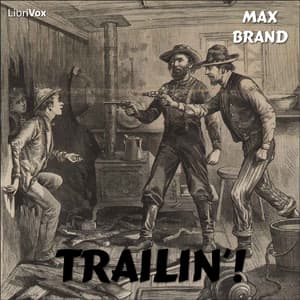

Okay, look. I know what you're thinking. "Tom, you're the guy who won't shut up about hard magic systems and the Cosmere. Why are you reviewing a Western from 1919?"
Valid question. Honestly? I needed a break. My brain was melting from debugging a procedural generation algorithm that kept spawning trees upside down, and I just couldn't handle another 50-hour epic fantasy where I have to memorize three different political lineages just to understand Chapter 1. I needed something straightforward. A palate cleanser.
But man, did this test my patience at first.
The "Level 1 Adventurer" Problem
Here's the setup: Anthony Bard is basically your classic D&D character with a tragic backstory. Rich kid from the East (high Charisma, low Wisdom), sees his dad get murdered, and decides to go on a vengeance quest out West. Classic, right? It's the Hero's Journey with spurs.
But the start... yikes. It drags. It's that specific kind of early 20th-century pacing where they really want to make sure you understand the gravity of the situation before anyone actually gets on a horse. I almost DNF'd it around hour two to go back to The Blade Itself for the tenth time. It felt like waiting for my advisor to reply to an email—just endless anticipation with very little payoff.
However. (And it is a big however.)
Once Anthony actually hits the trail, the vibe shifts. It stops being a Victorian drama and turns into a proper survival story. Max Brand (who is actually Frederick Faust—guy wrote under a million names) knows how to write pulp. It's not "literature" in the high-brow sense, but it's got that raw, mythic storytelling quality. That same stripped-down, character-driven approach shows up in Hotel on the Corner of Bitter and Sweet, though obviously with very different stakes. It's about a tenderfoot learning to survive in a hostile server—I mean, environment. If you like the "Zero to Hero" progression fantasy trope, this is basically the grandfather of that genre.
A Narrator Named Rowdy (Yes, Really)
Can we talk about the narrator for a second? His name is Rowdy Delaney. I don't know if that's his real name, but if you're narrating a Western, that is a god-tier handle. You literally cannot fail with a name like that.
Delaney does a solid job here. He's got this warm, clear delivery that feels like someone telling you a story around a campfire rather than an actor performing a one-man show. He's not doing the Steven Pacey thing where every character has a distinct, gravelly accent that you can identify in a crowded room, but he distinguishes the characters enough so you aren't lost. He captures Anthony's initial naivety really well, which makes the character's hardening later on feel earned. The audio quality is clean, no weird background hiss or mouth noises (which, thank the Almighty, because nothing kills my coding flow faster than hearing someone smack their lips).
Why I Kept Listening (Instead of Writing Code)
The hook here isn't the gunfights—though there is violence, obviously. It's the mystery. Anthony is hunting this legendary outlaw, but the outlaw isn't just waiting to duel him at high noon. There's a story there. A twist.
I won't spoil it, but it adds a layer of psychological drama that I wasn't expecting from a pulp novel that's over 100 years old. It reminds me a bit of when a DM pulls a fast one on the party, revealing the BBEG has a motivation that actually makes sense.
Is it Sanderson-level world-building? No. Is it a complex political thriller? Also no. But it's a satisfying, self-contained arc that clocks in at under 8 hours. That's, like, one long gaming session.
Roll for Initiative (Or Don't)
Listen if: You want a quick, pulpy Western with a revenge arc and a twist that actually lands. Great for when your brain needs a break from complex systems—fantasy or otherwise.
Skip if: You can't tolerate slow starts, or you need intricate world-building to stay engaged. The first couple hours will lose you.
So yeah, if you can push through the slow start, it's a decent ride. And now that I've finished it, I have absolutely no more excuses to avoid my thesis. (I'll probably start a LitRPG series next though. Don't tell Dr. Patel.)