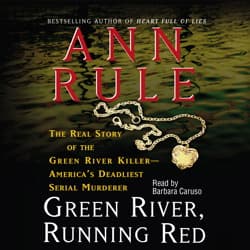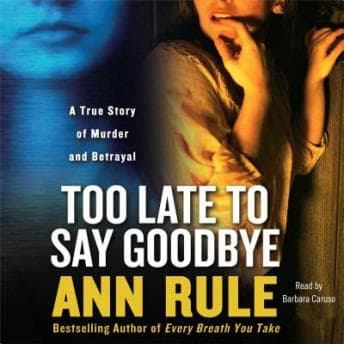

What does it take for two separate women, fourteen years apart, to end up dead with bullets in their heads — both ruled potential suicides — connected to the same man? And why does everyone around him keep saying he was so charming?
I was making chana masala on a Saturday night — alone, voluntarily, don't start — when Barbara Caruso began laying out the life of Dr. Bart Corbin. Dentist. Father. The kind of husband your mother's friends would point to at temple and whisper see, why can't you find someone like that. And somewhere around the third hour, while I was grinding spices, I realized I'd stopped cooking entirely. Just standing there, pestle in hand, doing what I do: building a psychological profile of a man who couldn't tolerate being left.
The Control Freak as Case Study
The research actually shows that the single strongest predictor of intimate partner homicide isn't rage — it's possessiveness. The belief that another person is yours to keep. Bart Corbin is a fascinating case study in exactly this. Ann Rule doesn't psychoanalyze him the way I would (she's a journalist, not a clinician, fair enough), but the evidence she stacks is damning in its pattern. Dolly Hearn, the gorgeous dental school girlfriend who tried to break things off — dead from an apparent self-inflicted gunshot wound in 1990. Jenn Corbin, the wife who was pulling away, emailing another man, talking about divorce — dead from an apparent self-inflicted gunshot wound in 2004. Same method. Same man in the picture. Same inability to let a woman walk away.
What makes this book work psychologically is that Rule doesn't just give you the murders. She gives you the escalation. The controlling behaviors that everyone noticed but nobody connected until it was too late — twice. The way Bart monitored Jenn's emails. The way he isolated her from support systems. The way charm functioned as camouflage. I found myself asking: why does Bart really need to be a dentist specifically? And honestly, the answer Rule builds toward — the precision, the control, the expectation of compliance from people lying vulnerable in his chair — is unsettling in ways she doesn't even have to spell out.
Rule's Method (and Its Limitations)
Ann Rule's signature move is exhaustive interviewing, and you feel every hour of it across this 12-and-a-half-hour listen. She talked to Jenn's sisters, Dolly's friends, the Gwinnett County detectives, prosecutors — the reconstruction is meticulous. But here's my complaint, and it's the same one I have with a lot of true crime that prioritizes thoroughness over structure: there are stretches where you're getting the biographical equivalent of a family reunion slideshow. Jenn's childhood, Jenn's college years, Jenn's early marriage — all rendered with such completeness that I lost the thread of tension at points. Rule understands human nature. She does. But she sometimes trusts the reader to stay patient through sequences that would've benefited from tighter editing. Vendetta has the same structural tension between exhaustive reconstruction and narrative momentum — and honestly handles the pacing problem a little better.
The forensic material, though — that's where things pick up. The circumstantial evidence chain, the almost-unheard-of techniques used to link the gun to Bart, the way investigators connected two deaths across fourteen years and different jurisdictions — this is genuinely impressive procedural work. Rule shines when she's in detective-brain mode.
Caruso Behind the Mic
Barbara Caruso has this precise, mature delivery that suits true crime well. She's not dramatic — no breathless pauses before reveals, no vocal theatrics. Just clean, modulated narration that trusts the material to do the work. I actually appreciated this. After some Ann Rule audiobooks where the narrator's monotone downturn at the end of every sentence makes you want to scream, Caruso's variation is a relief. She moves between the investigative passages and the personal history sections without losing you.
That said, there's not a lot of character differentiation happening. When Caruso reads quotes from Jenn's sisters versus the detectives versus Bart's colleagues, it's all filtered through that same measured tone. For a single-narrator true crime book, this is pretty standard. But if you're someone who needs distinct voices to track who's speaking — you might find yourself rewinding.
Who This Is For (and Who Should Run)
If you study domestic violence patterns, coercive control, or narcissistic personality presentations — even casually — this book reads like a case file wrapped in narrative. It's for people who want to understand the psychology of why two women died, not just the forensics of how. It's also for Ann Rule completists, obviously.
Skip it if you need tight pacing throughout. The middle section drags, and at 12.5 hours, you'll feel it. Also skip if you're triggered by intimate partner violence — Rule is thorough in ways that can be difficult.
My Therapist Would Have Thoughts About Bart Corbin
She'd probably say something measured about attachment disorders and narcissistic injury. I'd say: this is what happens when an entire community enables a man's sense of ownership over women by calling it love. Rule knows this. She just lets the evidence speak instead of editorializing — which is either her greatest strength or her most frustrating restraint, depending on your mood.
The book's title says it all, really. Too late. Twice.