
"Good political thriller that could actually happen."
That line kept running through my head somewhere around hour seven, stuck in Austin traffic on I-35 with Ranger drooling on the back seat. And here's the thing—it's both the book's greatest strength and its most frustrating limitation.
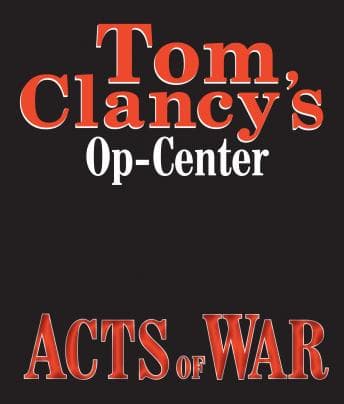
Let me cut to the chase: Acts of War is competent. Solidly competent. Like a staff officer's briefing that covers all the bases but doesn't make you lean forward in your chair. Kurdish terrorists hit a Turkish dam, the new mobile Regional Op-Center deploys, and we're off to the races. Except we're not really racing. We're... methodically advancing toward the objective.
The ROC: When Your Crisis Center Becomes the Target
The concept here grabbed me immediately. A mobile version of Op-Center, deployed in-theater, running real-time surveillance and coordination? That's exactly the kind of capability we dreamed about in the early 2000s. The book treats the Regional Op-Center like a character itself—all that cutting-edge tech, the information flow, the vulnerability of being forward-deployed. When the terrorists realize this prize is sitting there for the taking, the stakes should skyrocket.
Should.
The problem is Rovin (let's be honest, this is more Rovin than Clancy) spreads himself too thin. Too many characters across too many locations. I've run operations with multiple teams across different AOs, and yeah, it's chaotic—but there's a rhythm to it. Here, the jumping around feels less like controlled chaos and more like someone channel-surfing through a crisis. By hour four, I was mentally building an org chart just to keep the players straight.
Kramer's Mission: Mostly Accomplished
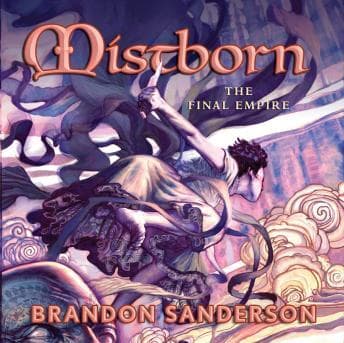
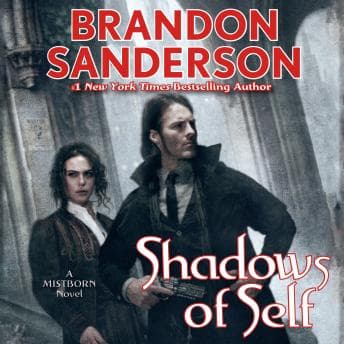
Michael Kramer is an interesting choice here. The man's won AudioFile Earphones Awards, been an Audie finalist—he knows what he's doing. That same controlled professionalism is on full display in his narration of Mistborn: The Final Empire, where he's juggling an even bigger cast across a far more demanding fantasy world—worth a listen if you want to hear what Kramer sounds like when the material gives him more room to run. His character differentiation is solid, particularly when he's handling the international cast. His Korean accent work is restrained and professional. (I've heard enough butchered accents in military training videos to appreciate when someone doesn't go full caricature.)
But here's where opinions diverge, and I get both sides. Some folks found him monotone, "drab" even. I can see it. Kramer delivers this material like he's reading an intelligence assessment—measured, controlled, professional. For a Tom Clancy joint, some listeners want more fire, more urgency. Me? I didn't mind the measured approach. Felt appropriate for the material. But if you're coming off a high-octane Jack Ryan audiobook expecting that same energy, you'll feel the difference.
The twelve-and-a-half-hour runtime became manageable at 1.25x. At 1x? I might've lost patience during some of the slower political maneuvering sections.
Where the Intel Falls Short
Compared to the Jack Ryan series—and that comparison is inevitable—Acts of War lacks punch. The high-tech elements feel dated now (it's a 90s book, so fair enough), but even by period standards, the action sequences don't land with the same weight. The characters are... ordinary. Competent professionals doing competent things. Which is realistic, I'll give it that. Most of the people I served with weren't larger-than-life heroes—they were regular folks doing hard jobs well. But in fiction, you need something more.
The Kurdish terrorist plot is actually pretty clever in conception. Using an attack on their own water supply as a catalyst for regional war? That's the kind of counterintuitive thinking that makes for good thriller material. The execution just doesn't match the premise's potential.
Who's This Mission For?
If you're a completist working through the Op-Center series, this is a necessary checkpoint. If you're into 90s-era military procedurals and appreciate the bureaucratic side of crisis management (the meetings, the intelligence assessments, the inter-agency coordination), you'll find value here. Linda would call it "homework reading"—not exactly a ringing endorsement, but not a dismissal either.
Kramer also narrates Never Split the Difference, and I'll say this—his measured, intelligence-briefing delivery suits that one even better than it suits Acts of War.Skip it if you want Jack Ryan-level action. Skip it if slow-burn political maneuvering makes your eyes glaze over. Skip it if you need a narrator who sounds like he's mainlining coffee.
Mission Debrief
Acts of War is a three-star listen that occasionally threatens to become something more but never quite commits to the escalation. The Regional Op-Center concept is genuinely interesting, the geopolitical scenario is plausible enough to be unsettling, and Kramer delivers a professional if understated performance. But "plausible" and "professional" don't always equal "compelling."
Ranger slept through most of this one. Make of that what you will.
Worth your time? If you're already invested in the series or you've got a long drive and want something that won't demand constant attention—sure, queue it up. But don't spend a full credit on it. Wait for a sale, or catch it on your streaming subscription. There are better uses for premium audiobook currency.