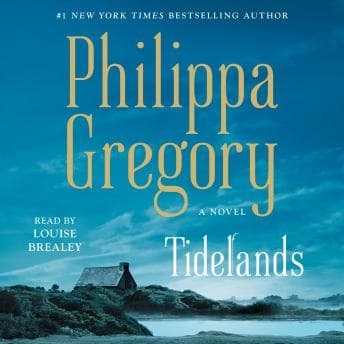

Fifteen and a half hours is a big ask. I need to say that right up front because that's almost double my usual comfort zone, and I went into this knowing I'd be listening for probably two weeks instead of my usual one. But something about the premise - a woman trapped between identities, not wife, not widow, just stuck - hit me right in the chest during a particularly rough Tuesday where I was waiting in the pediatrician's office with a feverish Sophie and two fidgety older kids, and I just thought, you know what, Alinor and I are both just trying to survive here.
The Mud Gets Under Your Fingernails
Philippa Gregory does something here that I genuinely wasn't expecting from the author who gave us Tudor court drama and royal intrigue. She strips all the glamour away and plants you in the marshes of 1640s England, where the tide can literally kill you if you don't know where to step. Alinor is a midwife and herbalist scraping by in a tiny coastal village, and the physical reality of her life - the cold, the hunger, the constant smell of fish and seawater - is so vivid I could practically feel my own hands chapping.
The opening at the churchyard on Midsummer's Eve, where Alinor goes hoping to see her husband's ghost so she can finally know if she's a widow, is genuinely eerie. Louise Brealey plays it with this quiet desperation that immediately tells you everything about who this woman is. She's not dramatic about it. She's just... tired. And then James shows up, this young man she leads across the treacherous tidal flats, and you can feel the whole trajectory of disaster coming but you can't look away.
Here's my issue though: the people who say it's a slow start are not wrong. The first three or four hours are a lot of establishing the political landscape, the village dynamics, who's loyal to Parliament, who secretly still supports the king. It's important context but I definitely drifted during a few school pickup lines and had to rewind. This is NOT a pause-47-times-and-still-track-it kind of book. You need to pay at least moderate attention to keep the political threads straight, especially early on.
Louise Brealey Carries the Marshes on Her Back
I'd never listened to Brealey narrate before, and she surprised me. Her Alinor has this worn-down steadiness to it - not defeated, just careful. Like a woman who's learned exactly how much space she's allowed to take up and measures every word. When Alinor starts falling for James, Brealey shifts just slightly into something warmer, more open, and that contrast does so much work.
Her male voices are decent but not spectacular - James sounds appropriately young and a bit posh, which fits since he's basically a Catholic spy pretending to be a tutor. The village men kind of blend together a bit, which did trip me up once or twice. And there were a few passages where her pacing felt uneven, like she'd rush through a description and then slow way down for dialogue. Minor, but noticeable when you're at 1.25x.
What she absolutely nails is the witch trial energy. When the village starts turning on Alinor - and you know they will, because a beautiful woman who knows herbs and doesn't need a man is basically painting a target on herself in 1649 - Brealey captures this suffocating paranoia. Every sideways glance, every whispered accusation. I was folding laundry during those chapters and I actually stopped and just stood there holding a onesie.
The Ending Question
Okay so. Some readers call the ending predictable, and I get it - you can see the general shape of where things are headed from fairly early on. But here's the thing: Gregory isn't writing a mystery. She's writing about what happens to women who have no power in a world designed to punish them for existing. The predictability isn't a flaw, it's the point. You're watching Alinor make choices knowing exactly how the world will respond, and that slow-motion inevitability is actually more devastating than a twist would've been.
Did it make me cry? Not ugly-cry, but my eyes were definitely wet during the last hour. I finished it parked in my garage on a Friday evening and sat there for an extra ten minutes just... processing. Then Lucas knocked on the car window asking for goldfish crackers and the moment was gone, but still.
This is book one of the Fairmile series, and it does end in a place that made me immediately want to grab the next one, which I consider both a compliment and a personal attack on my limited free time.
Who's Got the Hours (And the Patience)
If you love historical fiction with real grit to it - not the sanitized bodice-ripper version but the actual dirt-and-danger reality of being a woman in 17th century England - this is excellent. If you need a fast-moving plot or a tidy happy ending, this will frustrate you. And if you're a multitasking listener who's in and out of attention? Honestly, save this for a stretch where you can give it some focus. Nap time only if your toddler reliably sleeps 90+ minutes. Car time approved, but maybe not the school drop-off fragments.
Not my usual comfort read, but sometimes you need something with teeth. My book club will love this (if I ever have time for book club again). The last time I felt this wrung out at the end of something was with Song of Achilles — that same slow-building dread where you love the characters too much and the world is absolutely not going to be kind to them.