
How much suffering is one person supposed to take before they break?
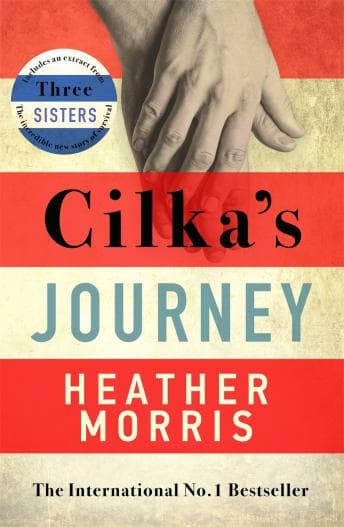
That's the question I pose to my AP Lit kids when we cover The Things They Carried, and honestly, it's the question that haunted me for eleven hours with this book. I listened to Cilka's Journey mostly during my commute down Lake Shore Drive, and let me tell you—staring at the gray water of Lake Michigan while listening to descriptions of a Siberian gulag? A mood. A heavy, heavy mood. (I actually had to switch to a podcast for a few days because the bleakness was messing with my grading mojo.)
If you read The Tattooist of Auschwitz, you know Heather Morris doesn't shy away from the brutal stuff. But this? This is darker. My review of Tattooist of Auschwitz: A Novel wrestled with that same Morris gift for making horror readable, which is not the same as making it easy. It's the story of Cilka, the girl who survived Auschwitz by—in the eyes of the Russians—"sleeping with the enemy." So they liberate her straight into a Soviet labor camp. Out of the frying pan, into the ice.
Louise Brealey's Quiet Witness
Let's talk about Louise Brealey. (Yes, Molly Hooper from Sherlock. I couldn't unhear it at first.)
Narrating trauma is a tightrope walk. Too much emotion and it becomes melodrama; too little and it sounds like a textbook. Brealey chooses the latter path—a very measured, almost detached British delivery. I saw some reviews online complaining about this—"Why does a Slovakian girl in a Russian camp sound like she's from London?"—and look, I get it. The accent choice is... a choice.
But here's my take: The detachment works. When you're describing the things Cilka goes through—sexual enslavement, starvation, the freezing cold—you don't need a narrator wailing into the microphone. You need a witness. Brealey reads with this quiet dignity that lets the horror speak for itself. She understands that sometimes, the most painful sentences need to be read the quietest. (Though, fair warning: if you need a dynamic, multi-voice performance to stay engaged, this might lose you. It's very steady.)
The "True Story" Problem
This is where the English teacher in me has a wrestling match with the reader in me.
As a story of resilience? It's incredible. It reminds me of Solzhenitsyn's One Day in the Life of Ivan Denisovich, but from a female perspective that we rarely get to hear. The focus on the women's relationships in the gulag—the way they hold each other up—is beautiful. That sense of memory doing its quiet, stubborn work is what stayed with me in Hallowed Ground, too. It's the kind of stuff that makes you want to call your mom and tell her you love her.
But—and it's a big but—we have to talk about the "True Story" label. There's been serious pushback from historians and even the real Cilka's family about how much of this is fictionalized. Morris takes liberties. Big ones. My students would probably call this "fanfic of real life," which is disrespectful but... not entirely wrong. If you're a stickler for historical accuracy, you might find yourself grinding your teeth. I had to remind myself to treat it as fiction inspired by truth, rather than a biography. Once I made that mental switch, I enjoyed it way more.
Who's This For (And Who Should Skip)
If you loved The Tattooist of Auschwitz, this is its spiritual successor in every way. Readers drawn to women's stories of survival and the moral gray zones of history will find plenty to chew on here. But if historical accuracy matters deeply to you, or you need a more dynamic narration style to stay hooked, this one might frustrate more than it moves.
Mr. Williams's Office Hours Verdict
Look, this isn't a "fun" listen. It's a slog through human misery, illuminated by these tiny, flickering candles of hope. It's graphic—there are scenes that made me cringe while walking the dog—and it's relentless.
It asks the hard questions about what we do to survive, and how we judge people for it. Just... maybe don't listen to it right before bed. Or before a budget meeting. It stays with you.