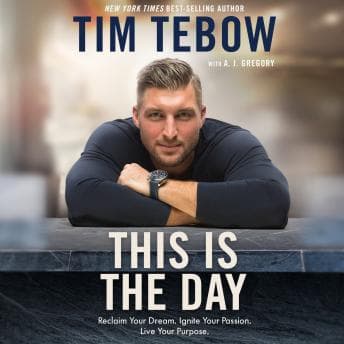

Look, I have a confession. I started this audiobook with my arms crossed—metaphorically, since I was actually chopping onions for a dal that would take three hours and feed me for a week. Tim Tebow. The guy who kneels. The guy with the jaw and the Jesus and the relentless optimism. I'm a researcher who studies why people believe what they believe, and I was fully prepared to dissect this as a case study in performative positivity.
And then he told the story about the woman on the airplane.
Her husband went into cardiac arrest mid-flight. Tebow didn't just pray with her—he got down on his knees in the aisle while medical personnel worked. That's not a photo op. That's not branding. That's a human being responding to terror with the only thing he knew how to offer. This kind of instinctive emotional response is exactly what Wired for Love explores in intimate relationships—how secure people show up in crisis. The protagonist exhibits classic secure attachment patterns—he genuinely believes his presence and faith can help, and that belief isn't arrogance. It's almost... childlike? In the best way.
I found myself asking: why does this work on me?
The Psychology of "Stuck"
Tebow's central thesis is that people are paralyzed by fear, and the cure is action. Simple, right? Almost annoyingly so. But here's where my research brain kicked in: he's not wrong. The literature on behavioral activation shows that waiting until you "feel ready" is a trap. You act, then you feel. Tebow doesn't cite studies—he's not that guy—but his intuition aligns with what we know about anxiety and avoidance.
What makes this character compelling is his complete lack of irony. He genuinely believes that feeding families after Hurricane Irma and pursuing a baseball career at 29 come from the same impulse: refusing to let fear write your story. Psychologically, this tracks. The man has an internal locus of control so strong it's almost clinical. He believes he can affect outcomes, so he tries. And sometimes—often, actually—he succeeds.
The research shows this kind of optimism isn't delusion. It's a predictor of resilience.
Fred Berman Does the Heavy Lifting
Here's the thing about self-help audiobooks: the narrator can make or break them. Fred Berman—who's won Audie Awards, by the way—gives this material exactly what it needs: warmth without schmaltz. His emotional delivery during the cardiac arrest story had me pausing my cooking to just... listen. Not analyze. Listen.
He doesn't try to impersonate Tebow's Florida drawl or his particular brand of intensity. Instead, he reads it like a friend telling you about someone inspiring he met. That distance actually helps. Tebow's message could easily tip into preachy if delivered with too much fervor. Berman keeps it grounded.
At 5 hours 29 minutes, this is a manageable commitment. I finished it across two cooking sessions and a morning jog through Cambridge. (My therapist would have thoughts about why I gravitate toward self-improvement content during exercise. Something about earning rest through productivity. She'd probably also point me toward Girl, Stop Apologizing and tell me to notice the pattern in what I'm avoiding. We're working on it.)
Who Needs This Pep Talk (And Who Doesn't)
Let me be direct: if you're allergic to Christianity, this book will irritate you. Tebow's faith isn't incidental—it's the engine. Every story circles back to God's plan, God's timing, God's purpose. If that's not your framework, you'll spend half the book mentally translating.
But if you can bracket the theology—or if it genuinely speaks to you—there's real utility here. This is a fascinating case study in how belief systems create action. Tebow doesn't overthink. He doesn't wait for permission. He sees a need and moves toward it. That's not nothing.
Listen if: you're feeling paralyzed by a big decision, you're a sports fan who already admires Tebow, or you want faith-based motivation without academic complexity.
Skip if: you need evidence-based frameworks, earnestness exhausts you, or you want nuanced theological discussion.
My Therapist Would Have Thoughts
I didn't expect to be moved. I was. Not by the theology—that's not my lane—but by the consistency of the man's character. He believes something, and he acts on it. Every day. Without apparent doubt or hesitation.
Is that psychologically healthy? Honestly, I'm not sure. My training says some doubt is adaptive. But watching someone operate with this much clarity is... instructive. Even if you can't replicate it.
The onions weren't the only reason my eyes were watering during the airplane story. (Okay, mostly the onions. But not entirely.)
This isn't a book that will change your worldview. But it might—might—get you to make that phone call you've been avoiding. And sometimes that's enough.