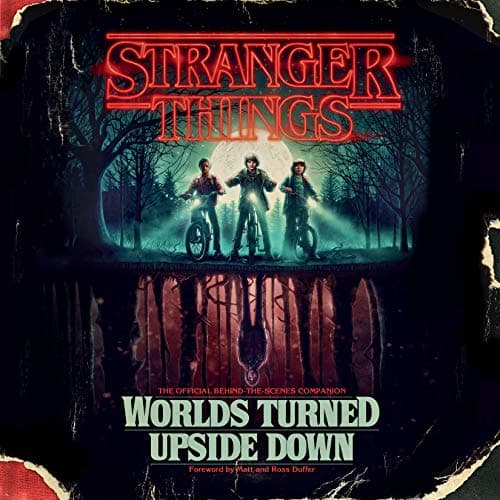
"It was called Montauk." That detail drops early in the listen—the Duffer Brothers' original title for what would become Stranger Things—and it's the kind of thing that makes you sit up straighter in traffic and think, wait, what else don't I know about this show?
I was halfway through a Saturday grocery run when I started this, and I finished it folding laundry that afternoon. At three hours and fifty-four minutes, Stranger Things: Worlds Turned Upside Down is built for exactly that kind of low-stakes, high-interest listening session. But here's the thing you need to know upfront: this was designed as a coffee table book. A gorgeous, photo-heavy, flip-through-while-rewatching companion piece. Strip away the production stills, the early sketches, the handwritten pitch notes, and pump it through your earbuds, and you're going to hit moments where Fred Berman is essentially narrating descriptions of images you cannot see. It happens maybe a dozen times across the listen, and each time there's a small friction—a reference to a costume sketch or a set photo that's doing nothing for you in audio form. It's not a dealbreaker, but it's a consistent reminder that this book was born in a different medium.
What does translate beautifully? The interviews. McIntyre structured this around voices—the Duffer Brothers walking through their creative process, Millie Bobby Brown and David Harbour reflecting on their roles, costume designers explaining why Eleven's pink dress matters, visual effects artists breaking down how they built the Upside Down on a TV budget. Berman handles this interview-heavy material with real skill. He doesn't do impressions of the cast—nothing so gimmicky. Instead, there's a subtle tonal shift when he moves from McIntyre's connective narration into quoted material. His voice warms slightly, gets more conversational, almost conspiratorial. It's the difference between reading someone's words and channeling their energy. Chapter transitions are clean and well-paced, with Berman providing just enough of a beat between sections that the shift from, say, casting stories to production design doesn't feel jarring.
The strongest material covers the show's origin story. Hearing about the Netflix pitch—two unknown filmmakers walking into a room with a concept that had been rejected by every major network—has genuine narrative tension even though you know how it ends. The casting calls are fascinating: learning who almost got cast, how the kid actors were discovered, the chemistry reads that sealed the deal. McIntyre traces the show's cultural DNA back through Stephen King, Spielberg, John Carpenter, and D&D campaigns, and hearing these threads laid out in sequence rather than scanning them on a page gives them a narrative momentum that actually works better in audio. You're hearing the archaeology of influence, one layer at a time.
Some of the technical production talk—specific lighting setups, camera lens choices—can glaze over if you're more interested in character and story than craft. These passages are short, but they're where the book reveals its coffee-table-book bones most clearly. On the page, they'd sit next to gorgeous behind-the-scenes photos. In your ears, they're just... information without a visual anchor.
Here's what clicked for me: this is fan service executed with genuine journalistic access. McIntyre isn't lobbing softball questions or writing puff copy. She's a veteran entertainment reporter who knows how to extract the good stuff. But this is also not a critical oral history. Nobody's interrogating the show's weaknesses or examining its cultural impact with any distance. If you want that kind of analysis, you're in the wrong place.
Berman also narrates Walking Dead: The Fall of the Governor: Part Two, which sits at the opposite end of that spectrum—fiction that digs into its darkness rather than celebrating around it, and honestly a good palate cleanser if you finish this one wanting something with more teeth.
The coverage cuts off after season two with a teaser for season three, which means the book is already several seasons behind. That's a limitation worth knowing about. Those first two seasons are arguably the show's creative peak, so the material holds up—but don't come expecting a full retrospective.
I bumped the speed to 1.25x and it hit a sweet spot. Berman's natural delivery is measured and precise, which serves clarity but can drag slightly during those descriptive-of-images passages. The speed bump adds conversational rhythm without losing any content.
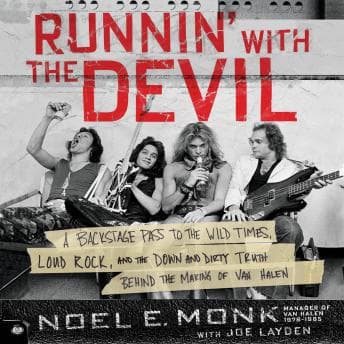
Berman is a multiple Earphones Award and Audie Award winner, and you can hear why. He brought that same quality to Runnin' with the Devil, another behind-the-scenes oral history where the material lives or dies on whether the narrator can make you feel like you're in the room—and he absolutely does. He makes informational content feel like you're sitting across from a knowledgeable friend who happens to have insider access. For a book that's essentially a guided tour through production history, that warmth is what keeps you listening past the missing visuals.
Who Should Listen (And Who Should Skip)
If you're a Stranger Things fan who wants the behind-the-curtain origin story—the rejected pitches, the casting near-misses, the Spielberg and Carpenter DNA—this is a satisfying quick listen, especially at 1.25x. Skip it if you need critical analysis, a full-series retrospective past season two, or if the idea of someone narrating image descriptions without the images sounds like it'll drive you nuts.