
How do you know a crew is actually a crew? Not when the dock is slow and everybody's joking around. You find out when somebody new gets dropped on the roster and the work gets harder on the same day.
That was on my mind at 3:10 in the morning, sitting on the forklift with my thermos and the aisle lights buzzing overhead, this book in one ear. The agency had sent us two temps that week. One was solid. The other vanished after lunch, which is pretty standard. So a story about Matt, Liz, and Aster taking on an unexpected temporary teammate and then heading out to an unexplored planet hit closer to home than a cultivation book has any right to.
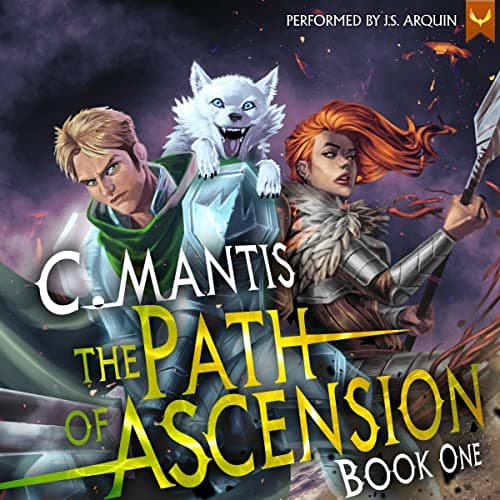
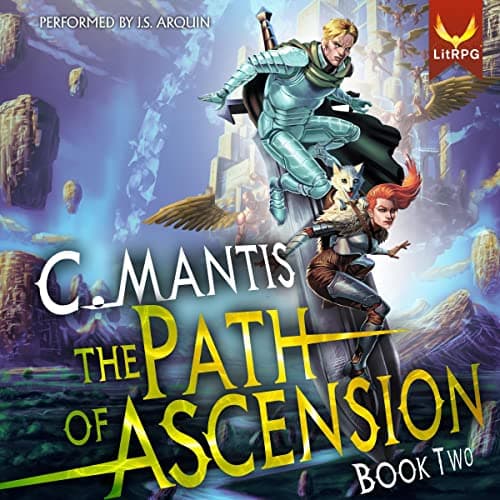
Here's the verdict up front. If you finished book one and liked it, this is worth a credit. It is not a starting point. If you haven't started, the place to begin is The Path of Ascension, which is also narrated by J.S. Arquin. And the narrator still has a couple of habits that will get on some people's nerves.
A Temp on the Roster and No Map to Go By
The smartest thing this sequel does is change the ground under the characters. Book one was about getting in the door and proving you belonged. Book two sends the team out to the edge of the frontier, onto a planet nobody has charted, where nobody has already figured out the dangers for you. That raises the stakes in a way I respect. Out there, a mistake isn't something you get to redo.
The engine under the hood hasn't changed since book one, and that's a compliment. The power system follows its own rules. Nobody suddenly unlocks a miracle because the plot needs one.
What keeps me coming back is Matt. He's a rational lead. He thinks before he swings, sizes up what he's got, and plans the job before he starts it. Every decent supervisor I've worked under ran a shift that way. The fights feel grounded because they come out of that kind of thinking instead of somebody getting lucky. The banter among the three (four, counting the temp) gives you room to breathe between the heavy stretches, and by now the friendship feels earned instead of assigned.
The Chuckle Tax
Now J.S. Arquin. I'll give him his due first. On an unmapped planet, where every new creature and hazard has to be explained before it can kill somebody, his clear exposition does real work. You always know what the team is up against.
But he still slips little chuckles into the narration, small laughs in spots where nobody on the page is laughing. He also performs written interjections like "Ugh" as if they were stage directions instead of just reading past them. I noticed the chuckles less than I did in book one. They're still there, though. He reads the whole run, through The Path of Ascension 11 and beyond, so this is the voice you're signing up for. When you're running on four hours of sleep, a tic like that will either keep you awake or make you grind your teeth, and some nights it did both. I'm not the only one who feels that way. The narration is the main thing people argue about with this series.
I listen at 1.6x because I have to, and speeding it up really does help here. The extra laughs go by before they can bother you. I'd tell most people to start at 1.25x at least.
Seventeen Hours, Thirty-Eight Minutes Off the Map
The runtime is 17h 38m. At my speed that's about eleven hours, which works out to a little over a week of breaks and drives home. That's a real commitment for a middle book, and it does play like a bridge. It builds out the world and grows the team more than it wraps anything up. Progression fantasy always spends time on training, mechanics, and cultivation theory, and this one is no exception. If you love that stuff, it's the good part. If you don't, those stretches are where you'll check how much time is left.
I never felt like the author was wasting my time, though. The frontier setting gives every system detail a reason to exist, because out there, knowing how your power works decides whether you make it home.
Who Ought to Load This Up
This is for you if book one hooked you, you like a lead who uses his head, and you want magic that follows rules you can actually check. You'll get a bigger, riskier world and a crew that feels tighter. The trade-off is roughly eighteen hours of a narrator who chuckles at his own lines now and then.
Skip it if you haven't read book one, because there's no on-ramp here. Skip it too if small vocal tics get under your skin, or if you'd rather fast-forward through progression mechanics to get to the next fight.
Worth the Credit
I don't spend credits lightly. I'd spend this one again anyway. The crew holds up on new ground, the system stays honest, and the narrator is a cost you can live with if you turn up the speed. I'm already lined up for book three.