How many books deep into a series do you have to be before you stop asking yourself, "Am I still enjoying this, or am I just too invested to quit?"
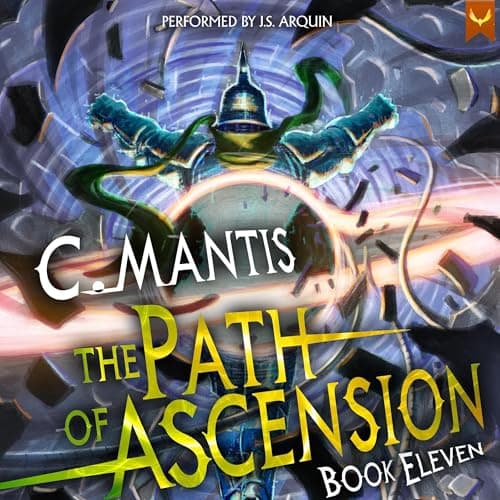
I hit play on Book 11 of The Path of Ascension around 9 PM, after my daughter was asleep and I was sitting at the kitchen table sanding down a rough edge on a cabinet door I'd been meaning to fix for two weeks. Twenty-three hours is a commitment - that's basically the length of a full work week of windshield time between job sites. And look, I've been riding with Matt, Liz, and Aster for a while now. I know their world. I know the system. So the question isn't whether C. Mantis can still write - it's whether this particular chapter in the war justifies another credit.
A Century of War and Still Swinging
The setup here is smart. A hundred years into a three-on-two conflict, and the Empire is grinding down - losing border worlds, stretching its Ascenders thin. That slow bleed of a losing war? That hits different when you think about it in blue-collar terms. It's like running a crew that's been working double shifts for months. Eventually the quality drops, people get hurt, and you're just trying to hold the frame together. Mantis captures that exhaustion well. Matt and crew aren't just fighting - they're working overtime, and the distinction matters.
The LitRPG-meets-Xianxia engine is still humming. The progression system stays internally consistent, which at Book 11 is genuinely impressive. Age of Legend is another series that manages this same long-game consistency, and it's worth a look if internal world logic is what keeps you coming back. Most series this deep start contradicting their own rules. Mantis measures twice. The power scaling makes sense within the framework, and when the enemy factions finally make their "decisive move," it feels earned rather than arbitrary. Stakes keep climbing, and the political chess between empires gives the action scenes actual weight.
But here's the thing - at 23 hours, there are stretches where the pacing feels like framing a house in the rain. You're making progress, but it's slow, it's wet, and you keep checking how much you've got left. The war logistics and faction politics can pile up, and if you're listening while driving (like I do), those sections can blur together at anything less than 1.25x speed.
The J.S. Arquin Problem
I gotta be straight about this because it's been bugging me since earlier books: J.S. Arquin's narration is the drywall mud that never quite dries right. His prose narration - the non-dialogue stuff - is clear, competent, and easy to follow at 1.4x. Fine. But the second a character opens their mouth, it flattens out like a PowerPoint presentation. There's this monotone quality to the dialogue that strips emotion from scenes that should hit hard.
Some listeners have complained about a nasally quality and poor mic setup, and I can hear what they mean. There's a thinness to the audio that better production would fix. When you're spending 23 hours with one voice, these small irritations compound. It's like a nail gun that's slightly miscalibrated - every shot is a little off, and by the end of the day your whole wall is crooked.
I won't say Arquin ruins the book. He doesn't. But he doesn't elevate it either. In a series this deep, with battle scenes this detailed and political tensions this layered, you need a narrator who can shift gears. Arquin stays in second.
Who Gets a Hard Hat and Who Walks Off the Site
If you've been with this series since Book 1, you're buying this anyway - and the story rewards your loyalty. The empire-scale warfare, the progression milestones, the trio's dynamic under pressure: it's all here. If you're a LitRPG or progression fantasy fan who appreciates systems that actually make sense after 11 books, this is your lane. Skip it if you're new to the series (you'll be lost in five minutes) or if flat narration and thin audio production are dealbreakers for you - 23 hours is a long time to white-knuckle through that.
Measure Twice on This One
The story in Path of Ascension 11 is solid construction. Mantis knows his blueprint, the stakes are real, and the war arc is paying off in ways that feel earned after a decade of buildup. But the audiobook experience is dragged down by flat narration and audio quality that doesn't match the ambition of the source material. I kept listening. I'll probably keep going. But I catch myself wishing someone else was reading this to me, and that's not a feeling you want at book 11.
My daughter's asleep, the cabinet door is smooth, and I've got another six hours of war left to finish tomorrow. Construction foreman approved on the story - but the narration needs a whole new crew.