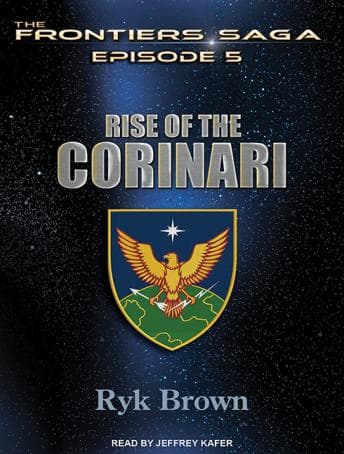

Look, I'll be honest - I came to this as a complete outsider. Fourteen hours of space opera when my usual fare is Dickens and Dostoevsky? My students would be proud. (They've been telling me to "touch grass" and apparently that includes touching fictional galaxies.)
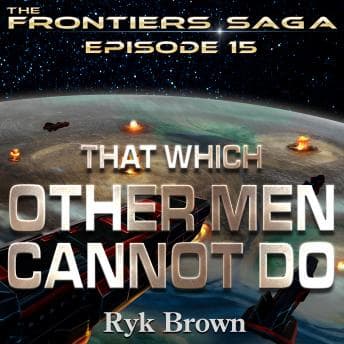
But here's the thing about Ryk Brown's work that grabbed me: underneath all the jump drives and political maneuvering, this is fundamentally about alliances. About trust. About what happens when the center cannot hold - and if that's not Yeats by way of starships, I don't know what is.
When the Classroom Meets the Cosmos
I started this during a particularly brutal week of grading junior essays on The Great Gatsby. Captain Nathan Scott's problems with the Jung suddenly felt very relatable. Political unrest? Try explaining to a seventeen-year-old why the green light matters.
Brown writes with the kind of detail that reminds me of historical fiction - there's a density to his world-building that demands attention. Nightingale: A Novel has that same density—every detail matters, and you can't skim your way through. The Sol-Pentaurus Alliance isn't just a backdrop; it's a living political entity with all the messy complexity that implies. I found myself pausing during my lakefront walks to actually process what was happening. This isn't background listening. This is the kind of book that punishes you for zoning out during faculty meetings. (Not that I would ever zone out during faculty meetings, Principal Martinez.)
The pacing is deliberate. Some listeners call it slow - I'd call it earned. There's a reason we still teach students to read carefully. Brown assumes you're paying attention, and honestly? That's refreshing.
Jeffrey Kafer's Command Performance
Now, about Jeffrey Kafer. The man won a Voicey Award for Best New Voice back in 2008, and you can hear why he's still working. His character voices are distinct - genuinely distinct, not just "slightly different pitch" distinct. When you're dealing with military hierarchies and political factions, that clarity matters.
I've seen some reviews say he sounds like he's "reading a script." I get that criticism, but I'm not sure I agree. There's a crispness to his delivery that feels intentional - almost like a military briefing, which... fits? The emotional moments land when they need to. The action sequences have urgency without becoming breathless.
Here's what I appreciated most: Kafer understands that pause is punctuation. He doesn't rush through the political intrigue to get to the explosions. He trusts the material. (My students would hate this. I love it.)
That said - and I want to be fair here - there are stretches where the narrative complexity makes things genuinely hard to follow. This isn't Kafer's fault; it's the nature of jumping into what is clearly a deep series with established lore. I occasionally felt like I'd walked into the third act of a play everyone else had been watching from the beginning.
The Weight of Fourteen Hours
Fourteen and a half hours is a commitment. I won't pretend otherwise. This is the kind of audiobook that rewards loyalty - fans of the Frontiers Saga clearly adore it, and I can see why. Brown has built something substantial here, with the kind of character development that pays off across multiple books.
For someone like me, coming in cold? It's a different experience. I had a similar feeling with Booked: A Collection of Rom-Com Novellas for Book Lovers—admiring the construction while knowing I wasn't quite the target audience. I appreciated the craft without always feeling the full emotional weight that longtime readers clearly feel. When the book talks about "old friends lost," I could sense the significance without having earned it myself.
But that's not really a criticism of this book - it's just the reality of series fiction. You can't walk into Book Whatever of a saga and expect the same experience as someone who's been there from the beginning. (This is why I make my students read the whole novel, not just the SparkNotes.)
Who This Is For (And Who Should Start Elsewhere)
If you're already invested in Brown's universe, this is apparently one of the stronger entries. The action is exciting, the stakes feel real, and Kafer's narration serves the material well. If you're new to space opera - like I was - this might not be your entry point. Start earlier in the series. Let the world-building accumulate. Then come back to this one when the phrase "Sol-Pentaurus Alliance" means something to you.
Class Dismissed
For me? I'm genuinely curious to go back to the beginning now. Brown writes with enough intelligence and Kafer performs with enough skill that I want to understand what I've been missing. That's not nothing. That's actually pretty rare.
Denise asked me what I was listening to last night. "Space politics," I said. She looked at me like I'd grown a second head. Fair enough. But sometimes you need to leave the classics behind for a few hours and see what the universe has to offer.