
Look, I'm an English teacher. I'm supposed to be reading Middlemarch and annotating Faulkner. So why was I absolutely glued to a space opera about a ragtag alliance fighting tyranny during my morning lakefront walk?
Because Ryk Brown gets something that a lot of literary fiction forgets: pacing is a form of respect for your reader's time. And Jeffrey Kafer's narration? The man understands that pause is punctuation.
The Space Opera I Didn't Know I Needed
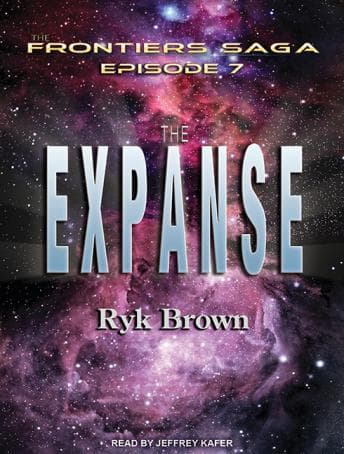
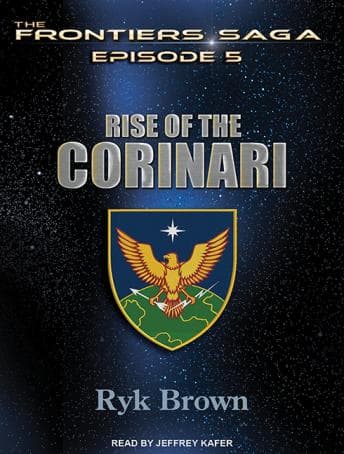
Here's the thing about Rise of the Corinari - it's book five in the Frontiers Saga, and I came in knowing basically nothing about the previous entries. (Don't tell my students I skipped ahead. We literally had a whole unit on reading order last semester.) But Brown weaves in enough context that I never felt completely lost. Disoriented, sure. Like walking into a faculty meeting twenty minutes late. But never lost.
The premise is classic space opera stuff - civilizations clashing, honor being reclaimed, lines being drawn in proverbial sand. What elevates it is Brown's pacing. The suspense builds like a proper three-act structure, and you can feel the big confrontation coming. My wife Denise kept asking why I was walking faster. I didn't have the heart to tell her I was trying to reach a chapter break before we got home.
This is accessible science fiction. Not hard sci-fi that requires an engineering degree, but the kind that prioritizes character and stakes over technical specifications. That same focus on character over complexity is what makes Fifty Shades of Grey work for its audience—though obviously in a very different genre. My students would probably call it "readable." High praise from teenagers who think anything before 2015 is ancient history.
Why Kafer Works
Jeffrey Kafer was a 2015 Audie Award finalist, and honestly, you can hear why. His narration is clean - not flashy, not trying to impress you with vocal gymnastics - just solid, professional storytelling. He's got that rare ability to differentiate characters without making it feel like a cartoon. The pacing matches Brown's writing, which sounds obvious but is actually pretty rare. (I've listened to enough audiobooks where the narrator fights the prose instead of serving it.)
What struck me most was his emotional delivery during the battle sequences. Space battles can get monotonous in audio - just a lot of "fire" and "shields" and tactical jargon. Kafer keeps the tension alive. He understands that even in action scenes, the human element matters. The fear, the resolve, the moments of doubt. That's what makes you care whether the Alliance wins or loses.
I listened at my usual 1.0x because - and I will die on this hill - the author chose those words and the narrator chose those pauses. Speeding through would've undercut the suspense Brown spent chapters building.
Who Should Queue This Up (And Who Should Skip)
If you loved the Hornblower books or any naval fiction where honor and duty matter, this is your spiritual successor in space. Brown writes military science fiction that's more about the people than the technology. The Corinari themselves - this is a story about a people reclaiming their dignity. That's a theme as old as Homer, just with spaceships.
Perfect for commuters. At nearly eleven hours, it'll get you through a solid week of driving or a few long walks. The chapter structure works well for interrupted listening - I paused mid-chapter during a particularly tedious budget meeting (sorry, Principal Martinez) and picked right back up without confusion.
Skip this if you need deep literary prose or experimental structure. This is plot-driven, accessible storytelling. It does what it sets out to do extremely well, but it's not trying to be Ursula K. Le Guin. It's trying to be a really satisfying space adventure. And it succeeds.
Class Dismissed
Yeah, I'm already looking at the next book in the series. There's something refreshing about fiction that doesn't require me to grade it, you know? No symbolism to decode, no unreliable narrators to track. Just good people fighting for what's right in a universe that's trying to crush them.
My students would hate that I'm spending my limited reading time on space opera instead of "real literature." But they also think audiobooks are cheating, so their opinions are suspect. Sometimes you need a story that reminds you why people read in the first place - for the thrill of it, the escape, the simple pleasure of wanting to know what happens next.
Kafer and Brown deliver that. Consistently. For nearly eleven hours.
Worth pausing the faculty meeting for.