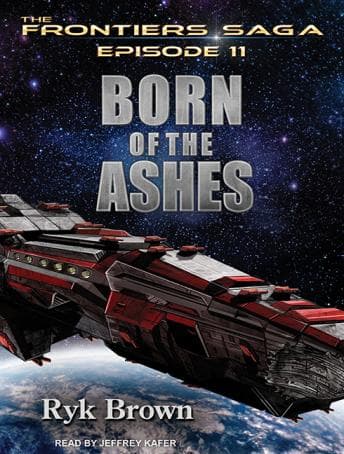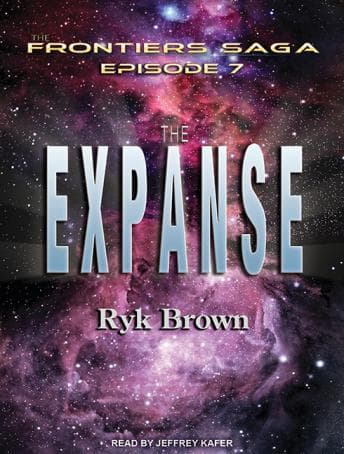

What makes a space opera feel like home? Is it the ship? The crew? The promise of FTL jumps and alien encounters? I've been chewing on this question since finishing Ryk Brown's Expanse (not to be confused with that Expanse - different universe, similar vibes).
So here's the setup: the UES Aurora is finally repaired, the crew's ready to rock, and they've got shiny new tech to play with. All that stands between them and home is a thousand light-years of unexplored space. Which, you know, is basically the D&D equivalent of "you see a dungeon entrance" - you know things are about to get interesting.
The World-Building Is Chef's Kiss
Look, I'm a sucker for detailed sci-fi universes. The kind where someone clearly spent way too much time figuring out how the engines work and what happens when you push the wrong button. Brown delivers that in spades. The technical descriptions? They're there. They're detailed. And honestly? I loved it.
(Yes, I know some people find this heavy-handed. Those people are wrong. Fight me.)
The Frontiers Saga has this military sci-fi DNA that reminds me of reading Weber's Honor Harrington books, but more accessible. That same balance of technical detail and human story shows up in Dark Tower II: The Drawing of the Three, where King builds complex world mechanics without losing the emotional core. Brown doesn't assume you've got a physics degree - he explains things without being condescending about it. The ship systems, the tactical decisions, the way space combat actually works in this universe... it all feels internally consistent. Sanderson-level world-building for the sci-fi crowd.
I was coding (definitely not procrastinating on my thesis) while listening, and I kept pausing to actually pay attention during the technical bits. That's how you know the author's doing something right.
Jeffrey Kafer Walked So Other Narrators Could Run
Okay, I need to talk about Jeffrey Kafer. This guy won a Voicey Award for Best New Voice back in 2008, and you can hear why. His character work is solid - distinct voices that don't blur together, emotional beats that land, pacing that knows when to breathe and when to punch.
The action sequences? Kafer nails the tension. There's this thing some narrators do where they rush through combat scenes and everything becomes an incomprehensible blur of explosions. Not here. The space battles are clear, suspenseful, and genuinely exciting. I caught myself gripping my phone during a few close calls, which probably looked weird on the bus.
His delivery is clean and engaging without being overly dramatic. He's not trying to win an Oscar - he's trying to tell you a story about a ship and its crew crossing a thousand light-years of dangerous space. And he succeeds.
The Cliffhanger Problem (It's Not Really a Problem)
So yeah, this ends on a cliffhanger. Some folks apparently found that frustrating. But like... it's book seven of a series? What did you expect? A neat bow and everyone retiring to a space farm?
The cliffhanger worked for me because the journey getting there was satisfying. You've got crew development, escalating stakes, cool tech reveals, and enough space combat to keep things interesting. If you're the type who needs complete resolution in every book, maybe wait until you can binge the whole saga. But honestly, I kind of love a good cliffhanger. It means I get to think about what happens next while I'm supposed to be working on my thesis.
(I'm never finishing that thesis.)
Who Should Strap In (And Who Should Eject)
This is military sci-fi comfort food in the best way. If you've burned through Scalzi's Old Man's War series and you're looking for something with similar energy but more technical detail, Brown's got you. If you enjoy the tactical aspects of space warfare - positioning, weapons systems, command decisions - you'll eat this up.
My D&D group would love this, honestly. It's got that same collaborative energy, that sense of a crew working together against impossible odds. The Aurora feels like a character herself, and the crew dynamics remind me of the best campaign parties - competent people who actually like each other, facing down threats that should probably kill them.
At just over ten hours, it's a solid listen for a week of commutes or a couple of long coding sessions. The pacing keeps things moving even during the exposition-heavy moments, and Kafer's performance means you're never bored.
Skip if: you hate info-dumps (but you're wrong), you need standalone stories, or detailed technical descriptions make your eyes glaze over. Everyone else? Get in the ship. We're going home the long way.