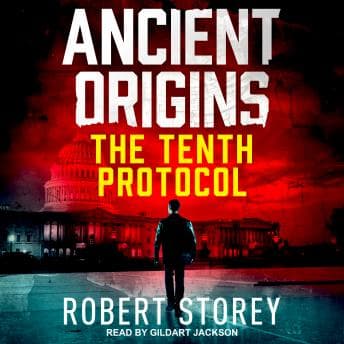

I was three hours into a late-night coding session — ostensibly working on my thesis, actually just staring at a procedural generation algorithm I've been ignoring for six weeks — when The Tenth Protocol hit the part where humanity starts piecing together that they're basically living in a rerun of someone else's apocalypse. I had to stop typing. Not because it was a convenient stopping point. Because my brain needed a second.
That's the premise doing its job. An ancient, technologically advanced civilization wiped out on Earth before humans even showed up. A countdown — the Tenth Protocol — that's been ticking toward a mass evacuation that saves millions but condemns billions. And a small group of surface-dwellers who decide, apparently, that they'd rather die trying than just... watch. As a guy who has spent an embarrassing number of D&D sessions designing civilizations that rose and fell before the players' world began, this is my exact flavor of catnip. The deep-history angle isn't just backdrop — it's load-bearing. The mystery of what destroyed the first civilization IS the ticking clock for the current one. Knight of the Seven Kingdoms scratches a similar itch if you want ancient history doing structural work rather than just set dressing — though it leans medieval fantasy rather than sci-fi extinction.
The Countdown Architecture (Or: Why This Hits Different as Book 5)
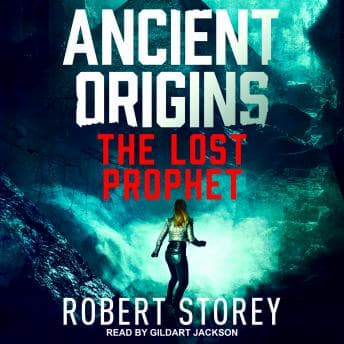
I should be upfront — I jumped in at book five of the Ancient Origins series, which is either brave or chaotic depending on your worldview. (My D&D group would say chaotic neutral.) Storey does enough catch-up work that I wasn't completely lost, but there's definitely a sense that the world-building payoff is richer if you've been here since book one. The progression is satisfying in the way that a long-running series SHOULD feel by book five — you get the sense that pieces laid down chapters and books ago are finally clicking into place. The dual-timeline structure, with humanity uncovering the ancient civilization's secrets while their own extinction clock runs down, is doing a lot of heavy lifting and mostly succeeds. It's Sanderson-level world-building ambition, even if the execution occasionally trips over its own mythology.
At 18 hours, this is a commitment. Yes, it's 18 hours. Yes, it's worth it — but only if you're the kind of person who likes their sci-fi with actual weight behind it. This isn't background listening. The story demands focused attention, especially when the ancient civilization's history starts intersecting with the present-day evacuation plot in ways that require you to remember things from two hours ago. I tried half-listening while debugging code. I missed a plot connection and had to rewind 20 minutes. Learn from my mistakes.
Gildart Jackson: Good, With a Caveat
Here's where I have to be honest in a way that might annoy some people. Jackson is genuinely good. He's got real acting chops — the emotional weight in quieter character moments lands, and his pacing through the tension-heavy evacuation sequences keeps the urgency real. When characters are scared or desperate, you hear it in a way that feels earned rather than performed.
But — and this is a real but — if you're the kind of listener who tracks characters by voice alone, you're going to work harder than you should. The differentiation between characters is there, but it's subtle. We're talking shades, not distinct colors. I kept the cast straight mostly through context and name-drops rather than immediately recognizing who was speaking. For a story with this many moving pieces and this many characters navigating an extinction-level event, cleaner separation would've helped significantly. It's not a dealbreaker. It's a friction point. Jackson's overall performance is strong enough that I'd still call it a net positive — but "easily top ten narrators" might be the enthusiasm of someone who hasn't listened to Steven Pacey. Steven Pacey walked so other narrators could run. Jackson is solidly in the good-but-not-legendary tier.
Should You Survive This Apocalypse With Me?
If you like your sci-fi with ancient history mysteries, extinction-level stakes, and the kind of world-building that rewards patience — yes, absolutely. If you're a LitRPG person who wants fast progression and clear power scaling, this is a different kind of beast. If you need razor-sharp narrator differentiation to follow complex plots, budget some rewind time.
I read this instead of writing my thesis. Dr. Patel, if you're somehow reading Audiobooks4soul.com reviews at midnight, I want you to know I have no regrets. Myth Agent is another one I burned thesis hours on — different flavor, but the same pull of mythology doing more than decorative work. The Tenth Protocol scratched a very specific itch — the "what if humanity is just the second draft" itch — and I'm probably going back to book one to fill in the gaps I felt at book five.
The magic system — well, the ancient tech system — is chef's kiss. That's enough for me.