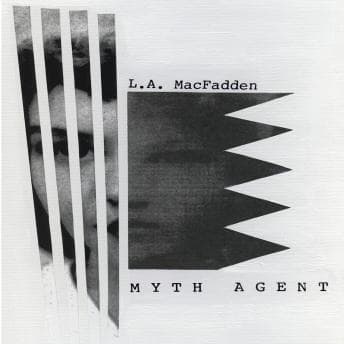

What if your mentor was right about everything, even the stuff that sounds completely bonkers?
That's pretty much the premise of Myth Agent, and honestly? I was not expecting to get as sucked in as I did. I started this during a particularly brutal debugging session (my thesis code was throwing errors I'd never seen before, don't ask), and by the time I looked up, three hours had vanished and my code was still broken. Worth it.
The Setup That Hooked Me
So we've got Ruttledge Rosenbaugh - and yes, that name is a mouthful, but it grows on you - a science professor at Hensley University who's spent years learning from a mentor obsessed with time travelers walking among us. Standard "eccentric academic" stuff, right? But then a kid literally travels back in time to his secret basement laboratory in 1910, and suddenly all that fringe theory becomes very, very real.
The magic system here - okay, it's more of a time travel system, but same energy - is chef's kiss. L.A. Macfadden clearly thought through the mechanics. There's internal consistency. Rules that matter. Prophecy of the Seven has that same rigorous approach to its magic rules—everything clicks together like well-written code. This is Sanderson-level world-building in a six-hour package, which is honestly impressive. Most authors need 40 hours to establish this kind of framework. (Yes, it's 40 hours. Yes, it's worth it. But sometimes you need something tighter, you know?)
Gary Macfadden Behind the Mic
Gary Macfadden's narration is... look, it's solid. His voice has this smooth, deep quality that works really well for the academic setting. Professor Rosenbaugh sounds like someone who's spent too many late nights in a lab surrounded by books and questionable equipment - basically, he sounds like half my department.
The pacing is well-balanced. I never found myself reaching for the speed controls, which is saying something because I usually bump everything up to 1.25x minimum. Some reviewers have mentioned his accent can be a bit grating, and I can see where they're coming from? It's not for everyone. But it didn't bother me. Your mileage may vary.
Where he really shines is in the quieter moments. The mentor-student dynamic comes through clearly, and there's this warmth to how he handles the professor's growing realization that maybe, just maybe, his mentor wasn't crazy after all.
Where It Drags (And Where It Doesn't)
Okay, real talk: the beginning is slow. Like, "I almost switched to something else" slow. The setup takes its time establishing Ruttledge's academic world before anything supernatural happens. If you're not into info-dumps, this isn't for you (but you're wrong). The world-building payoff is worth the patience.
Once the time-traveling kid shows up? The progression is satisfying. Things click into place. Mysteries deepen. I found myself doing that thing where you're supposed to be falling asleep but you keep telling yourself "just one more chapter" and suddenly it's 2 AM and you have a meeting with Dr. Patel in six hours.
(I read this instead of writing my thesis. Obviously.)
Some folks have complained about predictability, and... yeah, I can see it. If you've consumed enough time travel fiction, you might see certain beats coming. But the execution is strong enough that I didn't mind. It's like D&D - sometimes you know the dragon is at the end of the dungeon, but the journey there is what matters.
The Mythology Angle
The blend of mythology and time travel is where things get interesting. I don't want to spoil anything, but there's a creative weaving of different mythological elements that my D&D group would absolutely lose their minds over. It's giving me campaign ideas, honestly. The way Macfadden connects these disparate elements into a coherent system? Clever stuff.
If you're a Dresden Files fan, you'll find familiar vibes here. Same energy as Iron Druid Chronicles too. Shine nails that same blend of mythology and modern-day weirdness, though it leans harder into the emotional beats. Urban fantasy meets academic mystery meets time travel shenanigans. It's a lot, but it works.
Would I Listen Again?
At just over six hours, this is a perfect weekend listen. Not a massive commitment, but substantial enough to feel like you've actually experienced something. The production quality is clean - no weird audio artifacts or jarring transitions.
Is it perfect? Nah. The characters could use more depth in places, and the slow start might lose some listeners. But for what it's trying to do - blend mythology with time travel in an academic setting - it succeeds. The magic system is chef's kiss, the premise is genuinely intriguing, and Gary Macfadden's narration carries it well.
I'm curious where this goes if there's a sequel. And I'm definitely not using this as another excuse to avoid my thesis. Definitely not.