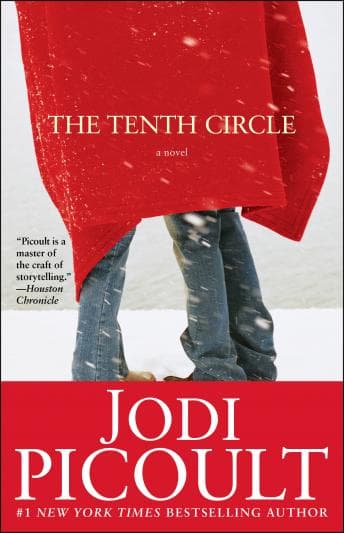

Look, I teach teenagers. I watch them navigate the minefield of high school social dynamics every single day. So when Jodi Picoult promises to reveal "today's youth culture" through the lens of trauma and family implosion, I'm skeptical. Most authors get it wrong. They write teenagers like small adults or cartoon characters.
Picoult doesn't get it wrong.
The Father We Think We Know
What grabbed me about Tenth Circle wasn't Trixie—though her story is devastating in ways that made me pause the audiobook more than once while grading papers at my kitchen table. It was Daniel Stone. The comic book artist father with a past so carefully buried that even his wife doesn't know the man she married.
This is what Picoult does better than almost anyone writing contemporary fiction: she takes the people we think we understand and peels back layer after layer until we're not sure if we're looking at a hero or a monster. Or both. Probably both.
Carol Monda's narration carries this ambiguity well. Her voice has this soothing quality that lulls you into the domestic rhythms of the Stone family—and then something terrible happens, and that same steadiness becomes almost eerie. Like she's reading you a bedtime story about the apocalypse. (My students would hate this comparison. I love it.)
Where Monda Shines—and Where She Doesn't
Here's the thing about Monda's performance: she's great with emotional weight. The heavier scenes land. You feel the devastation, the slow unraveling of a family that thought they were doing everything right.
But—and I noticed this during a particularly long walk along the lakefront with Denise—the character differentiation gets muddy sometimes. When you've got a fourteen-year-old girl, her parents, her ex-boyfriend, and a whole ecosystem of high school drama, you need distinct voices. Monda doesn't always give you that. There were moments where I lost track of who was speaking, especially in dialogue-heavy scenes. Not a dealbreaker, but it pulled me out of the story more than once.
The pacing, though? Solid. Thirteen and a half hours is a commitment, and I never felt like I was slogging through filler. Picoult structures this thing like a thriller even though it's really a family drama wrapped in a revenge narrative wrapped in a meditation on identity. The woman knows how to keep you listening.
What This Reminds Me Of
If you loved My Sister's Keeper—and honestly, who didn't ugly-cry through that one—this is its darker, angrier cousin. Less about impossible medical choices, more about impossible moral ones. What would you do to protect your child? How far is too far? And when you cross that line, can you ever come back?
This reminds me of what Hemingway said about writing—that the dignity of movement of an iceberg is due to only one-eighth of it being above water. Picoult's doing that here. Daniel's past in Alaska, his capacity for violence, his transformation from wild young man to mild-mannered father—it's all under the surface until it isn't.
The prose deserves to be savored. I listened at 1.0x because Picoult is doing real work with language, and Monda (despite the occasional flat moment) understands that pause is punctuation. There's a rhythm to this story that faster listening would destroy.
Who Should Listen (And Who Should Skip)
Parents. Definitely parents. But also anyone who teaches teenagers, works with teenagers, or remembers being a teenager in that visceral, uncomfortable way. Picoult captures something true about adolescence—that terrifying moment when you realize the adults in your life are just as lost as you are.
Who should skip? If you need your narrators to do distinct voices for every character, sample first. Monda's strength is emotional consistency, not vocal gymnastics. Also, content warning: this book deals with sexual assault. It's handled with care, but it's not easy listening.
Worth Pausing the Faculty Meeting For
I finished this one during Principal Martinez's quarterly curriculum review. (Sorry, Principal Martinez. Your PowerPoint on standardized testing metrics was very important, I'm sure.)
But here's my honest take: Tenth Circle isn't Picoult's best work. It's good—really good, actually—but it doesn't gut-punch you quite the way Nineteen Minutes does. For that kind of emotional devastation wrapped in a thriller structure, I Found You: A Novel comes closer to hitting that same nerve. The Dante's Inferno framing device with the comic book panels is clever, though obviously you lose some of that in audio format.
Still. This is why we still read the classics, why we still engage with stories about families in crisis. Because the questions never get old. How well do we really know the people we love? What are we capable of when everything we care about is threatened?
Monda gets you through thirteen hours without ever making you want to quit. That's not nothing. And Picoult gives you a story worth the investment—even if it's not quite the standout some of her other novels are.
Worth your time. Maybe not your first Picoult, but definitely not your last.