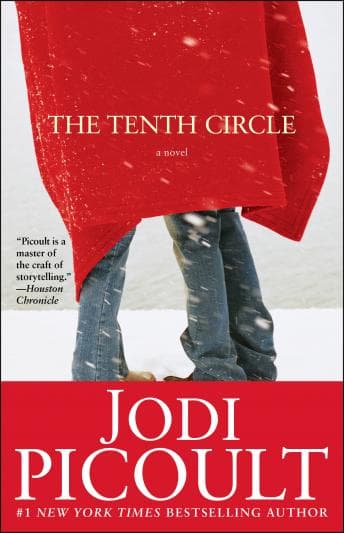

Let me cut to the chase: this one's not my usual lane. When Linda saw Jodi Picoult on my phone, she actually laughed. But a client recommended it - said it had courtroom drama and moral complexity. And honestly? She wasn't wrong.
Here's the setup. Nina Frost is an assistant DA who prosecutes child abuse cases. Then her five-year-old son Nathaniel gets sexually abused by a priest. She does what any parent might fantasize about - she shoots the guy. In a courthouse. In front of everyone. Case closed, right?
Except it's not. Because this is a Picoult novel, and nothing stays simple.
I burned through this during a week of windshield time between Austin and Houston. Fourteen hours is a long haul, but the pacing kept me engaged through most of it. The multiple narrators - Carol Monda, Michele Medlin, and Susan Bennett - actually work here. Each one takes different perspectives, and it helps you track whose head you're in. Monda handles Nina's sections with this raw, barely-controlled intensity that felt authentic. When Nina's falling apart, you hear it. When she's compartmentalizing like only someone in crisis can, you hear that too.
Now look. I've seen some ugly stuff overseas. Things that don't leave you. So when a book deals with child abuse, I'm not looking for exploitation - I'm looking for honesty. Picoult mostly delivers. She doesn't sensationalize, but she doesn't flinch either. The investigation scenes, the forensic interviews with the kid, the way the legal system grinds forward while a family disintegrates - it felt researched. She clearly did her homework on how these cases actually work.
Where the Mission Stalls
The middle section drags. There's a lot of internal processing, a lot of relationship dynamics between Nina and her husband that started feeling repetitive around hour eight. Ranger actually fell asleep during one of these stretches, and he's usually pretty engaged. (Yes, I know that's not a scientific measure, but still.)
The narration has one issue that other listeners flagged, and I gotta agree - the voice for Nathaniel, the five-year-old boy, sounds like a little girl. It's distracting. Every time the kid spoke, I'd get pulled out of the story. Not a dealbreaker, but noticeable enough that I'm mentioning it.
The Courtroom Delivers
What works? The courtroom scenes. Now we're talking. The trial of a mother who killed her son's abuser - in front of witnesses, on camera - while evidence emerges that maybe she got the wrong guy? That's compelling stuff. The legal maneuvering, the witness testimony, the way public opinion shifts - Picoult handles it well. It's not Grisham-level procedural detail, but it doesn't need to be. The focus is on the moral questions, not the legal technicalities.
That same kind of philosophical weight shows up in Alchemist, though obviously in a completely different context.
And those moral questions are genuinely thorny. Would you kill someone who hurt your child? What if you were wrong? What does justice even mean when the system fails? I've thought about these questions in different contexts - rules of engagement, collateral damage, the gap between what's legal and what's right. Picoult doesn't give easy answers, which I respect.
The ending, though. Ugh. Look, I won't spoil it, but it wraps up too neatly. After fourteen hours of complexity and moral ambiguity, the resolution felt... convenient. Like the author needed to land the plane and just picked the nearest runway. Several other listeners complained about this too, so it's not just me being grumpy.
Who's This For?
If you're into legal drama with emotional weight, this delivers. If you appreciate multiple narrators who actually differentiate characters, the production works. If you need everything to explode every thirty pages, this isn't your book. (Linda was right about my usual preferences, but sometimes you branch out.) Skip it if child sexual abuse is a hard no for you - it's central to the plot. Handled seriously, not gratuitously, but it's there.
Mission Debrief
I'd say sample first. The narration style either works for you or it doesn't, and that kid voice is going to bother some people more than others. But if you can get past that, there's a solid legal thriller underneath with some genuine emotional punch.
Ranger gave it three tail wags out of five. I'm calling it 3.5 stars - good, not great, worth the drive time if you're in the right headspace for heavy subject matter.