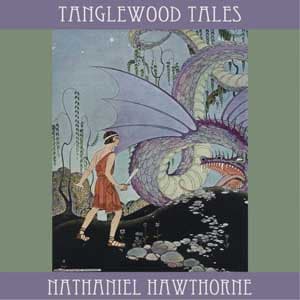

Greek mythology retellings for children, written in 1853. This is not my usual fare.
But here's the thing—I picked this up during a week when every shift was a disaster. Three codes in one night, a patient who reminded me too much of my lola, and the kind of exhaustion that makes you forget your own birthday. I needed something that wasn't going to ask anything of me. Something that felt like being tucked in.
Hawthorne delivered. Sort of.
Mythology Through a Victorian Tea Strainer
Compared to the actual Greek myths—you know, the ones with all the dismemberment and divine assault—Hawthorne's versions are gentle. Softened. Medusa becomes almost sympathetic. The Minotaur story loses most of its horror. Perseus is basically a nice young man on an adventure.
And honestly? For a 6.5-hour listen during my 3 AM charting sessions, that's exactly what I wanted. The prose is old-fashioned in that way where sentences roll on for entire paragraphs, but there's something genuinely soothing about it. Hawthorne writes like he's telling these stories to actual children gathered at his feet—which, historically, he was. The framing device has him literally narrating to kids at a place called Tanglewood.
My mom used to tell me Filipino myths the same way. Sanitized for consumption. I didn't learn the real version of the aswang stories until I was in nursing school and nothing could scare me anymore. That same kind of careful smoothing shows up in Memoirs of a Geisha—beautiful on the surface, but with the harder truths tucked away.
The LibriVox Situation
Okay, let's talk about the elephant in the room. LibriVox means volunteer narrators, which means you're getting different voices for different chapters. Some are genuinely lovely—clear, well-paced, the kind of voice you'd want reading to your kids. Others sound like they're recording in a bathroom while their dog barks in the background.
The quality inconsistency is real. You'll be drifting off to a pleasant telling of Theseus and the Minotaur, then the next chapter hits and suddenly you're adjusting your volume because the new narrator is either whispering or practically shouting. It's free, so I can't complain too hard. But if you need consistent audio quality, this will drive you up the wall.
I've listened to enough audiobooks to know when production issues are dealbreakers. These aren't quite that. They're more like... tolerable annoyances. The kind of thing you roll your eyes at and keep going.
Who Should Queue This Up (And Who Shouldn't)
Parents looking for something to play in the car that isn't Frozen for the eight hundredth time? This works. The stories are engaging enough for kids, gentle enough that you won't have to answer uncomfortable questions about why Zeus does what Zeus does, and long enough to get you through a road trip.
Classics enthusiasts who want to hear Hawthorne's prose out loud? Also works. His sentences are designed for oral storytelling. They hit different when spoken.
People looking for a thriller with accurate mythology? Skip this entirely. There's no tension here. No darkness. This is mythology with all the edges sanded down.
Me, specifically? I needed something that asked nothing of me and gave me gentle, familiar stories in a format I could zone out to during paperwork. Mission accomplished.
Charting Complete
I'm not going to pretend this changed my life. It didn't. But it got me through a brutal week, and sometimes that's enough.
The production quality is inconsistent because that's what free volunteer audiobooks are. The stories are simplified because they were written for Victorian children. Hawthorne's prose is dated because the man died in 1864. None of these are surprises.
But there's something genuinely nice about hearing these old myths told in this old way. It reminded me of my mom reading to me and my siblings—five kids crammed into one bedroom, listening to stories about heroes and monsters, all of us too young to know how complicated the world actually is.
Carlos asked why I was smiling at my dashboard during the drive home. I blamed the sunrise. But really, it was Hawthorne describing Pegasus like he was the most wonderful thing in the world, and for a moment, I believed him.