
"Do not learn the ways of this king. Do not."
That line hit me somewhere around the forty-minute mark, and I had to stop walking. Just stood there on the lakefront trail, joggers splitting around me like I was a rock in a river, staring at nothing. Because Gene Edwards wasn't just talking about Saul. He was talking about every petty, insecure authority figure I've ever served under. Every department chair who confused control with leadership. Every pastor who weaponized his position. And yeah - if I'm being honest with myself at 11 PM on a Tuesday - he was talking about some version of me, too.
The Smallest Book That Ever Wrecked Me
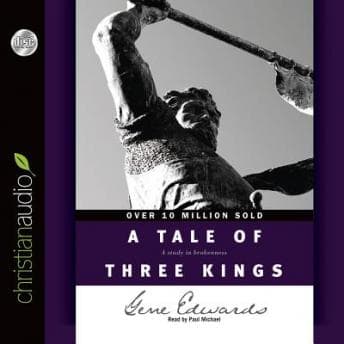
Let me get this out of the way: A Tale of Three Kings is an hour and forty-two minutes long. That's shorter than most faculty meetings. (It's definitely shorter than Principal Martinez's annual budget presentation, which I definitely paid attention to last spring.) You could listen to this during a single commute and still have time for your morning coffee order.
But here's what Edwards does with those hundred minutes that most authors can't manage in five hundred pages: he retells the stories of David, Saul, and Absalom as a parable about spiritual authority, brokenness, and the terrifying choice between becoming the tyrant who wounded you or becoming something entirely different. The prose is stripped bare - almost psalm-like in its rhythm. Short declarative sentences. Questions that sit in your chest. This reminds me of what Hemingway said about writing - leave out everything that isn't essential, and the reader will feel the omitted parts more deeply. Edwards clearly studied at that school.
The first section, focused on young David enduring Saul's madness - the spears, the jealousy, the paranoia - reads like a manual for anyone who's ever been crushed by someone who was supposed to protect them. And I don't just mean in church contexts. I've watched seventeen-year-olds in my classroom carrying wounds from coaches, parents, youth group leaders who turned authority into a weapon. Edwards doesn't name those situations, but the parable does what great parables always do: it leaves a door open for your own story to walk through.
What Paul Michael Understands About Silence
Paul Michael narrates this with a warmth that never tips into sentimentality - and that's a harder line to walk than people think. His voice has this quality I can only describe as campfire pastoral. Like someone telling you a story they've carried for a long time and finally trust you enough to share. The narrator understands that pause is punctuation, and Michael uses silence the way Edwards uses short sentences - to let meaning land before moving on.
What I appreciated most: he doesn't perform this like a dramatic reading. There are moments - particularly in the Absalom section, where Edwards examines the seductive danger of the charismatic rebel who gathers the wounded to himself - where a lesser narrator might have leaned into theatrical villainy. Michael keeps it measured. Almost gentle. Which makes the content hit harder, because you realize Edwards isn't asking you to hate Absalom. He's asking you to recognize Absalom in yourself. That quiet, righteous anger that convinces you your rebellion is justified.
My one note: the production is clean but simple. No music, no ambient sound. Just voice. For this particular book, that's the right call. You don't need atmosphere when the words are doing this much work.
The Gap Some Listeners Will Feel
I've seen the criticism that Edwards skips the action - the battles, the political intrigue, the parts of David's story where things actually happen. And that's fair. If you come to this expecting a biblical historical narrative, you'll feel cheated. Edwards isn't interested in what David did. He's interested in what David didn't do - the spears he didn't throw back, the throne he didn't seize, the revenge he didn't take. That deliberate omission IS the theology.
But I'll be honest: the Absalom section feels thinner than the Saul section. Edwards has less patience for the third king, and it shows. The David-Saul dynamic gets this rich, aching exploration, while the David-Absalom conflict feels more like a lesson delivered than a story discovered. My students would recognize the difference - it's the gap between showing and telling, and even great writers stumble into it.
Who Needs to Hear This (And Who Doesn't)
If you've ever left a church, a ministry, a job, or any community feeling like you got run over by someone who claimed to love you - this book was written for you. Full stop. It's also uncomfortably good reading for anyone IN leadership, because Edwards has this quiet way of asking: which king are you becoming?
If you want rigorous biblical scholarship or a detailed retelling of 1 and 2 Samuel, look elsewhere. This is a parable wearing biblical clothes, and it's speculative in ways that will bother some readers. That's fine. Parables aren't supposed to be comprehensive. They're supposed to be true in the way that matters. I kept turning that over while listening to Bible (KJV) NT 20: James recently - James operates the same way, these short declarative punches that don't explain themselves so much as just land on you and wait.
The Lesson Plan I'll Never Assign
I can't teach this in a public school English class, obviously. But I keep thinking about it in those terms - about how Edwards does with biblical narrative what the best historical fiction does with any source material. He finds the emotional logic underneath the events and follows it where it leads. The prose deserves to be savored, even at under two hours. Especially at under two hours.
I'm going to listen to it again next week. Same trail. Same pace. 1.0x, because Gene Edwards chose those words and Paul Michael chose those pauses, and I choose to hear them properly.
Worth pausing the faculty meeting for. Worth pausing a lot of things for.