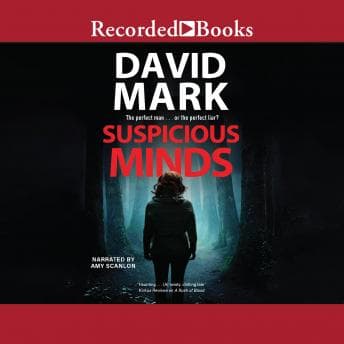

David Mark understands something most thriller writers don't: the real horror isn't what might be lurking in the woods. It's what we're willing to believe about the people we love.
I started this one around midnight, which—yes, I know. Classic Jordan mistake. But there's something about psychological thrillers that demands darkness. Not just metaphorical darkness, though Mark delivers plenty of that. Actual darkness. Shirley was doing her 2 AM zoomies while I was white-knuckling my headphones through Liz's increasingly fractured perception of reality.
The Unreliable Narrator We Actually Deserve
Here's the thing about Borderline Personality Disorder in fiction: most writers use it as a cheap trick. A "gotcha" diagnosis to explain away plot holes. Mark does something braver. He puts us inside Liz's head and makes us feel the desperation—the way she clings to Jay even knowing he's controlling, the way she immediately transfers that need onto Jude. It's uncomfortable. It should be.
Amy Scanlan's narration walks a tightrope here. She doesn't play Liz as "crazy" (god, I hate that lazy shorthand). Instead, she gives us someone genuinely trying to navigate a brain that keeps betraying her. The voice wavers at the right moments. Gets too bright, too hopeful when Liz meets Jude. There's this quality—almost breathless—when Liz describes the brooding farmer who "just keeps on rescuing her." You can hear the red flags she's ignoring.
Yorkshire Gothic, But Make It Psychological
Mark spent years as a crime reporter for the Yorkshire Post, and it shows. The maze of country roads where Liz crashes isn't just setting—it's a metaphor he commits to. Lost in unfamiliar territory, desperate for someone to show her the way. Jude appears like a gothic hero, all intensity and isolation, and Mark lets us fall for it right alongside Liz.
But those woods where Jude's wife died? They're always there. In the background of every romantic scene, every moment of "new happiness." The audiobook's 10-hour runtime gives Mark space to let that dread build slowly. This isn't a thriller that rushes to its reveals. It marinates in unease.
Scanlan handles the Yorkshire setting with restraint—she doesn't overdo regional accents or lean into caricature. The production is clean, no distracting sound effects or music cues. Just her voice and Mark's increasingly claustrophobic prose.
Where It Gets Complicated
I'll be honest: the middle section tested my patience. There's a stretch around hours 4-6 where Liz's internal spiraling starts to feel repetitive. We get it—she's questioning everything. She's unreliable. But Mark circles the same anxieties a few too many times before pushing the plot forward.
And look, the "dead wife in the woods" mystery isn't exactly groundbreaking territory. You've read this setup before. Seen it in a dozen Lifetime movies and half the thrillers on your TBR list. What elevates it here is Mark's refusal to make Jude a simple villain or a simple victim. When his past "boils into the present," it's messier than the genre usually allows.
The content warnings are real, by the way. Abuse, violence, sexual content—Mark doesn't shy away from the uglier aspects of controlling relationships. If you've experienced domestic abuse, proceed with caution. This isn't trauma-for-shock-value, but it's not gentle either.
Who Needs This In Their Ears (And Who Should Hit Skip)
If you're a "Gone Girl" devotee who's been chasing that unreliable narrator high ever since, this scratches the itch. If you appreciate psychological horror that's more about dread than jump scares—Shirley Jackson walked so David Mark could run. That slow-building terror also defines Pretty Baby, where domestic unease becomes something far more sinister. If you need action every chapter, look elsewhere. This is slow-burn manipulation, the kind that makes you question your own judgment alongside Liz's.
Skip if: you're tired of the "suspicious husband" trope, you need faster pacing, or you're looking for something light. This ain't it.
Lights On Until 3 AM
My podcast listeners are going to love this—it's exactly the kind of psychological horror that rewards close listening and doesn't insult your intelligence. Mark writes "at the top of his game" according to Publishers Weekly, and yeah, I see it. The man knows how to make you distrust everyone, including yourself.
Scanlan commits to the performance. That's rare in this genre. She doesn't telegraph the twists or oversell the emotional beats. By the final hour, I'd forgotten I was listening to a narrator at all—I was just inside Liz's head, terrified of what she was about to discover.
Horror that respects the genre. Even if it cost me sleep.