
What if the cave paintings at Lascaux weren't just art - but trip reports?
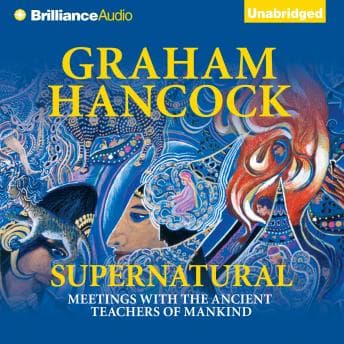
I know, I know. That sounds like something Kevin's weird cousin would say at Thanksgiving after too much wine. But here's the thing: Graham Hancock actually builds a surprisingly systematic case for this, and I found myself genuinely engaged while debugging a gnarly race condition in my head during my morning commute.
The Engineer Brain vs. The Shaman Brain
Look, I'm a skeptic by profession. I debug distributed systems. I need evidence, logs, reproducible results. So Hancock's central thesis - that prehistoric humans accessed some kind of shared consciousness through hallucinogens and that's why cave art across continents shows the same weird human-animal hybrids - should have made me roll my eyes into the back of my skull.
But he doesn't just throw ideas at the wall. He builds his argument like... okay, like a surprisingly well-structured API. He starts with the hard archaeological data (the cave paintings, their dating, their similarities across cultures), then layers in ethnographic research on shamanic practices, then adds his own firsthand ayahuasca experiences in the Amazon. Each piece connects to the next.
Does the science hold up? Eh, partially. The neurological research on how hallucinogens produce consistent visual patterns (the spirals, the geometric forms, the therianthropes) is legit - that's documented stuff. The leap to "therefore these beings are real entities from another dimension" is... a bigger jump. Way bigger. But Hancock is upfront about when he's speculating versus when he's citing peer-reviewed research, which I appreciated.
Christopher Lane Does the Heavy Lifting
Fifteen hours is a LOT of Hancock. This could've been a slog - and honestly, some sections drag, especially when he's cataloging cave painting after cave painting. (I zoned out somewhere in the middle of the third French cave description and had to rewind.)
But Christopher Lane keeps it listenable. His pacing is measured without being sleepy, and he handles Hancock's shifts between academic analysis and personal narrative smoothly. When Hancock describes his ayahuasca visions - the snakes, the entity encounters, the terror - Lane doesn't oversell it. He just reads it straight, which somehow makes it more unsettling.
I listened at 1.5x for the research-heavy sections and dropped to 1.25x for the experiential stuff. Worked pretty well.
Where It Lost Me (And Where It Didn't)
Okay, so. The repetition. Hancock really, REALLY wants you to understand that cave paintings show therianthropes (human-animal hybrids) and that shamanic visions produce therianthropes and that ayahuasca produces therianthropes and that DMT produces therianthropes and - you get it. I got it by hour four. He kept making the point through hour twelve.
Also, and I say this as someone who genuinely enjoys speculative science: the "what if human evolution was guided by intelligent entities from another dimension" stuff is a bridge too far for me. It's interesting as a thought experiment, but Hancock presents it a bit too earnestly for my engineer brain.
That said? The sections on his actual ayahuasca experiences are fascinating. Like, genuinely gripping in a way I didn't expect from a book about cave paintings. There's this one ceremony where he encounters what he describes as a malevolent entity, and I was fully awake on the 6:47 AM train, which is saying something.
Who Should Listen (And Who Should Skip)
This is basically "What if prehistoric art was Instagram for interdimensional contact" - and I mean that with more respect than it sounds. If you've read Hancock's other stuff (Fingerprints of the Gods, Magicians of the Gods), you know what you're getting: ambitious theories, extensive research, and conclusions that mainstream archaeology would absolutely roast him for.
Listen if: you're into consciousness research, ancient history, or just want something genuinely weird to think about during long commutes or drives. Skip if: you need everything empirically bulletproof, or you're doing anything requiring actual focus - this one's too dense for multitasking.
I finished this in about 10 commutes, and while I don't buy his ultimate conclusions, I found myself Googling cave paintings at 11 PM, which is more than most nonfiction does for me. Compare that to Secret, which had me Googling "is manifestation real" for about five minutes before I remembered I'm an engineer. The ROI on this audiobook is decent if you want something that'll actually make you think while staring at the Caltrain window.
Just... maybe don't bring it up at work. Trust me on that one.