
How many books about moral courage have you taught that actually make you question whether you'd have the courage yourself?
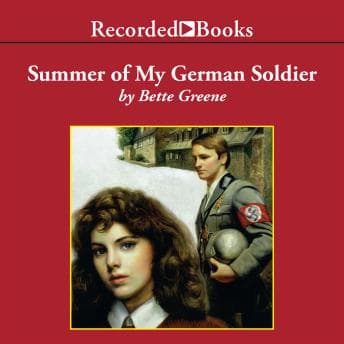
I've been assigning To Kill a Mockingbird for two decades like it's the only novel that explores childhood moral awakening in the American South. And this whole time, Bette Greene's 1973 novel has been waiting—darker, more personal, less interested in giving us a hero we can comfortably admire. If you're looking for books that force you to look at uncomfortable truths about complicity and kindness during wartime, this belongs on that shelf.
I finished this one at 11 PM, supposedly grading sophomore essays on symbolism. The red pen sat untouched for two hours because Dale Dickey's narration had me frozen in my chair.
Patty Bergen Doesn't Get an Atticus
Here's what gets me about this twelve-year-old protagonist: she's not plucky. She's not precocious in that way we've come to expect from coming-of-age heroines. She's a child desperately trying to understand why her father hits her, why her mother treats her like an inconvenience, why being Jewish in small-town Arkansas during WWII means she belongs nowhere.
Greene based this on her own childhood, and you feel that autobiographical rawness in every interaction. Patty doesn't have the vocabulary to name what's happening to her—she just knows something is fundamentally wrong with the love she's receiving. Or not receiving.
And then Anton arrives. A German prisoner of war. The enemy. And he sees her. Actually sees her.
The friendship between Patty and Anton isn't romantic—she's twelve, he's an adult—but it's intimate in a way that's almost harder to read. He gives her the first taste of what it feels like to be valued as a human being. That's devastating. That's the kind of sentence Hemingway would have written and then crossed out for being too on the nose. But Greene earns it.
Dickey Understands That Pause Is Punctuation
Dale Dickey's narration is why I listen at 1.0x speed when my students think I'm ancient for it. She doesn't rush through the quiet moments—the scenes where Patty processes her father's cruelty, the stolen conversations with Anton where two outsiders recognize each other. There's restraint here that serves the material beautifully.
Her Southern accent work feels authentic without veering into caricature. Patty's voice carries that particular mix of intelligence and vulnerability that defines kids who've learned to read adults for survival. You know the type. I've taught hundreds of them. The ones who flinch when you raise your hand to write on the board.
Dickey lets the horror of Patty's home life speak through understatement rather than melodrama. That's a choice, and it's the right one. The town characters—gossipy neighbors, suspicious sheriff—each get enough distinction that you're never confused about who's speaking, even when you're half-listening while pretending to pay attention to your grading.
The Truths We Ask Children to Hold
This book won't let you feel comfortable. It asks you to hold multiple truths at once: that Anton is a German soldier who served under Hitler, and also a frightened young man who shows a child kindness. That Patty's parents are victims of their own limitations, and also her abusers. That doing the right thing can destroy your life.
My students would hate this. I love it.
Scout Finch gets Atticus—a moral compass, a protector, a father who fights for justice. Patty Bergen gets no one, really. And that's the point. Some children don't get heroes. They become their own, or they don't survive.
At just over seven hours, it's a compact listen that doesn't feel rushed. The prose deserves to be savored—Greene writes with economy but not coldness. This is a National Book Award finalist that earned every bit of that recognition.
Who Gets This Assignment
Skip it if you want easy answers or comfortable resolutions. The content warnings are real—the abuse is never graphic but it's present and painful. Parents should probably preview before handing this to younger listeners.
But if you're a teacher looking for something to pair with or replace Mockingbird? If you're a parent trying to explain moral complexity to a kid old enough to handle it? If you're just someone who wants to feel something complicated on a quiet evening? This one's for you.
This is why we still read the classics. Because someone in 1973 wrote down the truest sentences she knew about being a lonely child in an impossible situation, and fifty years later, they still land.
Worth pausing the faculty meeting for. Worth the red pen sitting untouched.